
Why estrogen matters for men on TRT
Estrogen matters on TRT because men need a healthy amount of it, and testosterone therapy can push it too high or, if over-treated, too low. Estrogen (estradiol, or “E2”) isn’t the enemy. Men rely on it for libido, erections, joints, bones and heart health.
A study that suppressed and replaced hormones in healthy men showed how much it matters. Estrogen deficiency mainly drove increases in body fat, and low testosterone and low estrogen both contributed to declining sexual function.
On testosterone therapy, E2 can drift high through aromatase or fall too low if it is over-suppressed. The sweet spot keeps you feeling well without side effects.
Why estrogen rises on TRT
Estrogen rises on TRT mainly because some of the extra testosterone is converted into estradiol. The main drivers:
- Aromatase converts testosterone to estradiol, especially in fat tissue. The AUA guideline notes it is not uncommon for estradiol to rise while men are on testosterone therapy.
- Higher peaks from large or less frequent doses. A big injection creates a high testosterone peak, which gives aromatase more raw material.
- Genetics and lifestyle. Body fat, alcohol, sleep and some medicines all influence how much conversion happens.
Symptoms: high vs. low estrogen
The symptoms of high and low estradiol overlap more than most men expect, which is why labs matter.
| High E2 | Low E2 (often over-suppressed) | |
|---|---|---|
| Common signs | Nipple or breast tenderness, water retention or bloating, mood swings or irritability | Joint aches, flat mood, dry skin, fatigue |
| Sexual function | Reduced libido or erection problems | Low libido or erectile difficulty |
Breast symptoms are the most specific clue. MedlinePlus lists enlarged or painful breasts among testosterone side effects to report, and the AUA guideline describes symptomatic breast changes as uncommon in clinical trials. Our page on sore nipples on TRT covers what to do if it happens.
Blood pressure needs its own check, whatever your estradiol. Under the FDA’s 2025 class-wide labeling changes, testosterone products now carry a warning about increased blood pressure, so readings are part of every follow-up.
Lab targets and monitoring
Good estradiol monitoring uses the right test, drawn at a consistent time, read against symptoms:
- Assay: a sensitive estradiol test (LC-MS/MS) is preferred for men because it measures low levels more accurately than standard immunoassays.
- Target: there is no guideline-set “ideal” estradiol for men on TRT, and reference ranges vary by lab. The AUA guideline uses 40 pg/mL as the level at which a man with breast symptoms before treatment should be referred to an endocrinologist. Your result is read against your lab’s range and how you feel.
- Timing: draw at the same point in your dosing cycle each time. The AUA notes mid-cycle draws are the usual convention for injections, and our page on trough vs. peak labs on TRT explains when a pre-dose draw is more useful.
- Cadence: at Ultimate Male, labs are rechecked 6 to 8 weeks after starting or changing a dose, then every 3 to 6 months once stable. The AUA guideline asks for testosterone levels at least every 6 to 12 months on therapy.
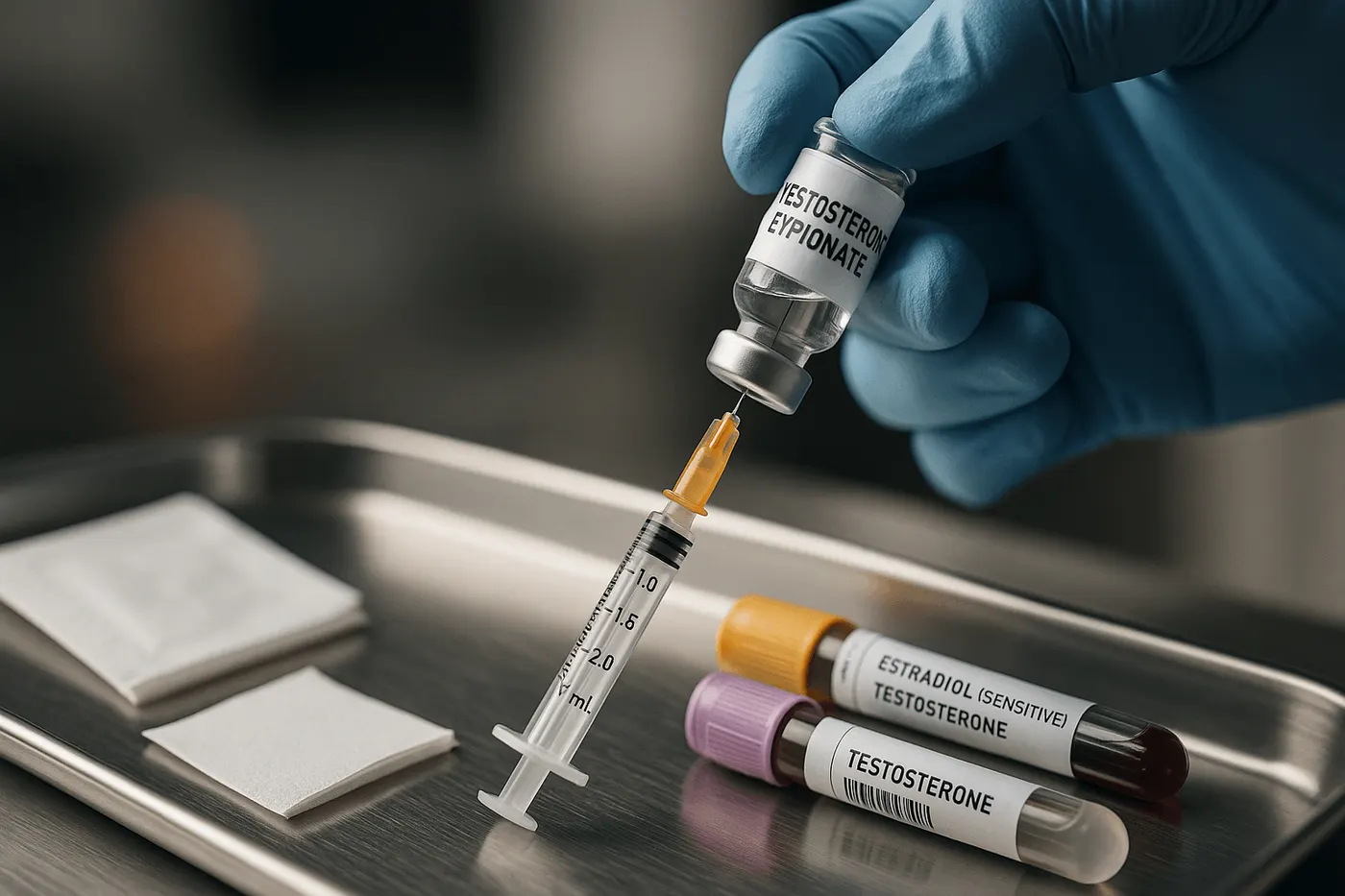
We treat symptoms plus labs, not numbers alone.
First-line (non-drug) strategies
The first fixes for estradiol problems usually involve how testosterone is given, not another medicine. Your provider sets the dose and schedule; do not change them on your own.
1. Dose strategy
Splitting the weekly amount into two smaller injections, for example twice weekly under the skin, lowers the peaks that feed aromatase. Our answer on weekly or twice-weekly testosterone injections covers the trade-offs.
2. Formulation fit
Injections under the skin or into the muscle, oral Kyzatrex and pellets each produce a different testosterone curve, and some men absorb one form differently from another.
3. Body composition
Reducing visceral fat lowers the amount of aromatase working on your testosterone, because much of the enzyme lives in fat.
4. Lifestyle
Sleep, less alcohol, managing insulin resistance and consistent training all help.
5. Timing
Keep a steady dosing schedule. Late or missed doses create the swings you are trying to avoid.
When medication is considered
Medication enters the picture only when symptoms and repeat labs both confirm a problem with estradiol despite the steps above:
- Aromatase inhibitor, used sparingly. Anastrozole blocks the conversion of testosterone to estradiol. It is not FDA-approved for men on TRT, so any use is off-label, low-dose, as needed and reassessed often to avoid over-suppression. Our page on anastrozole on TRT covers the trade-offs.
- HCG adjustments. When HCG used alongside testosterone for fertility support raises E2, smaller, more frequent HCG doses or a rebalanced testosterone dose can help. The AUA guideline lists HCG and aromatase inhibitors among options for men with low testosterone who want to maintain fertility.
- Re-test 4 to 6 weeks after any change.
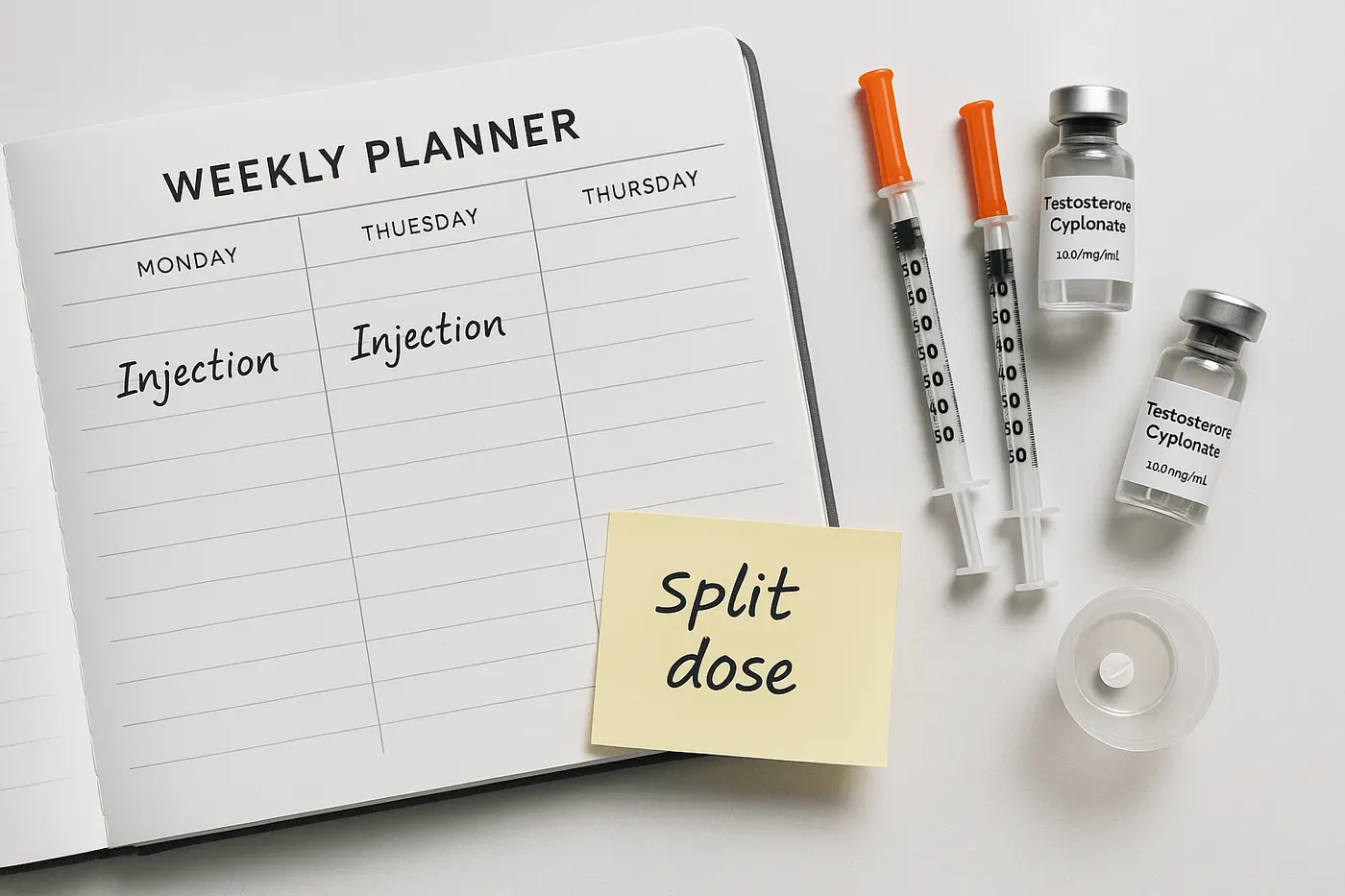
Our process at Ultimate Male
Our approach is to balance estradiol through the testosterone plan first and to add medicine only when it is clearly needed:
- Consult and baseline labs: total and free testosterone, SHBG, sensitive estradiol, CBC with hematocrit, CMP, lipids and PSA when appropriate, drawn on site in San Gabriel or Downey.
- Start or adjust TRT with peak-smoothing strategies built in.
- Recheck at 6 to 8 weeks, then fine-tune the dose, schedule or route, considering an aromatase inhibitor only if truly needed.
- Quarterly follow-up to keep you comfortable and performing well over the long term.
If you are already on testosterone therapy and suspect estrogen is part of the problem, bring your recent labs and dosing history. Start with a free phone call at (626) 319-5261 or book a consultation online.