What peptides are
Peptides are short chains of amino acids that act as signals in the body. You already make thousands of them; insulin and growth hormone releasing hormone are two. Therapeutic peptides use those same signals on purpose, to nudge recovery, hormone output or cellular energy in a specific direction. They are not supplements, not steroids and not synthetic growth hormone, and a provider decides with you whether one fits your labs and goals.
How it works
Peptides sit inside a plan, not on their own. The process is the same labs-first approach we use for everything else:
- A free phone call, then blood work including IGF-1, metabolic and hormone markers
- A one-on-one consultation to decide whether a peptide fits, and which one
- Your peptide comes from a licensed US compounding pharmacy, shipped to you or kept at the clinic
- We show you the injection in clinic the first time; the needle is the small insulin type
- Follow-up labs and a check-in at six to eight weeks, then adjustments as you respond
Where the FDA stands
Compounded peptides are not FDA-approved drugs. They are made by licensed pharmacies for an individual patient, and the FDA decides which substances pharmacies may use. That list has moved a lot this year, so each peptide below carries its current status, and your provider walks you through it before you start. The honest picture as of fall 2026:
- Tesamorelin is an FDA-approved medication (Egrifta). Its use for body composition in otherwise healthy men is off-label.
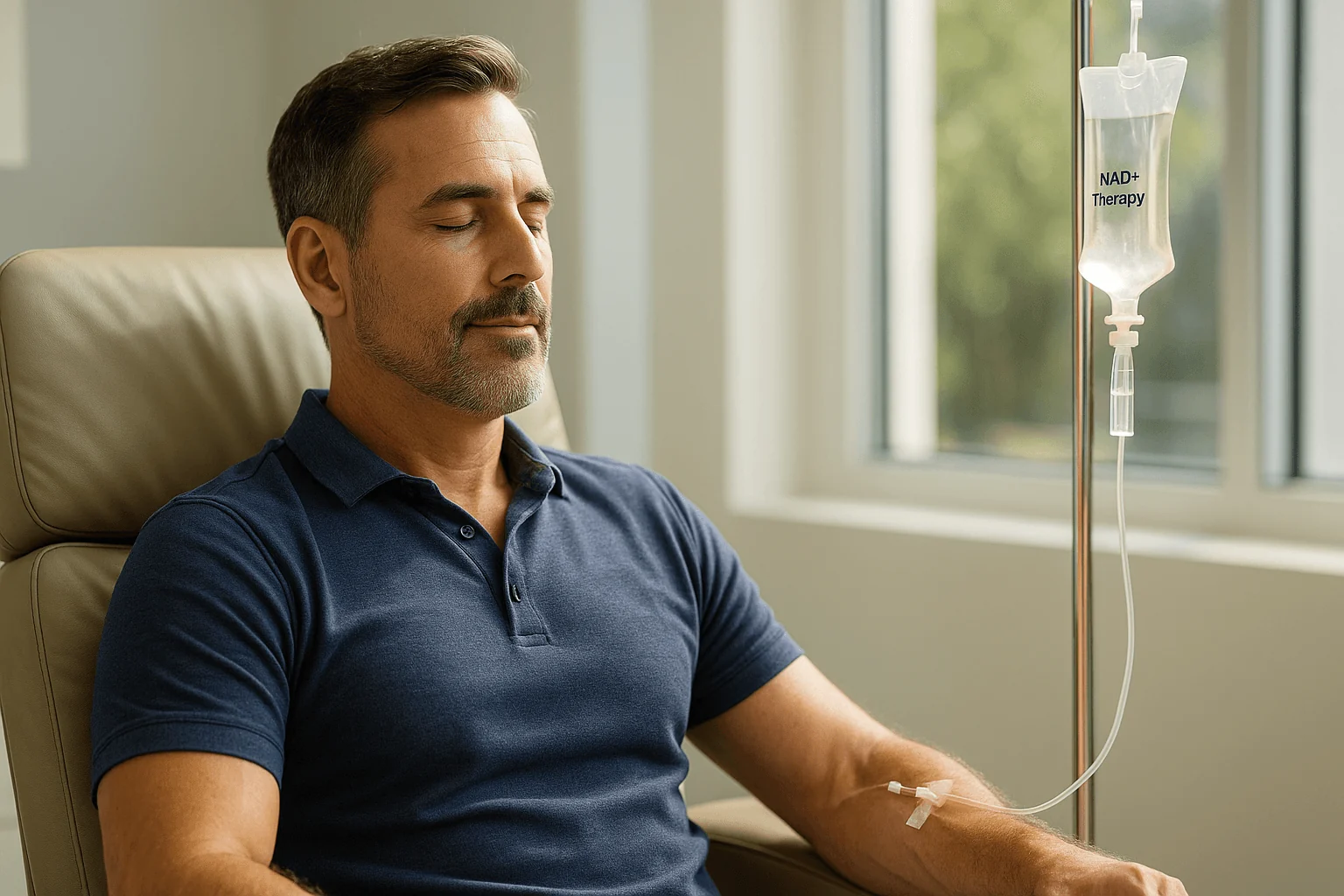
- Sermorelin was FDA-approved as Geref and is still compounded. NAD+ is widely available as an injection and IV.
- BPC-157, TB-500 and GHK-Cu were removed from the FDA's safety-concern list in April 2026. In July 2026 the FDA's advisory committee voted to recommend BPC-157 and TB-500 for compounding; the final rule is pending, and GHK-Cu is scheduled for the same review by early 2027.
- CJC-1295, ipamorelin, AOD-9604 and similar peptides are not currently eligible for compounding in the United States, so they are not on our menu.
Benefits
Is it for me?
You may be a good candidate if any of these sound like you. Labs and a consultation confirm it.
- Men over 35 recovering slower, sleeping worse or stuck on body composition despite training
- Men training through a nagging tendon, joint or muscle issue
- Men on TRT who want to add growth hormone support
- Men who already know their labs and want a provider-guided protocol
- Not for men with active or recent cancer, or untreated pituitary conditions, which the consultation screens for
How it starts
Every plan starts with a free ten-minute phone call, then labs and a one-on-one consultation with a provider at our San Gabriel or Downey clinic.