
Which test fits your situation?
An at-home kit fits a man who is curious, far from a lab, or tracking a number he already understands. A clinic draw fits any man who is weighing testosterone therapy, because that decision needs more than one number and a safety check that kits are not designed to deliver. If you are in the second group, a kit can be a first look, not the deciding test.
Home kits vs a clinic draw, side by side
| Saliva kit | Finger-prick (dried blood or capillary) kit | Morning venous draw in clinic | |
|---|---|---|---|
| Sample | Spit into a tube | A few drops of blood on a card or in a tiny tube | Several tubes from an arm vein |
| Total testosterone | Not the basis of guideline diagnosis | Can track well with serum when run by mass spectrometry | Reference standard used by guidelines |
| Free testosterone | Not a standard diagnostic method | Method varies; often not stated | Calculated from SHBG and albumin, or by dialysis, when needed |
| CBC and PSA | Not included | Check the kit; often not both | Drawn the same morning |
| Timing control | Self-timed | Self-timed | Booked for early morning |
| Interpretation | Report only | Report, sometimes a call | One-on-one review with a PA-C or MD |
How does each kind of test work?
Saliva kits
Saliva kits measure the small amount of hormone that passes into saliva. Results can be affected by collection technique, mouth bleeding and the assay used. The Endocrine Society guideline is built on blood measurements: fasting, early-morning total testosterone by an accurate assay, confirmed with a repeat. Saliva does not appear in that pathway.
Finger-prick kits
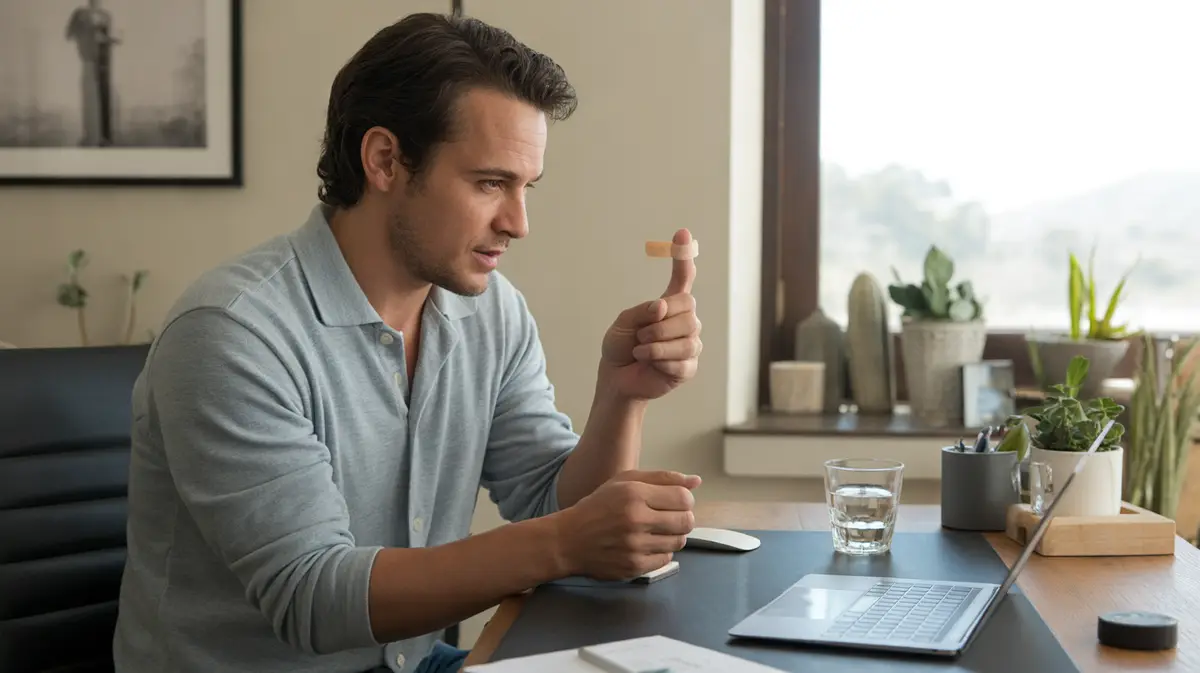
Finger-prick kits are closer to a lab test. In a 2026 study of dried blood spot sampling, testosterone measured by mass spectrometry tracked serum closely in healthy volunteers and was reliable for men on testosterone undecanoate injections. The same study found results were unusable in men using testosterone gel, because the gel on their hands contaminated the sample, and it stressed careful instruction on how to collect.
The clinic draw
A venous draw lets the lab run total testosterone, SHBG, albumin and a full blood count from one sample. MedlinePlus notes that blood is usually taken between 7 and 10 in the morning, when levels are highest, and that at-home kits for blood or saliva exist but should be discussed with your provider first.
Where home kits fall short for a TRT decision
Free testosterone accuracy
Free testosterone is where methods matter most. The Endocrine Society recommends measuring it by equilibrium dialysis or calculating it from total testosterone, SHBG and albumin, and it treats direct analog immunoassays as unreliable. If a kit report shows a free testosterone without naming the method, read it with caution. Our free vs total testosterone page explains when free testosterone decides the question.
Safety markers kits skip
Starting TRT safely needs more than testosterone. The AUA guideline calls for two early-morning total testosterone results on separate days, a hemoglobin and hematocrit check because therapy can raise red blood cell counts, and a PSA in men over 40 before treatment starts. Check any kit for those markers; if they are missing, you still need a draw.
Timing and repeats
Testosterone falls through the day and shifts with sleep, illness and training. A kit done at 2 p.m. after a bad night can look low when your morning value is normal. Our page on morning testosterone test timing shows why the clock matters, and guidelines ask for a repeat testosterone test before any diagnosis.
If you still want to use a kit
A kit can be a sensible first step if you choose and use it well. Look for these features:
- A blood sample rather than saliva, analyzed by a CLIA-certified lab.
- Testosterone measured by mass spectrometry, with the method named on the report.
- Free testosterone that is calculated from SHBG and albumin, or not reported at all.
- Collection done before 10 a.m., after a normal night of sleep and no hard workout the day before.
- Clean, dry hands, and no testosterone gel anywhere near the sample.
Side effects, convenience and cost factors
Neither option carries much physical risk: a sore fingertip for a kit, a sting and possible small bruise for a draw. Kits win on convenience if you live far from a lab. A clinic draw takes a short morning visit, and at our clinics it is same-day and on site.
Cost depends on what is measured. A kit that covers testosterone alone can look inexpensive until you add the markers a TRT decision needs. At Ultimate Male, the TRT pre-screening panel of total testosterone, estradiol, PSA and CBC is bundled with your first consultation, so those four markers carry no separate lab charge. Lab work is FSA and HSA eligible, and we provide itemized receipts.
How we turn a number into a plan
Bring your kit results; they are useful history. Then we draw a morning sample at our San Gabriel or Downey clinic, with results back in 24 to 48 hours. If the total is borderline, your provider adds free testosterone, SHBG, LH or FSH as needed, and a second morning test confirms any low result.
A PA-C or MD then reviews every number with you alongside your symptoms, medicines, sleep and goals. Sometimes that leads to testosterone therapy; often it points to a fixable cause first. See the TRT pre-screening panel for what is included, or browse all preventative blood testing options.