
What does one PRP hair session pay for?
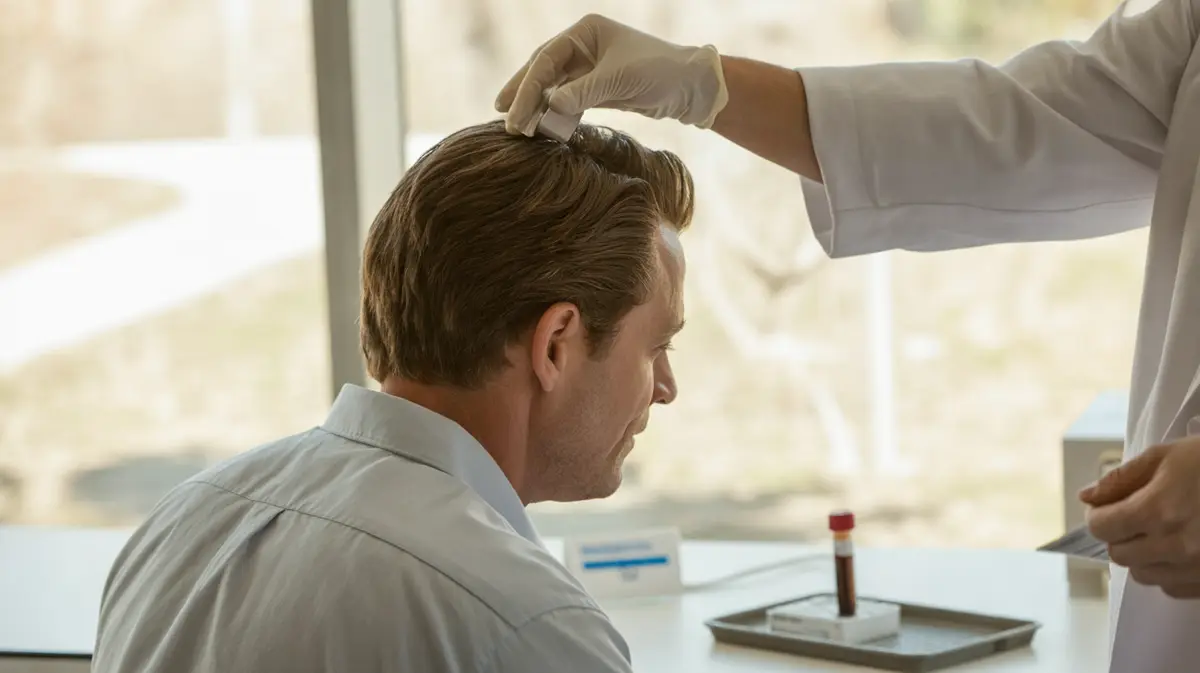
Each session covers a full procedure, not just the injections. Your blood is drawn, spun in a centrifuge to concentrate the platelets, and the plasma is placed into the thinning areas of your scalp. The American Academy of Dermatology notes the injection step itself takes about 10 minutes.
What changes the price of a single session:
- The processing kit. Single-use tubes and the separation system are a fixed cost every time.
- The area treated. A receding hairline alone takes less product and time than a hairline plus the crown.
- Comfort measures. Numbing for the scalp adds a small amount of time.
- Provider time. Planning the injection pattern and checking your progress at each visit.
Keep in mind that the FDA has not approved PRP as a hair loss treatment, and studies so far range from mixed to promising. Our page on whether PRP for hair is FDA-approved covers what that means for you.
How many sessions should you budget for?
Plan on a starting series followed by maintenance for as long as you want to keep the results. The AAD describes monthly treatments for the first three months, then a return visit every three to six months. Your provider sets your actual schedule, but that pattern gives you a fair way to estimate.
| Phase | Schedule the AAD describes | Sessions to budget |
|---|---|---|
| Starting series | Monthly for the first three months | 3 to 4, depending on whether the first visit is counted separately |
| Rest of year one | Every 3 to 6 months | 1 to 3 |
| Each year after | Every 3 to 6 months | 2 to 4 |
So a first year usually runs about four to seven sessions, and later years settle at two to four. Multiply those counts by your quoted session price to get a yearly figure. Our answer on how many PRP sessions for hair explains why some men land at the short end and others the long end.
PRP or a hair transplant: how the yearly cost compares
The two options are paid on completely different patterns. A transplant is one larger surgical bill, while PRP spreads smaller bills across every year you continue.
| PRP hair restoration | Hair transplant | |
|---|---|---|
| How you pay | Per session, ongoing | One surgical fee, sometimes a second procedure |
| Permanence | Not permanent; maintenance holds results | The AAD describes results as permanent and natural-looking |
| Downtime | Little to none | Surgical recovery |
| FSA or HSA | Generally not eligible as cosmetic | IRS names hair transplants as cosmetic |
The AAD also notes that PRP can be used alone or before a transplant, so the choice is not always one or the other. For a deeper look at the trade-offs, read our comparison of PRP and hair transplant.
What is included at Ultimate Male
Before any session, your provider looks for causes that PRP will not fix. Thyroid problems, low iron and other conditions can thin hair too, as MedlinePlus notes when it separates male pattern baldness from other kinds of hair loss. Our page on blood tests for hair loss in men shows what a provider may check.
If labs are needed, they are drawn on site the same day at our San Gabriel or Downey clinic, with results in 24 to 48 hours. Your consultation then sets the treatment area, the session plan and how progress will be measured. Our guide on what to expect at a PRP hair session walks through the visit itself.
FSA, HSA and financing for PRP hair sessions
Plan to pay for hair restoration with after-tax money. IRS Publication 502 excludes cosmetic procedures, defined as those aimed at improving appearance without meaningfully promoting body function or treating disease, and it lists hair transplants by name. PRP for pattern hair loss generally falls under the same reasoning, though your plan administrator decides.
Insurance does not cover it either, and Ultimate Male does not bill insurance in any case. To spread the cost of a starting series, CareCredit, Prosper Healthcare Lending and Afterpay are available, and the financing page explains each.
How to get a quote for your hair plan
Start with the free 10-minute phone call and describe where you are thinning and for how long. The team can tell you whether a consultation makes sense and what it involves.
After your evaluation, the provider gives you a quote that covers the starting series and a realistic maintenance estimate, before you book any session. Then you can decide with the full multi-year picture in front of you, and see how PRP fits within the wider hair restoration program.