
Last updated October 7, 2026. Written and maintained by the Ultimate Male clinical team; regulatory lines are re-checked when the FDA acts.
What GHK-Cu is
GHK stands for glycine-histidine-lysine, a tripeptide first isolated from human plasma in 1973 by the biochemist Loren Pickart, who noticed that liver tissue from young donors behaved like young tissue when bathed in plasma from older donors. The peptide binds copper tightly, and the copper-bound form, GHK-Cu, is the active one. It is released whenever tissue is injured, as a fragment of collagen and other proteins, and it acts as a signal to begin the repair program. Plasma levels decline steadily with age, which is one reason wounds heal more slowly and skin thins in older men.
How GHK-Cu works
Gene-expression studies show GHK-Cu changes the activity of a surprising number of genes, and most of the effects point in the same direction:
- Collagen and elastin: it stimulates fibroblasts to produce collagen I and III, elastin and the glycosaminoglycans that hold water in the dermis, which is the basis of firmer, thicker skin
- Remodelling: it raises the enzymes that clear damaged collagen and lowers the ones that destroy healthy tissue, so scars and sun-damaged skin remodel toward normal
- Hair: it enlarges hair follicles and lengthens the growth phase in lab and animal work, and copper peptides are a standard ingredient in hair-restoration protocols for that reason
- Inflammation and healing: it lowers inflammatory signals and speeds wound closure, which is why it is used after procedures such as microneedling and laser
What the research shows
GHK-Cu has decades of laboratory data and a respectable set of small human studies, most of them on the topical form. Controlled trials of copper-peptide creams have shown improved skin thickness, elasticity and fine lines over twelve weeks compared with placebo, with results on par with or better than vitamin C and retinol in head-to-head comparisons. Studies on wound healing after procedures and on hair density are smaller but consistent. Injectable GHK-Cu for systemic anti-aging or healing has essentially no human trial data; its use rests on the mechanism and on the topical results. We say that clearly, and we steer men toward the topical and procedure-paired uses where the evidence lives, reserving injections for specific healing goals after a conversation about the gap.
How we use GHK-Cu at Ultimate Male
GHK-Cu is the peptide most likely to sit inside an aesthetics plan rather than a hormone plan:
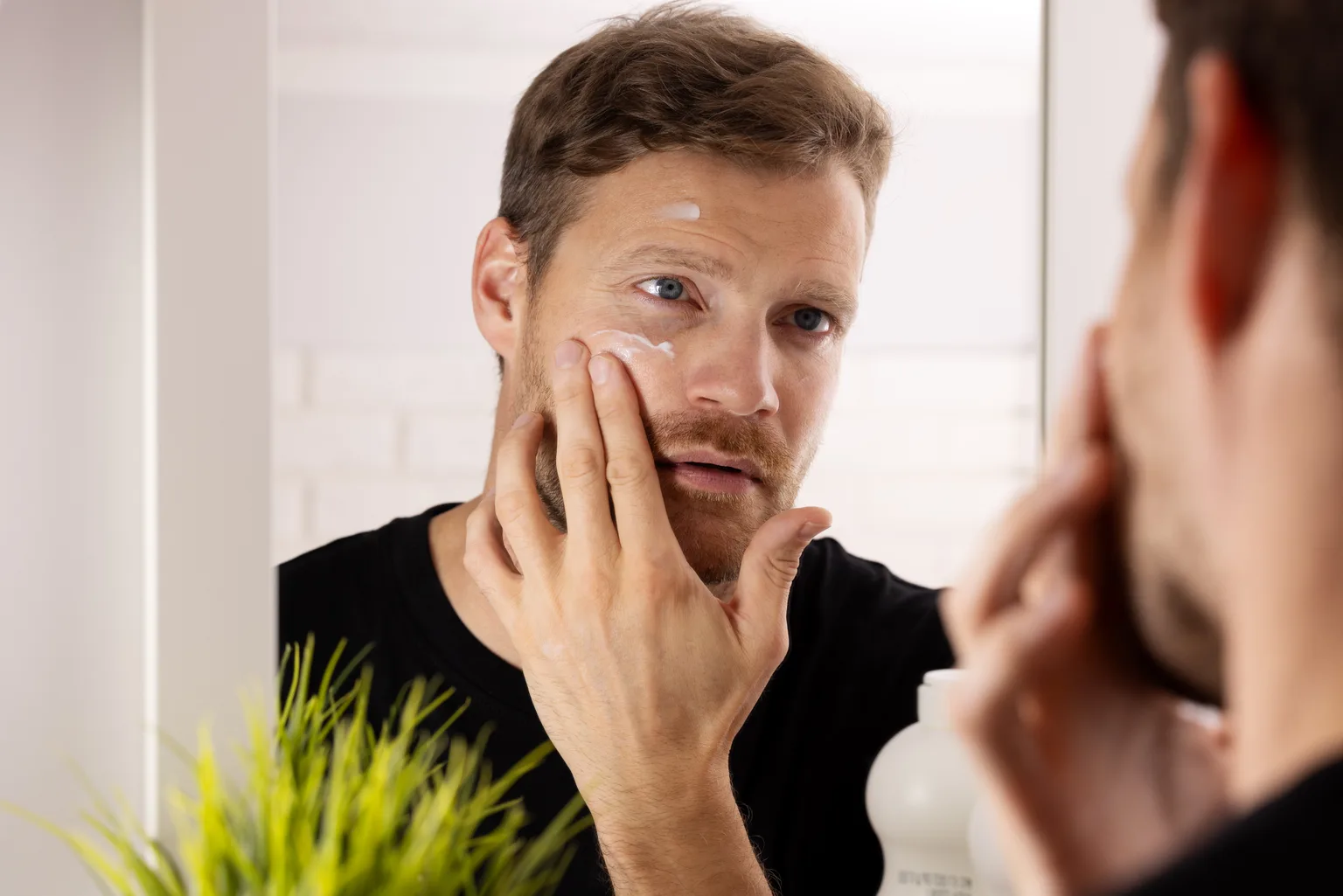
- Topical: a serum or cream applied once or twice daily to the face, scalp or a healing area; results are judged at twelve weeks with photos
- With microneedling or PRP: applied immediately after the procedure, when the skin absorbs it best, and continued at home between sessions
- Hair: combined with our hair-restoration program, as a scalp topical and sometimes as a subcutaneous injection series
- Injectable: 1 to 2 mg by subcutaneous injection, daily or every other day, in short courses for men focused on healing or recovery; we discuss the limited evidence before starting
- No special labs are needed for topical use; the injectable follows our standard baseline panel and screening
Where the FDA stands on GHK-Cu
The two forms sit under different rules. Topical GHK-Cu in creams and serums is a cosmetic ingredient and has been sold for decades without restriction. Injectable GHK-Cu made by compounding pharmacies was placed in Category 2 of the FDA's bulk substances list in 2023, then removed from that list on April 15, 2026. It was not part of the July 2026 advisory committee meeting that covered BPC-157 and TB-500; the FDA has indicated the Pharmacy Compounding Advisory Committee will review GHK-Cu by February 2027. As of October 7, 2026 pharmacies supply the injectable under the interim position, and we will update this page when the committee meets.
Side effects and who should skip it
Topical GHK-Cu occasionally causes mild redness or itching, and the blue tint of concentrated products can stain fabric. Injectable use can cause injection-site irritation and, rarely, light-headedness. Because it delivers copper, men with Wilson's disease or other copper-handling disorders should not use it, and we are cautious with men who have active cancer, since GHK-Cu promotes tissue growth and blood vessel formation in healing wounds. It has no hormonal effect and does not interact with TRT or other peptides.
What men use GHK-Cu for
Is GHK-Cu for me?
It may be a good fit if any of these sound like you. Labs and a consultation decide.
- Men in their forties and up who notice thinner, looser skin and want a non-surgical, evidence-backed step
- Men already doing microneedling or PRP who want to get more from each session
- Men in our hair-restoration program looking for an add-on with real follicle data behind it
- Men with slow-healing scrapes, surgical scars or sun-damaged skin
- Men who want an aesthetics option that is not a filler or a relaxer
Who should not use it
- Wilson's disease or any disorder of copper metabolism
- Active cancer, especially skin cancer in the treatment area
- Men expecting injectable GHK-Cu to produce whole-body anti-aging; the human evidence is topical
- Open, infected wounds, which need treatment first
How it starts
A free ten-minute phone call, then labs and a one-on-one consultation with a provider in San Gabriel or Downey. GHK-Cu is recommended only if your results and goals point to it.