
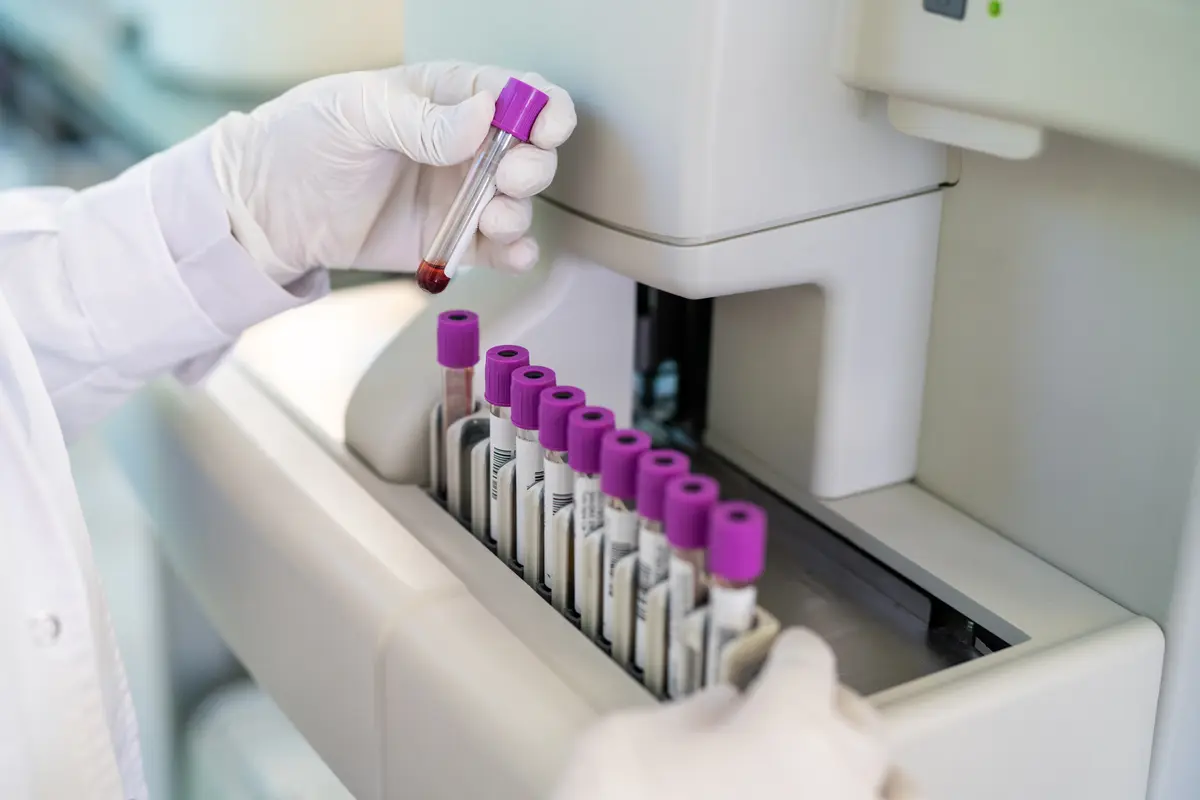
What does each part of the panel look at?
Ultimate Male’s Cancer Risk Insight Panel checks two common gene markers, MTHFR and HLA-B27, and offers BRCA screening as an add-on. Each piece answers a different, narrow question, and only one of them is about cancer.
| Test | What it detects | What it can suggest | What it cannot tell you |
|---|---|---|---|
| MTHFR | Common variants in a folate-processing gene | Why a homocysteine level might run high | Your risk of a heart attack or a blood clot |
| HLA-B27 | An immune marker on white blood cells | Whether back, joint or eye inflammation fits a spondyloarthritis picture | Whether you will ever develop that disease |
| BRCA1 and BRCA2 (optional) | Inherited changes in two tumor-suppressor genes | A higher lifetime risk of prostate, male breast and pancreatic cancer | Whether you will get cancer, or your risk of unrelated cancers |
Your genes do not change, so each result is a one-time answer. The value comes from deciding in advance what you would do with a positive or a negative.
Can an MTHFR result predict heart disease or clots?
No. MedlinePlus Genetics explains that the MTHFR enzyme helps the body process folate, and that common variants reduce how well it works. For years, those variants were thought to push homocysteine up and, through it, raise the risk of clots and heart disease.
The theory did not survive testing. In its 2013 practice guideline, the American College of Medical Genetics and Genomics noted that meta-analyses had disproven a link between high homocysteine and coronary heart disease, and between MTHFR status and venous blood clots. It concluded the test has minimal clinical utility.
In practice, an MTHFR result almost never leads to a referral. If you want to know whether your methylation chemistry is working, a direct homocysteine blood test with folate and B12 levels answers that question better than the gene does.
What does a positive HLA-B27 mean if your back feels fine?
On its own, very little. MedlinePlus describes HLA-B27 testing as a way to help find the cause of joint pain, stiffness or swelling, and links the marker to ankylosing spondylitis, reactive arthritis, psoriatic arthritis and uveitis, an inflammation inside the eye. It also notes that the marker turns up in some healthy people.
The result starts to matter when your history fits. A man with months of low back pain that is worst on waking and eases with movement, plus a positive HLA-B27, is usually referred to a rheumatologist. A painful red eye with light sensitivity calls for same-day eye care, whatever the panel showed. Our HLA-B27 test page goes deeper on the marker.
When does a BRCA result change a man’s care?
When it finds a harmful variant. The National Cancer Institute estimates that 19% to 61% of men with a harmful BRCA2 change develop prostate cancer by age 80, against about 10.6% of men in the general population. For male breast cancer, the figures are 1.8% to 7.1% by age 70 with BRCA2, against about 0.1%. Pancreatic cancer risk rises as well.
A positive result sets off three things: genetic counseling, an earlier screening plan, and a conversation with blood relatives who may want testing. The AUA/SUO prostate screening guideline advises offering screening from age 40 to 45 to people at increased risk, a group that includes carriers of germline mutations.
A negative result needs context. NCI explains that if a relative carries a known family variant and you test negative for that variant, you did not inherit it. If no one in the family has been tested, a negative adds little to what your family history already says. Our page on BRCA testing for men covers who should consider it.
Related question: is the panel worth it with no family history?
Often it is not the right first test. Without symptoms, HLA-B27 adds little and MTHFR rarely changes anything. NCI focuses BRCA testing on people with a known family variant, Ashkenazi Jewish heritage, or relatives with breast cancer at 50 or younger, ovarian, pancreatic, male breast, or metastatic or high-risk prostate cancer.
If your worry is heart risk or low energy, other markers answer it more directly. Our answer on whether a preventive blood panel is worth it compares the options, and the page on a family history of prostate cancer explains when BRCA belongs in the plan.
How Ultimate Male handles a genetic panel
Start with the free 10-minute call and say what you are hoping to learn. If the real question is about your heart or your energy, you may be pointed to a different panel before anything is drawn. If genetic testing does fit, the draw is a short on-site visit at San Gabriel or Downey.
A PA-C or MD then goes through each result with you: what it shows, what it does not, and whether it calls for a rheumatologist, a genetic counselor or a urologist. Testing is direct-pay with itemized receipts for FSA and HSA claims. You can read more about the genetic risk screening panel or compare every option under preventative blood testing.
