
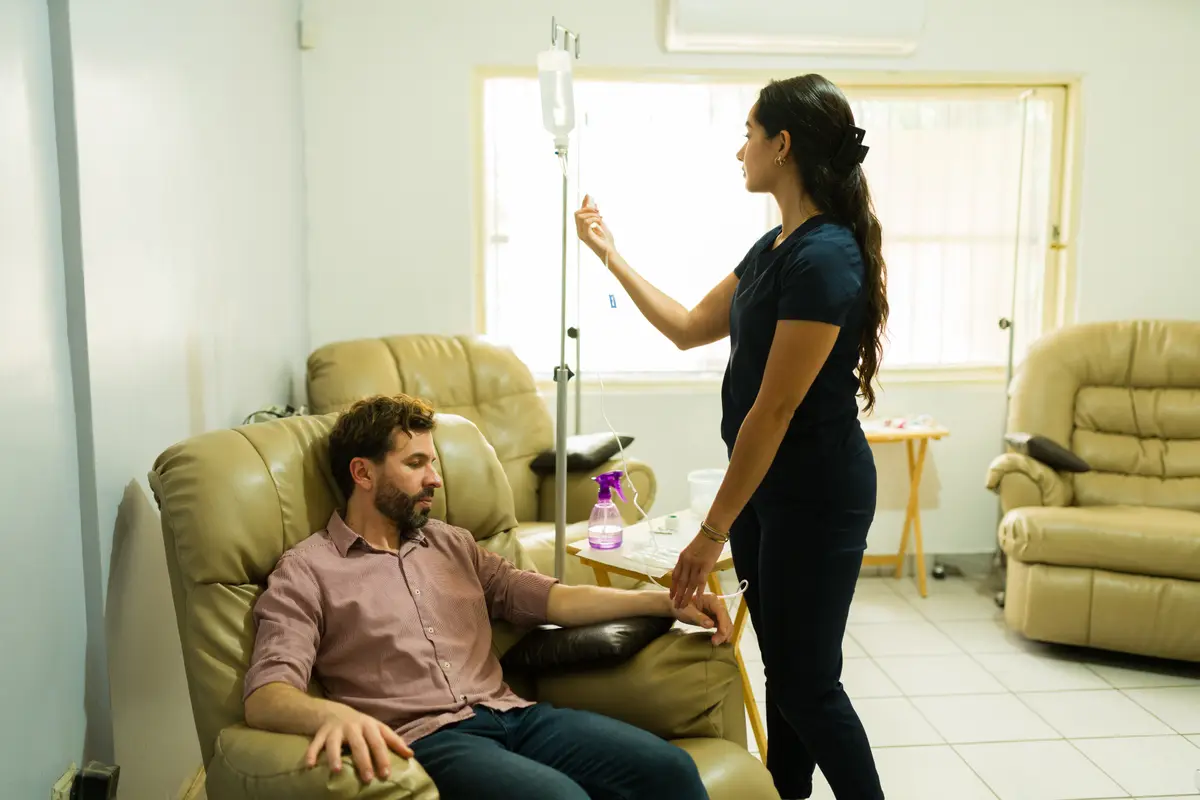
How long does the hydration part last?
The fluid itself is processed within hours. Once your blood volume is topped up, your kidneys send the excess out as urine, so how long you stay well hydrated depends on what you do after the drip: what you drink, how much you sweat and whether alcohol or heat is in the picture.
Research in athletes matches this. A review of IV versus oral rehydration found that IV fluid rehydrates faster than drinking, but the benefits were generally transient, and markers of hydration differed only slightly between the two methods. The drip gives you a head start, not a reserve.
How fast do the vitamins leave your body?
Most vitamins in a typical drip are water soluble, and your body keeps only what its tissues can hold. The rest is filtered out by the kidneys, often within a day or two.
| Ingredient | What the evidence shows | What it means for you |
|---|---|---|
| Vitamin C | The Ascor label reports a half-life of about 7.4 hours in its dosing study, and once tissues are saturated, most of any extra is excreted in urine | Blood levels return toward normal within a day |
| Vitamin B12 | The cyanocobalamin injection label says 50 to 98 percent of an injected dose may appear in urine within 48 hours, most of it in the first eight hours | Giving it by vein leaves little chance for the liver to store it |
| Other B vitamins | Also water soluble and cleared by the kidneys | Bright yellow urine afterward is the visible sign |
| Fluid and salts | Handled by the kidneys over hours | Depends on what you drink afterward |
Route matters for how high levels climb, not how long they stay. In a National Institutes of Health study of vitamin C, a 1.25 gram dose by vein produced a peak blood level about six times higher than the same dose by mouth, because the gut tightly limits absorption. A high peak is not the same as a lasting effect, which is why the vitamin C label also points to urine as the route out.
Our pages on high-dose vitamin C IV and vitamin B12 injections and IV go deeper on each one.
Why do some men feel better for days?
How you feel and how long a vitamin stays in your blood are two different things. Rehydration, an hour of quiet rest and the expectation of feeling better can all lift your energy, and that lift may outlast the vitamins themselves.
Expectation is powerful here. In a placebo-controlled pilot trial of the Myers’ cocktail, adults with fibromyalgia improved on both the vitamin drip and a plain lactated Ringer’s drip, and the difference between groups was not statistically significant, partly because of a high placebo response.
The real exception is a true deficiency. If labs show you are low in B12, repleting it changes how you feel for weeks, but that is treatment of a diagnosed shortfall with its own schedule, not a wellness drip.
Does an IV last longer than drinking the same fluid?
Not in any meaningful way for most men. A drip gets fluid into your bloodstream faster, which helps if you cannot keep anything down, but the body handles that fluid on the same timeline either way. Our IV hydration versus electrolyte drinks comparison sets out when each makes sense.
What does this mean for repeat timing?
Because fluid and most vitamins clear within a day or two, a drip is better timed to a specific need rather than repeated on a calendar to keep levels up. A man who feels he needs one every few days is better served by finding out why. Our answer on how often to get IV therapy explains how intervals are set.
How Ultimate Male plans your next drip
At our San Gabriel and Downey clinics, your provider looks at why you felt better and for how long, then decides with you whether a repeat makes sense or whether labs should come first. If something like low B12 or iron shows up, you get a targeted plan instead of more drips. When an IV is the right tool, you know what is in the bag and what to expect afterward. See the full range of IV therapy treatments, or read whether IV vitamin therapy works before you book.