
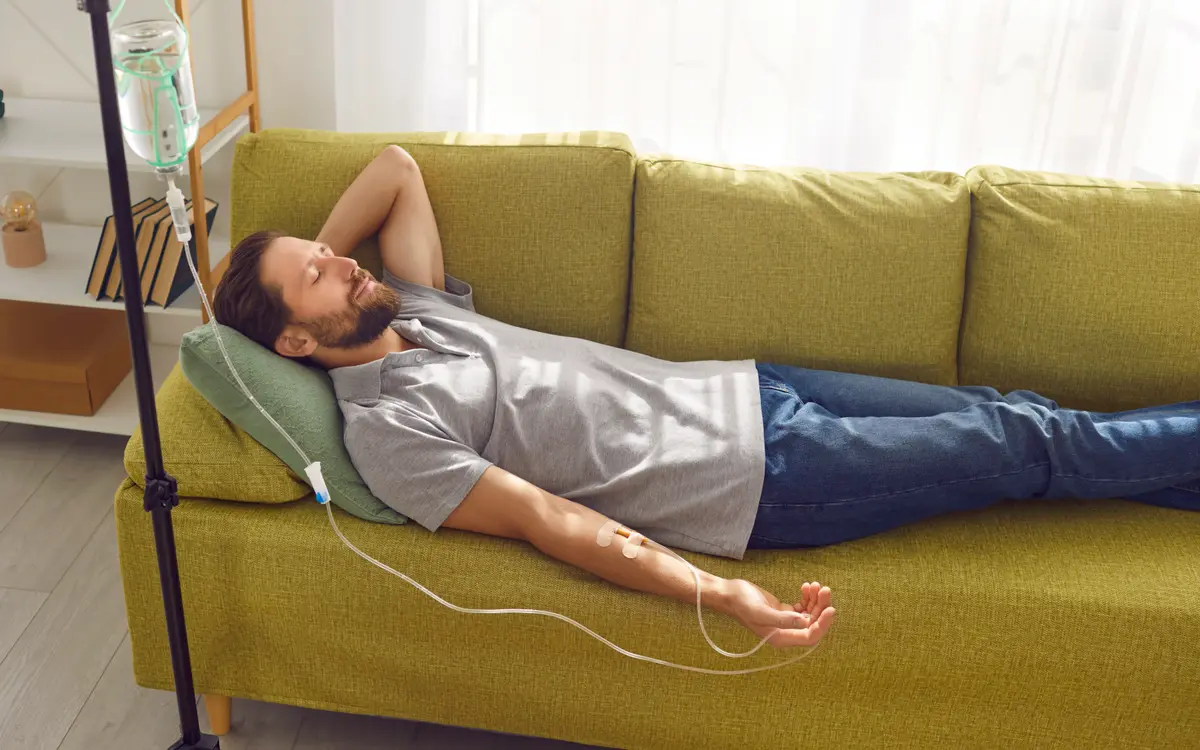
What can a drip actually help with?
A drip helps with the parts of a hangover that come from losing fluid. The NIAAA explains that alcohol suppresses vasopressin, a hormone that helps you hold on to water, so you urinate more while drinking. The mild dehydration that follows likely contributes to thirst, fatigue and headache.
Replacing that fluid can make you feel more human, and quickly if you are too queasy to drink. Drips marketed for hangovers often add an anti-nausea medicine as well. If you are offered one, ask which medicine it is and whether it suits the other medicines you take.
What can an IV not do?
It cannot speed up how fast your body clears alcohol or how fast your brain recovers. The NIAAA is direct about this: there is no fix for a hangover other than time, and no way to speed the brain’s recovery from alcohol.
Dehydration is also only one piece of the hangover. The NIAAA lists disrupted sleep, stomach irritation, inflammation and exposure to acetaldehyde, a toxic byproduct of alcohol, among the causes.
| Hangover symptom | Main driver | Can an IV help? |
|---|---|---|
| Thirst, dry mouth, lightheadedness | Fluid loss | Yes, fluid replaces it |
| Headache | Partly fluid loss, partly other effects | Sometimes, partially |
| Nausea | Stomach irritation | An anti-nausea medicine may help |
| Fatigue and poor focus | Disrupted sleep, alcohol’s effects on the brain | Not really; sleep and time do |
| Shaky, anxious feeling | Alcohol’s effects on the brain | No |
Electrolytes are often the selling point, but the NIAAA notes that research has not found a link between the size of electrolyte disruptions and how bad a hangover feels, and that most people’s bodies restore the balance on their own once the alcohol wears off. California’s pharmacy board, in its policy statement on IV hydration, names hangovers among the uses drip businesses advertise for and warns that, depending on the mixture, there may be very little or no evidence the drips work as advertised.
When is it alcohol poisoning, not a hangover?
A hangover happens after alcohol has mostly left your system. Alcohol poisoning happens while there is still too much of it in your blood, and it can kill. The NIAAA’s overdose guide lists these danger signs:
- Mental confusion or stupor, or being hard or impossible to wake
- Vomiting, seizures or no gag reflex
- Slow breathing (fewer than 8 breaths a minute) or gaps of 10 seconds or more between breaths
- Slow heart rate, clammy skin, very low body temperature, or bluish or pale skin
Call 911 right away if you see these signs. Blood alcohol can keep rising even after drinking stops or the person passes out. Do not leave the person alone; if they are lying down, roll them onto their side. Sleeping it off is not safe, and a drip clinic cannot treat alcohol poisoning.
Is acetaminophen safe for a hangover headache?
It is not the right choice while alcohol is still in play. The NIAAA warns that combining alcohol with acetaminophen (Tylenol) can be toxic to the liver. If you take a pain reliever, check with a pharmacist or your provider which one suits you.
How Ultimate Male approaches a hangover drip
At our San Gabriel and Downey clinics, a provider checks that you are dealing with a hangover and not something more serious, reviews your heart, kidney and medicine history, and then decides whether a hydration IV adds anything over water, food and rest. Our comparison of IV hydration and electrolyte drinks shows when a drink does the same job.
If hangovers have become a regular part of your week, that is worth a conversation too, since alcohol affects testosterone, sleep and weight. Our article on a dry January and testosterone is a good starting point. For the bigger picture, read whether IV vitamin therapy works or explore our IV therapy options.
