
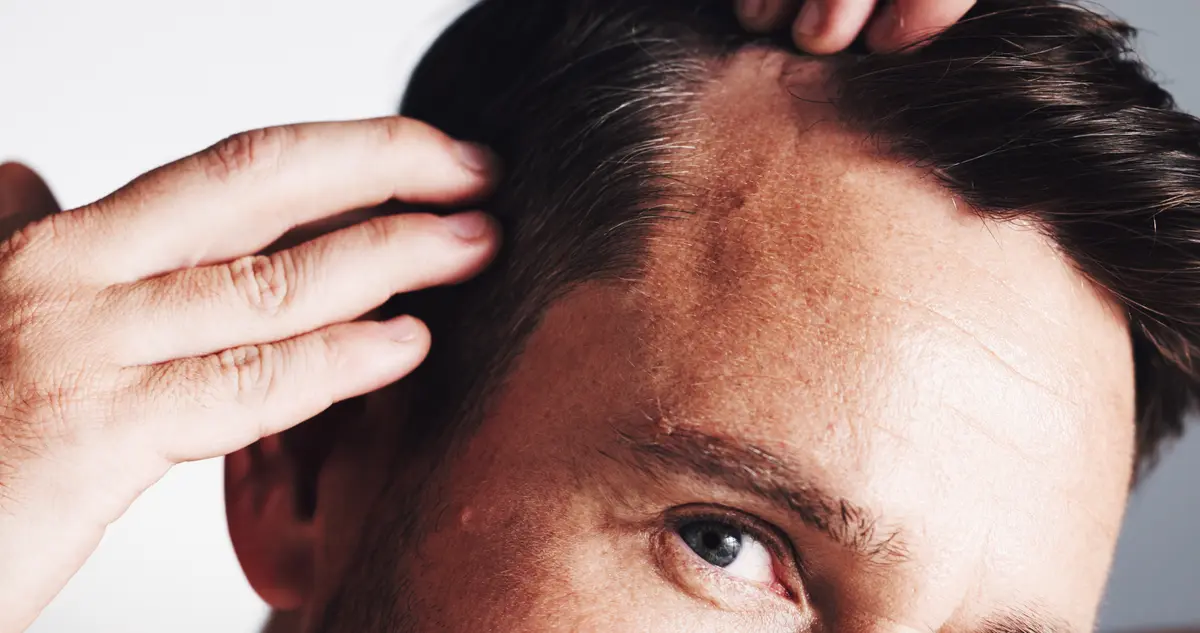
How telogen effluvium differs from pattern loss
Sudden shedding and male pattern loss feel alike when you see hair in the drain, but they behave very differently. Telogen effluvium happens when a shock to the body pushes many growing hairs into the resting phase at once, and they fall out together a few months later.
The American Academy of Dermatology says losing 50 to 100 hairs a day is normal, that excessive shedding usually appears a few months after the stressful event, and that hair generally regains its normal fullness within six to nine months once the stressor ends.
| Feature | Telogen effluvium | Male pattern hair loss |
|---|---|---|
| Onset | Sudden, over weeks | Gradual, over years |
| Where | All over the scalp | Temples and crown |
| What you see | Many full-length hairs in the shower, brush, pillow | Thinner, finer hairs; little dramatic shedding |
| Shed hairs | Often a small white bulb at the root | Mostly short, fine hairs |
| Trigger | Illness, fever, surgery, stress, rapid weight loss, new medicine | Genetics and androgen sensitivity |
| Course | Usually recovers in 6 to 9 months | Progresses without treatment |
Common triggers in men
The trigger usually happened a few months before the shedding, which is why men rarely connect the two. The AAD lists these among the usual culprits:
- Rapid weight loss, including losses of 20 pounds or more, whether from dieting, illness or medicines such as semaglutide.
- High fever or a significant illness, and the recovery period after it.
- Surgery or a hospital stay.
- Major stress, such as a job loss, divorce or caring for a sick family member.
Other causes the AAD’s overview of hair loss causes covers include thyroid disease, low iron or protein, and excess vitamin A or selenium from supplements. New medicines can play a part too, so the provider reviews anything started in the past six months. If you lost weight quickly on a GLP-1 program, our page on semaglutide and hair loss explains why the timing lines up.
The labs checked before PRP is recommended
PRP does nothing for a deficiency, so the clinic checks for fixable causes first. Three tests do most of the work, alongside a complete blood count:
- Ferritin, the body’s iron store. MedlinePlus notes it is used to look for low iron and iron deficiency anemia, both of which can thin hair. Ranges differ by lab, and men can run low after blood donation, heavy endurance training or gut blood loss, which itself needs follow-up.
- TSH, the main thyroid screen. Per MedlinePlus, dry, thinning hair is among the symptoms of an underactive thyroid, along with fatigue, cold intolerance and weight gain.
- Vitamin D, measured as 25-hydroxyvitamin D. MedlinePlus explains what the test measures; low levels are common and easy to correct, though the link to shedding is less settled than for iron or thyroid.
Zinc, B12 and a metabolic panel are added when diet, medicines or symptoms suggest them. These draws are done on site with results in 24 to 48 hours, and the markers are covered in our guide to blood tests for hair loss in men. The clinic’s nutrient deficiency panel bundles several of them.
When pattern loss is hiding underneath
Telogen effluvium sometimes uncovers a pattern that was already starting. A man with early, unnoticed thinning at the temples or crown may only see it once a shedding episode thins everything at once.
The sorting happens over time. If shedding stops and hair returns evenly across the scalp, it was telogen effluvium. If the shedding settles but the temples or crown stay thin, pattern loss was also present and deserves its own plan. Baseline photos taken at the first visit make that comparison possible a few months later, and our overview of male pattern hair loss explains what comes next if the pattern is confirmed.
Why PRP usually waits
For pure telogen effluvium, the main treatment is time and fixing the trigger. Iron is replaced if it is low, thyroid problems are treated, the pace of weight loss is adjusted, and protein intake is checked. PRP is not FDA-approved for hair loss, and there is little reason to inject the scalp while an active deficiency is still pulling hair out.
PRP comes into the picture once labs are normal and shedding has settled but thinning persists in a pattern, or when telogen effluvium has revealed underlying pattern loss. At that point the clinic’s PRP program targets the follicles that are still weakened.
What helps while the shedding settles
A few habits make the waiting period easier. Handle wet hair gently and skip tight styles or harsh treatments for a while. Eat enough protein, especially if you are losing weight on purpose, and slow the pace if the scale is dropping very fast. Avoid starting a pile of hair supplements before your results are back, since several are only useful when a deficiency exists. Some men find it reassuring to collect shed hairs from one wash a week in the same way, because a falling count is an early sign that the cycle is resetting, well before new growth is visible.
When shedding needs prompt care
Most shedding is not dangerous, but some combinations need a doctor soon rather than a cosmetic visit:
- Shedding with unexplained weight loss, night sweats or ongoing fever.
- Shedding with marked fatigue, palpitations, shortness of breath or very pale skin, which can point to significant anemia.
- Round, smooth bald patches, or loss in the eyebrows or beard.
- A red, scaly, painful or scarring scalp.
If you feel faint, have chest pain or are short of breath at rest, call 911 rather than waiting for an appointment.
Your next step at Ultimate Male
If your brush has suddenly filled up, the first visit is about finding the trigger. At San Gabriel or Downey, a provider takes your history, examines the scalp, draws the labs on site and sets up baseline photos so you can see recovery as it happens. Only if a pattern remains afterward does PRP hair restoration come into the plan.
The free 10-minute phone call at 626-319-5261 is the easiest place to start, and appointments can be made on the booking page.