
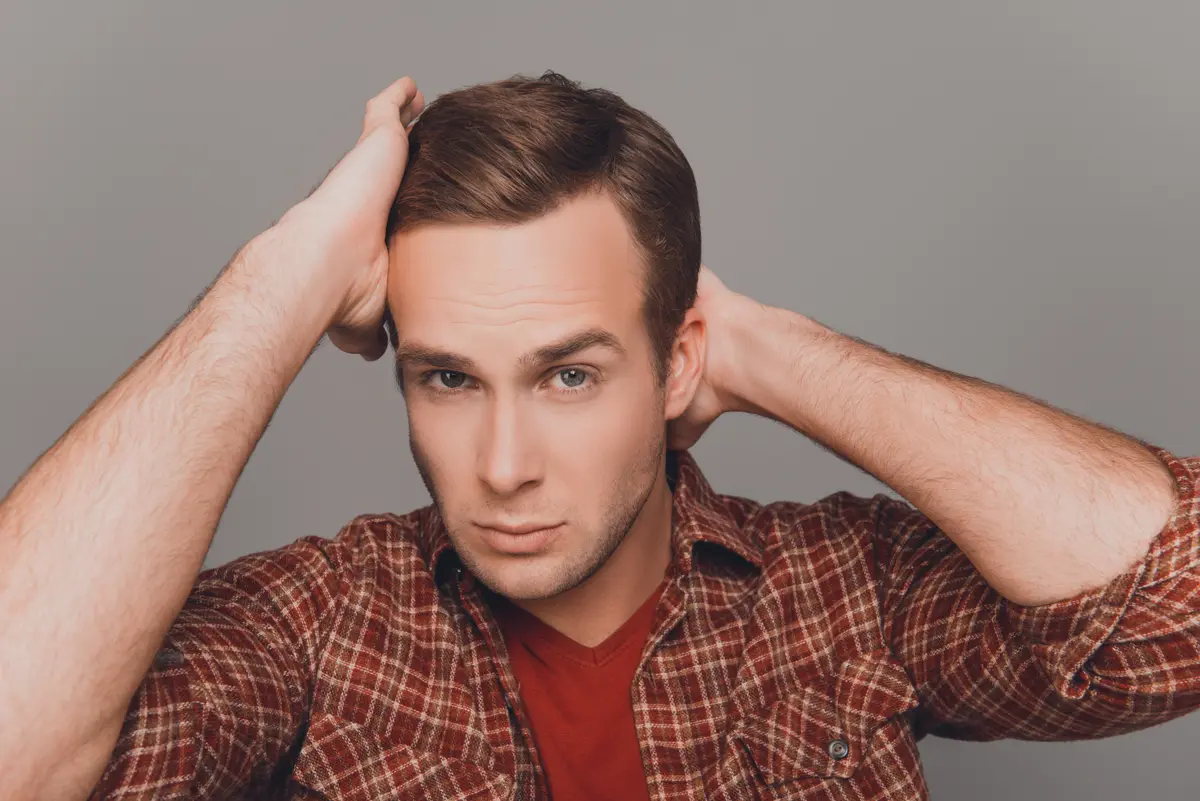
Signs of male pattern hair loss
Male pattern hair loss shows up as a slow, predictable retreat rather than patches or sudden clumps. MedlinePlus describes the classic course: the hairline moves back into an M shape while the crown thins and widens, and over years the two areas can meet.
Early clues are easy to miss:
- Temples that sit further back in photos than they did a few years ago.
- More scalp visible under bathroom lighting or in pictures taken from above.
- Hairs at the front or crown that are finer, shorter and lighter than the rest.
- A family history of balding on either side.
The cause is genetic sensitivity of scalp follicles to androgens, mainly dihydrotestosterone. Affected follicles shrink with each growth cycle, a process called miniaturization, until they produce only fine, nearly invisible hairs and eventually stop.
Reading the Norwood scale
The Norwood scale is the standard way to stage the pattern, and it tells you a lot about what treatment can still do. It was published by Dr. O’Tar Norwood in a 1975 classification built from 1,000 men, and it runs from stage 1 (no meaningful recession) to stage 7 (only a horseshoe band at the sides and back).
| Norwood stage | What it looks like | Follicle status | What usually fits |
|---|---|---|---|
| 1 to 2 | Slight temple recession, mature hairline | Mostly normal | Baseline photos, watch and decide |
| 3 and 3 vertex | Clear temple recession, or early crown thinning | Many miniaturized but alive | Medical therapy, PRP, or both |
| 4 to 5 | Deeper recession plus a crown spot, narrow bridge between | Mixed: thinning zones next to bald ones | Treat the thinning zones; discuss transplant for bald ones |
| 6 to 7 | Front and crown merged into one bald area | Few living follicles on top | Transplant referral or acceptance; injections add little |
The practical line is simple. Where you can still see fine hairs, follicles are alive and can respond. Where the skin is smooth and shiny, the follicles are gone, and no injection brings them back.
How medical therapy and PRP fit at each stage
Finasteride, minoxidil and PRP work in different ways, which is why they are often combined.
- Finasteride is a daily pill that lowers dihydrotestosterone in the scalp. The American Academy of Dermatology says it slows further loss in about 80 to 90 percent of men who take it, with results visible after about six months. Sexual side effects are possible and are discussed before starting.
- Minoxidil is applied to the scalp. According to MedlinePlus, it takes at least four months and possibly up to a year to see an effect, it has no effect on a receding hairline, and most new hair is lost within months of stopping.
- PRP concentrates growth factors from your own blood and injects them into thinning areas. It is not FDA-approved for hair loss. A 2024 meta-analysis of randomized trials concluded that PRP appears to increase hair density, but the studies were small, varied and showed signs of publication bias.
At Norwood 2 and 3, all three have living follicles to work on, so this is where they tend to make the clearest difference. At stages 4 and 5, treatment protects the thinning areas while the bald patches are a separate conversation. At 6 and 7, injections have little left to support. The sibling pages on a receding hairline and a thinning crown explain why the two areas respond differently.
What realistic results look like
Success in pattern loss is usually measured as less shedding, thicker strands and a fuller look in the treated zones, not a return to the hairline you had at 18. The AAD notes that men on minoxidil are unlikely to see full regrowth, and the same caution applies to PRP. Holding your current stage for years is a real result, because untreated pattern loss keeps moving.
Judging that by eye is hard. Hair looks different wet, dry, cut short or under a new bathroom light, so progress is compared in standardized photos taken from the same angles at baseline and at follow-up visits. If the photos show no change after a fair trial, the plan is adjusted or stopped rather than continued on hope.
How hair loss is evaluated
A scalp exam, your history and a set of baseline photos are usually enough to confirm pattern loss. The provider looks at where thinning sits, whether hairs are miniaturized, and whether the scalp shows redness, scaling or scarring that would point elsewhere.
Labs come in when the picture does not fit a pure pattern: diffuse shedding, a sudden change, or symptoms such as fatigue or weight change. In that case ferritin, thyroid tests and vitamin D are commonly checked, as described in our guide to blood tests for hair loss. Men using testosterone, anabolic steroids or other androgens are asked about it, because extra androgen can speed loss in men who are already prone.
When hair loss needs a different kind of care
Pattern loss is not an emergency, but some features mean something else is going on and deserve prompt attention from a dermatologist:
- Round, smooth bald patches, or loss in the beard or eyebrows.
- A red, scaly, itchy or painful scalp, pus bumps or areas that look scarred.
- Heavy shedding that starts suddenly over a few weeks.
- Hair loss together with unexplained weight loss, fever or marked fatigue.
These patterns are not treated with PRP first, and finding the cause comes before any cosmetic plan.
What the clinic offers, and your next step
Ultimate Male’s PRP hair restoration program starts with a consultation, baseline photos and, when needed, labs. The clinic’s usual starting plan is three to four sessions about a month apart, with maintenance every 12 to 18 months, and visible change typically appears at four to six months. Finasteride or minoxidil can be discussed alongside it. When bald areas are beyond what injections can reach, you are told so, and a transplant referral is part of the conversation.
To find out which stage you are at, call 626-319-5261 for a free 10-minute phone consultation, or book a visit at San Gabriel or Downey. The step-by-step hair loss treatment roadmap shows how plans are reviewed over the first year.
