
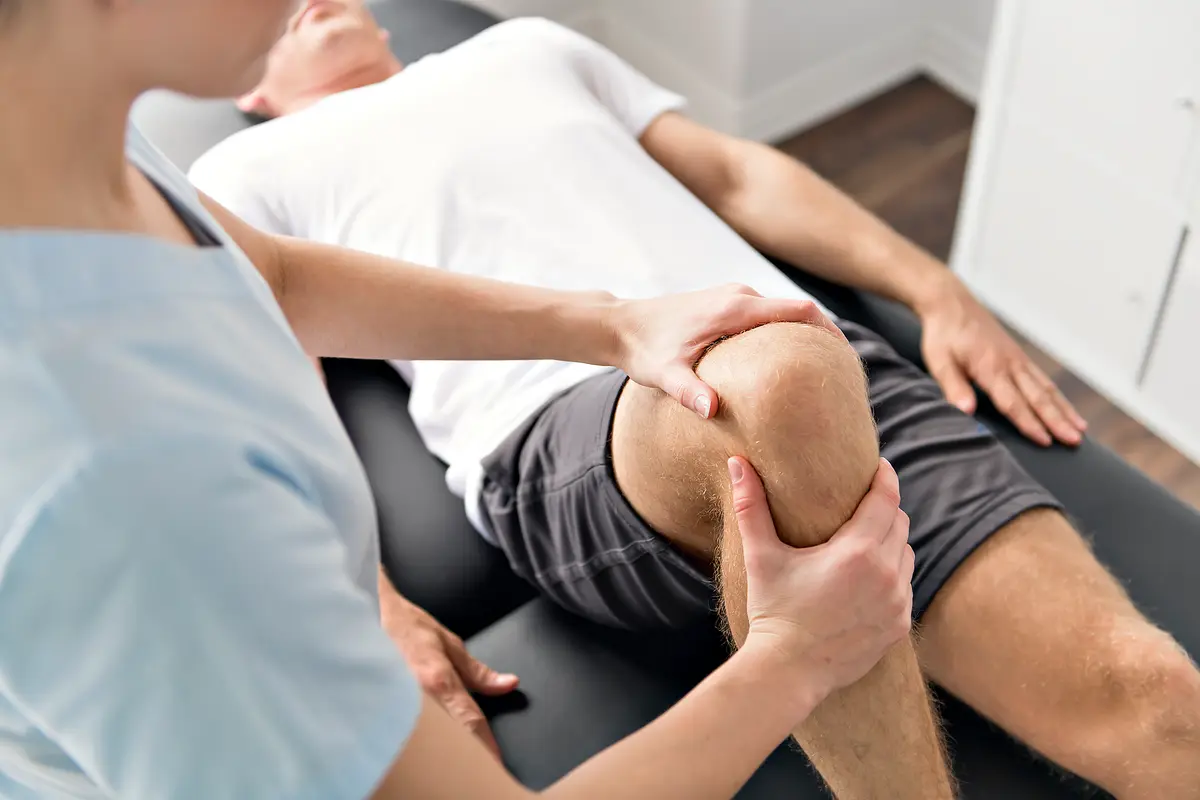
What changes when you are recovering from an injury
Three facts change how a men’s health clinic should approach an injury. Your surgeon or physical therapist leads the recovery, so anything added has to fit their plan. Low testosterone, low IGF-1 or low vitamin D can make it harder to rebuild muscle and bone, and they are easy to check. And the add-on treatments men ask about most, PRP and peptides such as BPC-157 and TB-500, have very different levels of evidence and regulatory standing.
Put together, that means coordination first, labs second, and an honest conversation about add-ons third. The order matters: a peptide started without labs or without your therapist’s knowledge can confuse the picture when progress stalls. Our answer on why injuries heal slower after 40 covers the age side of the story.
Working with your surgeon or physical therapist
The clinic’s role is supportive. With your permission, it requests your operative note or imaging report and your current rehab plan, and asks the surgeon or therapist about restrictions and timing. A man six weeks out from a tendon repair and a man with a two-year-old case of tennis elbow need very different things.
Coordination also prevents conflicts. Some surgeons prefer no injections near a fresh repair for a set period. Some therapists want to know about any new treatment so they can judge whether a change in pain or strength comes from the rehab or something else. And if you are still taking blood thinners after surgery, that affects any injection.
Labs that can hold back recovery: testosterone, IGF-1 and vitamin D
Three markers are checked because each plays a part in rebuilding tissue, and a low level is fixable.
| Marker | Why it matters for recovery | What a low result leads to |
|---|---|---|
| Morning testosterone | Supports muscle size and strength | A repeat morning test and a look at causes before any treatment |
| IGF-1 | A steady marker of growth hormone activity | Context for any growth hormone peptide discussion |
| Vitamin D | Needed to absorb calcium for bone and to keep muscles working normally | Supplementation guided by your level |
Testosterone’s role in muscle is well documented. In a carefully controlled NEJM study that suppressed men’s own hormones and replaced them at set doses, androgen deficiency accounted for losses in lean mass, muscle size and strength. A man trying to rebuild a wasted thigh after knee surgery with low testosterone is working against that.
IGF-1 is measured because growth hormone itself swings through the day. MedlinePlus explains that IGF-1 stays steadier and is a reliable way to track growth hormone activity. MedlinePlus also notes that vitamin D helps the body absorb calcium for healthy bones and keeps muscles working normally, and lists bone pain and muscle weakness among signs of a low level. See our pages on the IGF-1 blood test and the vitamin D test.
PRP: where the evidence is stronger and weaker
PRP concentrates platelets from your own blood and injects them into the injured area. The evidence depends heavily on the injury. OrthoInfo from the American Academy of Orthopaedic Surgeons says PRP is effective for chronic tendon injuries, especially tennis elbow, but that it is hard to say it beats traditional treatment for Achilles tendon problems. When added to rotator cuff or ACL surgery, results so far show little or no benefit, and research after meniscus repair is in its infancy.
That gives a fair working rule: PRP is most worth discussing for a stubborn, chronic tendon problem that has not settled with rehab, and least worth it as an add-on to a fresh surgical repair. AAOS also notes that few insurance plans reimburse it. Our page on PRP for tendon and joint repair covers the procedure.
BPC-157 and TB-500: honest about evidence and status
BPC-157 and TB-500 are the peptides most often asked about for injuries, and the honest answer has two parts.
The evidence. Most of what is known about both comes from animal and laboratory studies. Human trials for tendon, muscle or ligament healing are few and small, so claims of faster recovery in people are not established.
The regulatory status. Both were removed from the FDA’s list of substances that raised significant safety concerns in April 2026, after their nominations were withdrawn; the FDA bulk drug substances page now lists them as nominated but withdrawn. In July 2026, the FDA’s Pharmacy Compounding Advisory Committee voted, against FDA staff advice, to recommend them for the list that would allow compounding. There is no final rule. Leaving the safety-concern list does not by itself make a substance eligible for compounding, so availability is unsettled, and the free call is the place to ask where things stand.
Both are also on the WADA prohibited list, so men in tested sports should not use them. Our pages on BPC-157 and TB-500, and the BPC-157 versus PRP comparison, go into more detail.
Monitoring, questions and warning signs
Progress is judged by function rather than feel: strength, range of motion and what your therapist measures. Labs that were low are repeated after correction. Any added treatment is reviewed against your rehab milestones, and dropped if it is not helping.
Questions to ask at your consultation
- Will you contact my surgeon or physical therapist before adding anything?
- Are my testosterone, IGF-1 and vitamin D low enough to matter for recovery?
- Is PRP supported for my specific injury, or only for others?
- What is the current status of BPC-157 and TB-500, and what would you recommend instead today?
After surgery, call 911 for chest pain or sudden shortness of breath, and seek urgent care for a swollen, painful calf, or a wound that turns red, hot or starts draining with fever.
How Ultimate Male fits into your recovery
Start with a free 10-minute call to describe the injury and where you are in rehab. At our San Gabriel or Downey clinic, a PA-C or MD reviews your records, draws labs the same day and coordinates with your surgeon or therapist. Recommendations come only after that review, and they are framed around what the evidence supports for your injury.
If you are an older athlete, our page for masters athletes covers training-specific questions. The full range of options, with the current FDA status of each, is on our peptide therapy page.
