
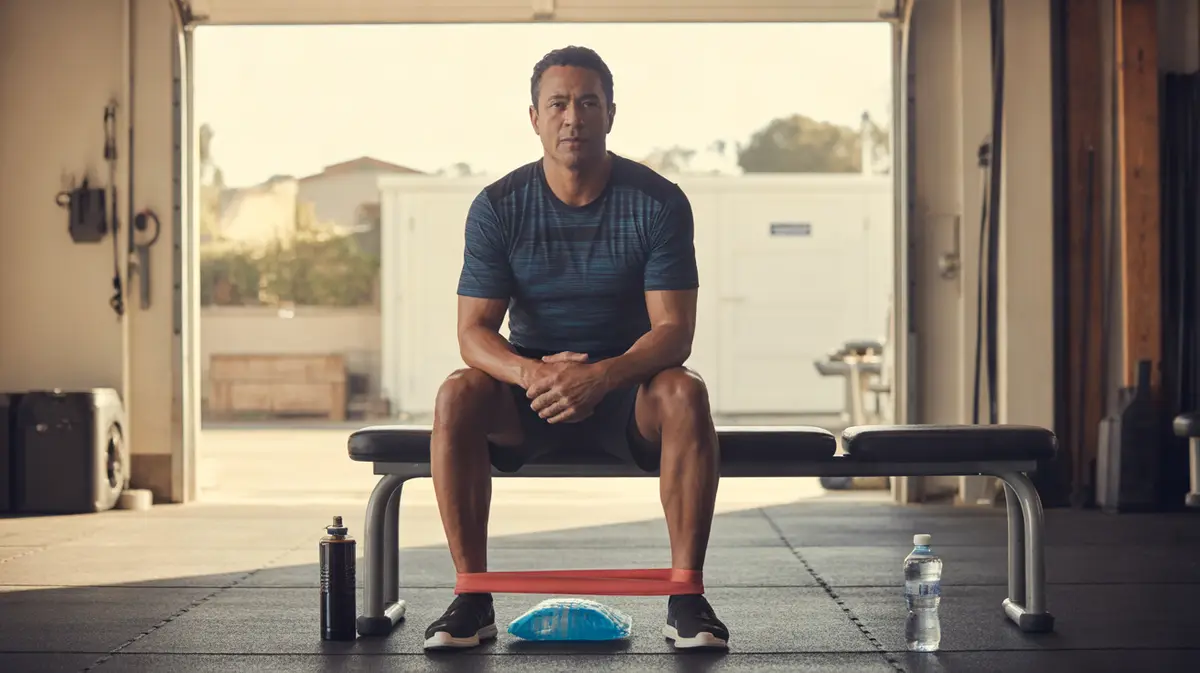
What PRP does for a tendon or joint
Platelet-rich plasma is a small volume of your own plasma with platelets concentrated several times above normal blood. Platelets release growth factors that take part in the body’s repair response. Injecting them into a tendon that has stalled in a cycle of pain and poor healing is meant to restart that response.
That is the theory. In practice, the answer to “does it work?” depends heavily on which tendon or joint you mean. It is also slower than a cortisone shot and less certain, so it makes more sense for men who are willing to pair it with a rehab plan.
Where the evidence is stronger, and where it is thin
The AAOS patient page on PRP gives a fair, condition-by-condition summary.
| Problem | What the evidence shows |
|---|---|
| Chronic tennis elbow (lateral epicondylitis) | The most support; PRP appears effective for chronic tendon injuries, especially here |
| Mild to moderate knee osteoarthritis | Growing support, with some studies showing benefit lasting up to about 2 years |
| Achilles and patellar tendon pain | Promising, but not clearly better than standard treatment |
| Rotator cuff and ACL surgery | Little or no added benefit when used during surgery |
| Acute muscle and ligament strains, fractures | Little evidence of benefit |
Which of these Ultimate Male treats with PRP is decided case by case. The clinic is a men’s health practice rather than an orthopedic surgery center, so your evaluation starts with whether PRP is a sensible option at all. A suspected tear, a locked or unstable joint, or pain after a significant injury needs imaging and an orthopedic or sports medicine assessment first, and you will be told so.
If you are weighing other options for a stubborn tendon, our comparisons of PRP versus a cortisone injection and BPC-157 versus PRP for tendon injuries set out the trade-offs.
Why anti-inflammatories are paused
PRP works by provoking a controlled inflammatory and repair response. Nonsteroidal anti-inflammatory drugs (NSAIDs) such as ibuprofen (Advil, Motrin) and naproxen (Aleve) are designed to blunt inflammation, and they also affect how platelets function. Taking them around the injection may work against the treatment.
Protocols vary, but the pattern is consistent. UTHealth Houston’s radiology team, for example, asks patients to avoid NSAIDs for 48 hours before the injection and for two weeks after it. Some practices ask for a longer pause beforehand. Your provider gives you exact dates and tells you what to use for pain instead.
One exception matters: aspirin or a blood thinner taken for your heart or circulation. Never stop those on your own. Bring them up at the consultation.
Who PRP suits, and who should skip it
PRP tends to suit men with a chronic tendon problem that has not settled after months of sensible rest, physical therapy and load management, and men with early knee arthritis who want to delay or avoid other procedures. It is often discussed by lifters with tendon pain who have tried rest and rehab without lasting relief.
It is a poor fit if you have a bleeding or platelet disorder, an infection at or near the site, an unexplained mass, or an injury that really needs surgical repair. Men on blood thinners need individual review.
The visit and the recovery timeline
The appointment follows a predictable order: a review of your history and any imaging, a blood draw from your arm, spinning the sample to concentrate the platelets, cleaning and numbing the skin, then the injection itself. You go home the same day.
| When | What usually happens |
|---|---|
| First 2 to 3 days | Light daily activity only; soreness at the site may increase at first |
| First week | Discomfort typically settles over 3 to 7 days |
| Weeks 1 to 2 | Many people start to notice some improvement |
| Several weeks onward | Gradual return to loading, ideally guided by a physical therapist |
| Months | The main benefit, if it comes, builds over weeks to months |
The UTHealth guidance also asks patients to call if discomfort continues beyond two weeks. The AAOS notes that pain may increase for one to two weeks and that benefit can take several weeks to appear.
Heavy lifting and sport come back in stages. Rushing back to full load in the first weeks is the most common way to undo the work, which is why our page for men recovering from injury puts so much weight on progression.
Safety and paying for it
PRP uses your own blood, so allergic reactions are not a concern. The risks are those of any injection: pain, bruising, and rarely infection or nerve irritation. Fever, spreading redness or rapidly increasing swelling should prompt a call to the clinic; severe symptoms with fever or a sudden inability to use the limb need urgent care.
Ultimate Male is cash-pay, posts no prices, and charges per visit with no membership. Our page on PRP injection cost for joints and tendons explains the cost factors. Treatment of an injury is medical care under IRS Publication 502, so an itemized receipt can be submitted to your FSA or HSA; your plan administrator decides. You can also finance treatment through CareCredit, Prosper Healthcare Lending or Afterpay.
Talk it through before you commit
The most useful first step is a short conversation about your injury. Call 626-319-5261 for the free 10-minute call, or book a PRP consultation in San Gabriel or Downey. You will find out whether your tendon or joint problem is a reasonable match for PRP injections, what the rehab plan would ask of you, and when a referral would serve you better.
