
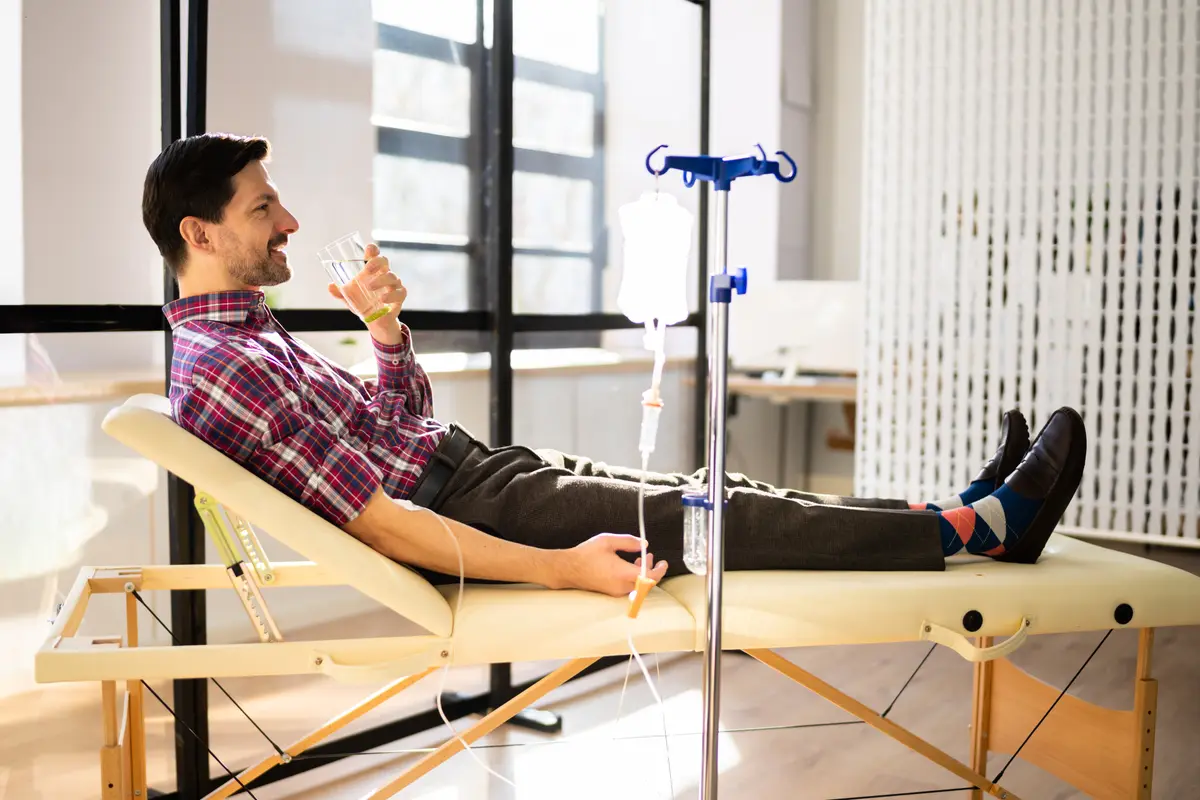
Who this guide is for
This guide is for men booking their first IV drip, whether for hydration after a hard week, recovery after training, immune support before travel or a first try at NAD+. It covers what you will be asked, how to prepare, what the IV placement feels like, how long you will sit and how you are likely to feel afterward.
IV therapy is not right for everyone. Men with heart failure, significant kidney disease or certain other conditions may not handle extra fluid well, and some formulas are a poor fit with particular medicines. Our page on who should not get IV therapy lists the main reasons a provider may say no or suggest something else.
The intake: questions you will be asked
An IV goes straight into your bloodstream, which bypasses many of the body’s natural defenses. California’s State Board of Pharmacy states that IV hydration provided at a clinic is a medical treatment that requires an examination by an authorized provider first, and that mixing and giving the IV must happen under licensed supervision.
Expect questions like these:
- What are your goals? Hydration, energy, recovery, immune support or NAD+.
- What medical conditions do you have? Heart, kidney, liver and blood pressure problems matter most, along with diabetes.
- What do you take? Every medicine, over-the-counter product and supplement, including anything with vitamins already in it.
- Any allergies? Including to vitamins, adhesive tape or latex.
- Have you fainted with needles or blood draws? If so, the nurse can have you lie back during placement.
- How are you feeling today? Fever, vomiting, chest pain or unusual shortness of breath are reasons to postpone or to seek a different kind of care.
- When did you last eat and drink? This affects how comfortable the session will be.
The intake runs both ways. The Board of Pharmacy suggests patients ask any IV provider a few questions of their own, which are worth asking anywhere:
- Did a licensed medical provider review my history and order this drip for me?
- Where do the medicines and supplies come from, and how are they stored?
- Who mixes the bag, and are they licensed to do it?
- How involved is the medical director, and are licenses posted?
Depending on your history, your provider may suggest labs before choosing a formula; see blood work before IV therapy for when that makes sense.
Before you arrive: eating, drinking and what to wear
- Eat a normal meal a couple of hours before. An empty stomach makes lightheadedness more likely, and some vitamin blends can feel queasy on no food.
- Drink water in the morning. Well-hydrated veins are easier to find.
- Wear a short-sleeved or loose-sleeved top so the arm is easy to reach, and bring a layer, since fluid at room temperature can make you feel cool.
- Bring something to do, such as a book, headphones or a phone charger.
- Bring your medication list if you have not shared it yet.
- Skip heavy alcohol the night before. If you are badly dehydrated from illness, call first; vomiting and diarrhea can need urgent care rather than a wellness drip.
Step by step: placing the IV and running the drip
- Formula confirmed. You and the provider settle on a formula, and the bag is prepared.
- Vital signs. Blood pressure, heart rate and sometimes temperature are checked.
- Choosing a vein. The nurse applies a tourniquet above the elbow and looks for a straight vein in the forearm, inner elbow or back of the hand.
- Cleaning the skin. The site is disinfected and allowed to dry.
- Catheter placement. A needle guides a thin, flexible plastic tube into the vein. The needle comes out and only the soft tube stays in, so you can move your hand. Expect a quick pinch.
- Securing it. A clear dressing holds the catheter in place, and the tubing is connected.
- The drip runs. The nurse sets the flow rate and checks on you during the session.
- Removal. The catheter slides out painlessly, and a small bandage and a minute of pressure finish it.
During the drip, a cool feeling moving up the arm is normal. Pain, burning, or swelling and coolness of the skin around the site is not; tell the nurse right away, because the catheter may have slipped out of the vein.
How long each formula takes
At Ultimate Male, infusions typically last about 60 minutes in a private, relaxed room. The exact time depends on the fluid volume, what is added to the bag and how your body tolerates the flow rate.
| Formula | Typical time | Why it varies |
|---|---|---|
| Hydration | About an hour | Larger fluid volumes take longer |
| Energy, recovery or immune support | About an hour | Some additives are run more slowly for comfort |
| NAD+ | Longer than a vitamin drip | The rate is slowed if chest tightness, nausea or flushing appears |
NAD+ is the exception worth planning around. In a 2026 study of 500 mg infusions, NAD+ drips averaged about 97 minutes because symptoms such as stomach upset, a faster heart rate and chest pressure led staff to run them more slowly; those symptoms ended when the infusion did. Our guide to your first NAD+ infusion covers that session in detail, and help choosing between blends is in choosing the right IV therapy formula.
How you will feel later that day
Most men leave and go straight back to work, the gym or home. Common experiences later that day include:
- Feeling refreshed or more alert, especially if you arrived dehydrated
- Needing to urinate more often for a few hours
- A small bruise or tenderness where the catheter was
- Feeling cool or slightly tired right after a large fluid volume
Signs of dehydration to compare against: MedlinePlus lists intense thirst, dry mouth, dark urine, urinating less, fatigue and dizziness. If those were your reason for coming, they should ease; if they return quickly or keep coming back, that pattern is worth a medical look rather than repeated drips.
What to watch for: redness, warmth, a hard cord along the vein, or swelling at the IV site that grows over the next day or two; fever; or swelling in your ankles or new shortness of breath, which can mean more fluid than your body handled comfortably.
When to call the clinic: any of the signs above, a bruise that keeps spreading, or a headache, nausea or rash after the session.
When to call 911: trouble breathing, swelling of the face, lips or throat, chest pain, fainting, or confusion. Those can signal a severe reaction or a heart problem and need emergency care immediately.
How Ultimate Male runs your first IV
At our San Gabriel and Downey clinics, every IV therapy session starts with a provider review of your goals, history and medicines before a formula is chosen. Drips are given in a private room by licensed staff who stay nearby throughout. If anything in your history makes an IV a poor idea, the provider says so and suggests a safer route, such as oral hydration or labs to find out why you feel run down.
Ultimate Male is direct-pay, gives itemized receipts and offers financing through CareCredit, Prosper Healthcare Lending and Afterpay; you get a quote before you book. To start, call 626-319-5261 for the free 10-minute phone call or book your first IV session.
