
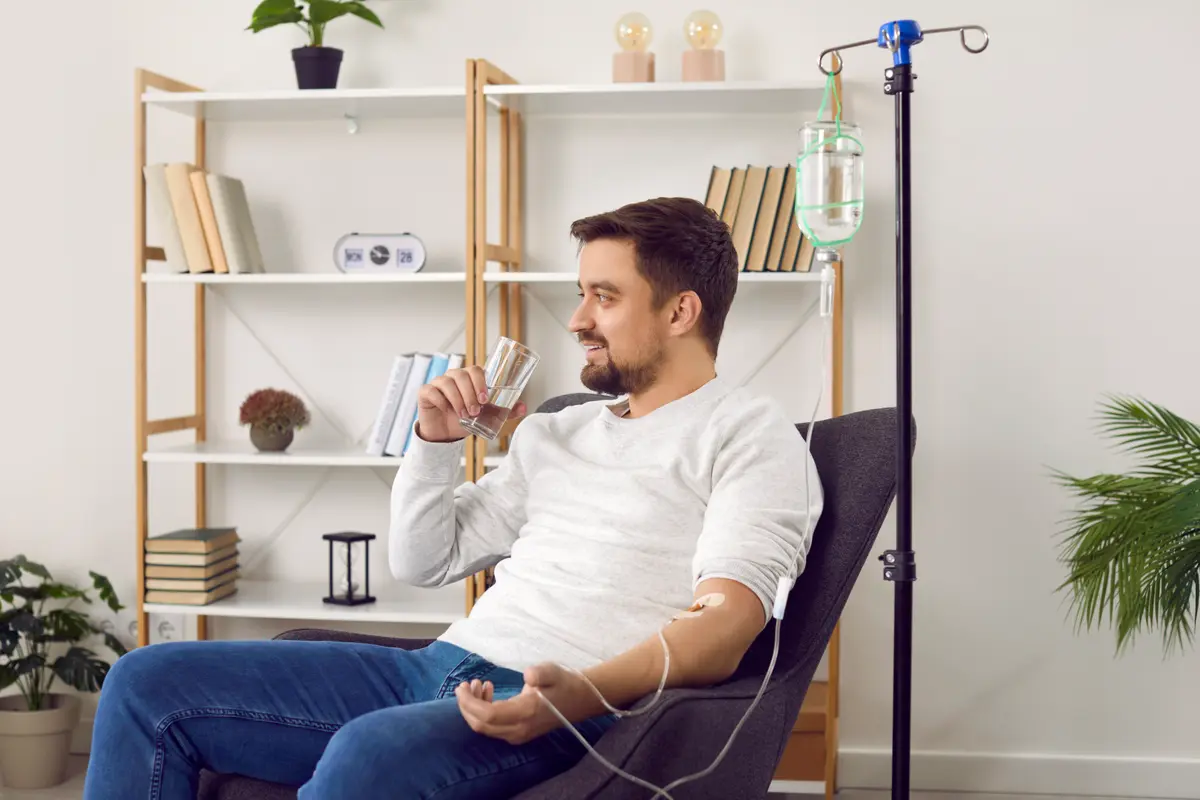
Do you need blood work before an IV drip?
Whether you need labs before an IV depends on three things: what is in the infusion, how often you plan to have one, and your health history. A one-time bag of fluids is a very different decision from repeated infusions of high-dose vitamin C.
| Type of infusion | Labs that may matter | Why |
|---|---|---|
| Basic hydration (saline or lactated Ringer’s) | Often none if you are healthy with recent normal results | The main question is whether your heart and kidneys can handle the fluid |
| Vitamin blends at modest doses | Usually decided from history | Labs come up if you have kidney disease or plan frequent visits |
| High-dose vitamin C | G6PD test, creatinine and eGFR, kidney stone history | Hemolysis risk in G6PD deficiency and oxalate load on the kidneys |
| Regular or frequent infusions | Kidney function and electrolytes, rechecked over time | Repeated doses add up in ways a single drip does not |
Ultimate Male has not published a fixed lab rule for each drip, and that is deliberate: formulas are chosen with a provider around your goals and history, so the lab decision is made the same way.
Why does kidney function come first?
Your kidneys clear what an infusion puts in, so they are the first organ to check before anything beyond plain fluids. Vitamin C is a clear example. The Ascor (ascorbic acid injection) label reports acute and chronic oxalate nephropathy, a type of kidney damage, after prolonged high-dose infusion, and it calls for caution in people with kidney impairment, a history of oxalate kidney stones, or older age, since filtration declines with age.
The National Cancer Institute’s summary of high-dose IV vitamin C research adds that kidney failure has been reported after treatment in people with existing kidney disorders, and that the safety studies screened people for G6PD deficiency, kidney disease and stones before dosing.
Kidney function is usually reported as creatinine and an estimated filtration rate. MedlinePlus explains that creatinine depends partly on body size, diet and activity, so a muscular man can show a borderline eGFR with healthy kidneys, and a cystatin C test can help settle it. Our page on the eGFR and creatinine kidney test explains how to read both.
Why does a G6PD test matter before high-dose vitamin C?
G6PD is an enzyme that protects red blood cells, and men who inherit too little of it can have those cells break apart after a strong oxidant load. The Ascor label warns that people with G6PD deficiency are at risk of severe hemolysis and should not exceed the recommended dietary allowance of vitamin C, which rules out high-dose infusions.
This is not a rare trait. MedlinePlus Genetics estimates that about 400 million people worldwide have it, most often in parts of Africa, Asia, the Mediterranean and the Middle East, and that it affects about 1 in 10 African American men. Because men carry a single X chromosome, where the G6PD gene is located, they are affected more often than women. Signs of a hemolytic episode include paleness, yellowing of the skin or eyes, dark urine, fatigue, shortness of breath and a fast heartbeat.
The G6PD test is a separate blood test that is not part of a routine panel, and normal values depend on the lab that runs it. Because the trait is inherited, a valid result does not need repeating before every visit. Our page on high-dose vitamin C IV covers the evidence for vitamin C infusions themselves.
When can labs be skipped for a hydration drip?
For a healthy adult having an occasional saline or lactated Ringer’s drip, a provider may reasonably proceed on history and vital signs alone. The things that tip the decision toward a draw first include:
- Known kidney disease, heart failure or liver disease, which limit how much fluid you can safely take
- Medicines that change fluid or salt balance, such as diuretics
- No recent lab results, with other health questions still open
- A plan for regular infusions rather than a one-off
Some situations call for an emergency room rather than a drip. MedlinePlus advises getting medical help right away if dehydration comes with confusion, fainting, no urination, a rapid heartbeat or rapid breathing. Severe dehydration is treated in a hospital, not an elective IV chair. Our page on hydration IV therapy describes what an elective fluids drip is for.
Why do frequent infusions change the picture?
Repeated infusions turn a one-time exposure into a running total. High-dose vitamin C is the clearest case, since the oxalate concern on its label comes from prolonged use, but even plain fluids and electrolyte blends add up for someone whose kidneys or heart are working near their limit.
That is why a man who wants regular drips may be asked for a baseline kidney panel and periodic rechecks even if his first visit needed none. How often makes sense depends on the formula, your results and your goals; our answer on how often to get IV therapy lays out the factors.
How Ultimate Male handles labs before IV therapy
Every formula is chosen with a provider who reviews your goals, medicines and health history first. If the plan includes high-dose vitamin C or frequent visits, expect the conversation to turn to a kidney check and a G6PD result before the first infusion, since those are the two risks the vitamin C label singles out. Kidney and liver markers are part of the clinic’s Targeted Preventative Health Panel, and the comprehensive panel includes a full metabolic panel.
Draws happen on site, same day, at San Gabriel and Downey, and results are usually ready in 24 to 48 hours, so labs rarely delay a planned infusion by much. If anything in your history makes a drip a poor idea, our page on who should not get IV therapy explains the common reasons, and your provider will tell you plainly. To talk through which IV therapy formula fits and what labs it needs, start with the free 10-minute phone call.
