
What body composition analysis measures
Body composition analysis divides your body weight into its main parts instead of giving one number. Most clinic scans report:
| Measure | What it means | Why it matters for men |
|---|---|---|
| Body fat percentage | The share of your weight that is fat | A better health marker than weight alone |
| Lean mass (fat-free mass) | Muscle, organs, water and bone | You want to keep muscle while losing fat |
| Skeletal muscle estimate | The portion of lean mass that is muscle | Tracks strength reserve during dieting or TRT |
| Visceral fat estimate | Fat stored deep around the organs | Linked to diabetes and heart risk more than fat under the skin |
| Body water | Total water, sometimes split inside and outside cells | Affects how other numbers are calculated |
A man and his friend can weigh the same and have very different risk, which is why our body composition versus BMI comparison matters. For more on the deep fat that drives metabolic risk, see visceral fat in men and how to measure visceral fat.
Which device is used, and how methods compare
Every Ultimate Male medical weight loss plan starts with a medical evaluation, lab testing and a body composition analysis. The clinic has not published the make of its device, so your provider will tell you which method it uses and what its numbers can and cannot tell you. The two methods you are most likely to meet are:
| Method | How it works | Strengths | Limits |
|---|---|---|---|
| Bioelectrical impedance (BIA) | A small, painless current passes through the body; fat resists it more than lean tissue, and equations estimate composition | Quick, no radiation, easy to repeat | Accuracy drops without standardized conditions and validated equations |
| Dual-energy X-ray absorptiometry (DXA) | A low-dose X-ray scan separates fat, lean tissue and bone | Considered the clinical reference method | Cost, need for trained staff, and limits on repeat scans |
A critical review of BIA and DXA describes DXA as the reference technique in clinical practice, notes that BIA accuracy is reduced when specific prediction equations and standardized measurement protocols are not used, and states that no more than two DXA body scans a year are currently advised. A separate review of BIA accuracy argues that impedance errors are not very different from those of so-called gold-standard methods, as long as protocols are standardized.
The practical lesson: one scan is an estimate. A series of scans on the same device, under the same conditions, shows the real trend.
Who benefits, and who should not have a BIA scan
Body composition analysis is useful for men starting GLP-1 treatment, men on or considering TRT, men who look lean but carry fat around the middle, a pattern covered in skinny fat in men, and anyone whose scale weight has stalled while their clothes fit differently.
BIA devices pass a small electrical current, so men with a pacemaker or implanted defibrillator should tell staff before stepping on; manufacturers commonly advise against impedance scans in that situation. Very swollen legs, recent heavy fluid loss or a large cast can also distort the numbers.
The scan, step by step, and how to prepare
Because BIA estimates composition from body water, hydration and timing change the result. Standard preparation for impedance scans includes:
- Same time of day for every scan, ideally in the morning
- No hard workout beforehand
- Normal hydration; avoid heavy drinking the night before
- Empty bladder just before the scan
- Light clothing; remove shoes, socks, watch and jewelry
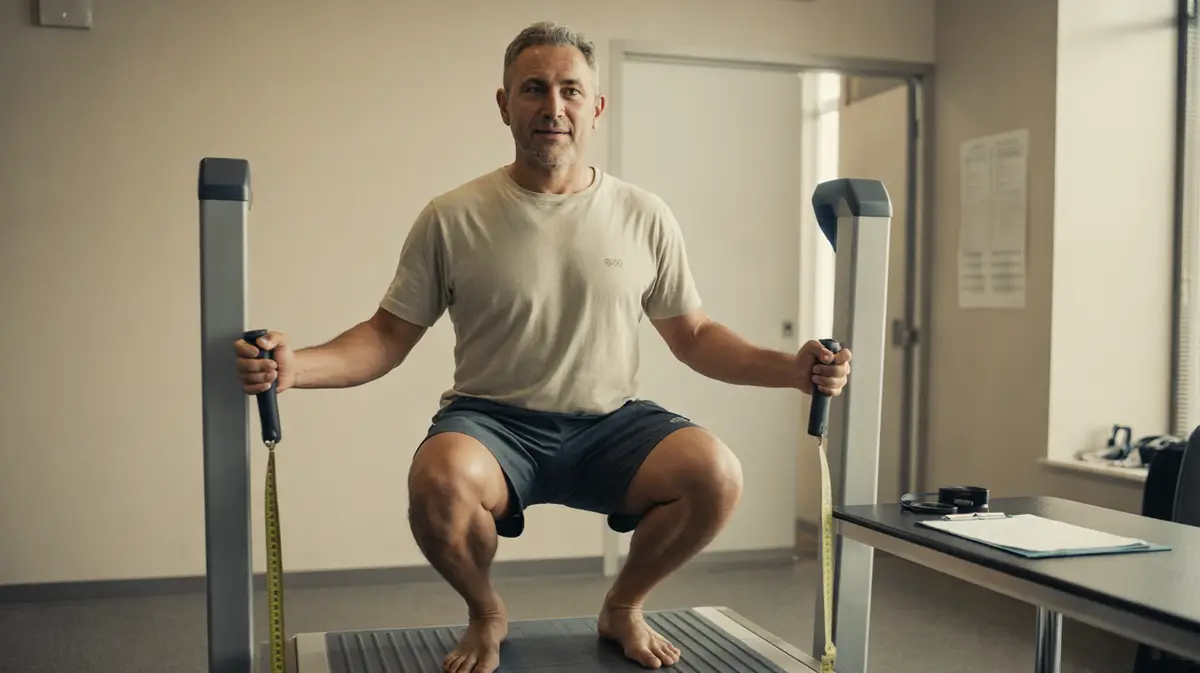
On the day, your height is recorded, you step onto the platform barefoot and hold the hand grips, and the reading takes a minute or two. Your provider then goes through the printout with you. The guide to tracking body composition progress gives tips for keeping conditions consistent between visits.
How often to repeat it during weight loss or TRT
There is no single right interval, and the clinic has not published a fixed rescan schedule. What decides it:
| Factor | Effect on timing |
|---|---|
| Method | BIA can be repeated more often; DXA is limited by radiation exposure |
| Rate of change | Faster weight loss justifies closer checks to catch muscle loss early |
| Dose changes | A new GLP-1 dose or TRT adjustment is a natural point to recheck |
| Training changes | A new strength program changes what you expect to see |
| Day-to-day noise | Rescanning too often mostly measures hydration swings |
On GLP-1 medicines, some of the weight lost can be lean mass, so scans help your provider decide when to push protein and strength work, as covered in muscle loss on semaglutide. On testosterone therapy, scans can show whether lean mass is rising as expected.
Safety and what the scan cannot tell you
BIA and low-dose DXA are low-risk tests. The bigger risk is over-reading the numbers: a scan does not diagnose disease, and a visceral fat estimate is not a substitute for blood sugar, lipid and liver testing. Treat a single odd reading with caution and look at the trend.
Paying for body composition analysis and booking at Ultimate Male
Body composition analysis is part of the start of every medical weight loss plan; ask whether repeat scans are included in your plan’s quote. If you want a scan on its own, the body composition scan cost page explains pricing factors. IRS Publication 502 allows weight-loss program costs as medical expenses when they treat a specific disease diagnosed by a physician, such as obesity or hypertension, so ask your plan administrator about FSA or HSA use. Ultimate Male is direct-pay with itemized receipts and no membership, and offers financing through CareCredit, Prosper Healthcare Lending and Afterpay.
At our San Gabriel and Downey clinics, your first scan is read alongside your labs, so the numbers mean something. Ask your provider which device is used, how to prepare, and when your next scan will be, before you leave. If weight loss medicine is part of the plan, see our semaglutide weight loss program, or book a weight loss evaluation.