
What does an IV add after an endurance event?
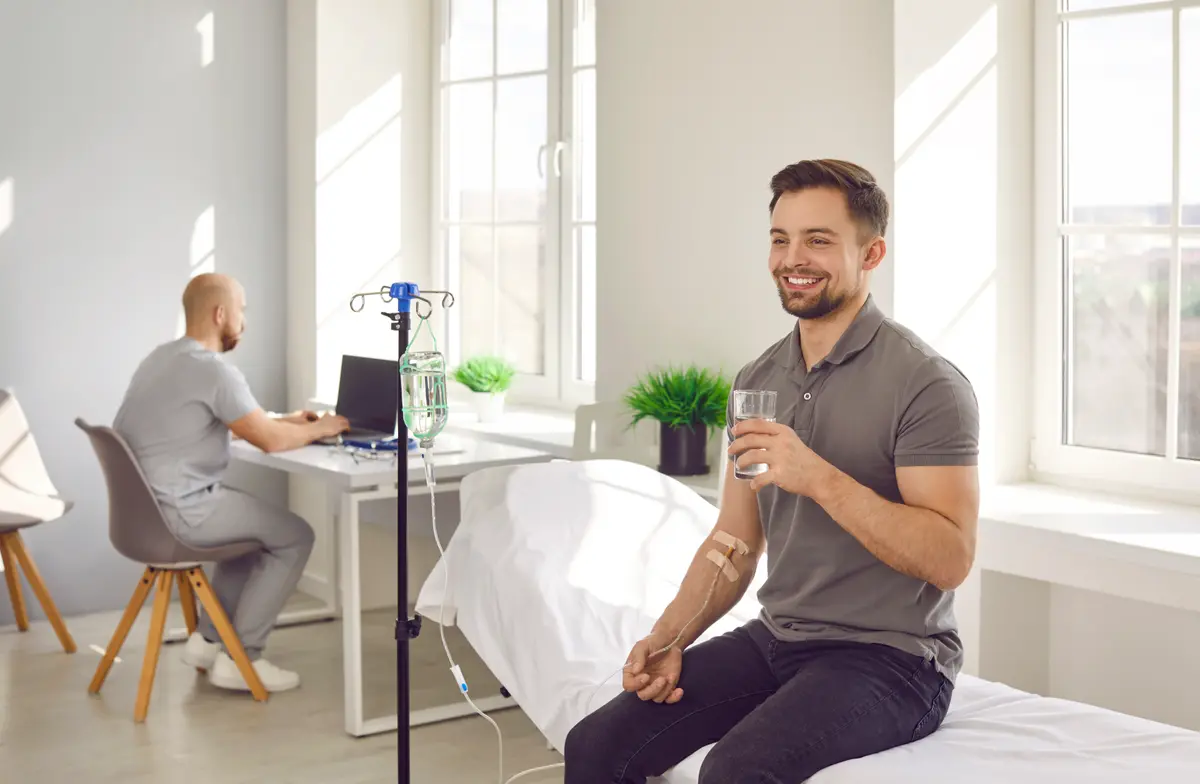
Mainly speed of rehydration. After a marathon, a long ride or a full day of tournament play, you may have lost a lot of sweat, and a drip puts fluid and electrolytes straight into your bloodstream instead of waiting on your stomach.
The research says that head start is real but short. A review of IV versus oral rehydration in athletes found that rehydration is more rapid with IV fluid, but the benefits were generally transient and markers of hydration differed only slightly. Some studies showed better heart function and temperature control with IV fluid, others favored drinking, and later exercise performance was not improved more by either method.
The same review points out a quirk: IV fluid bypasses the mouth and throat, which normally help regulate thirst and the hormone that controls how much water your kidneys hold on to. Drinking does that work naturally.
What about the amino acids and vitamins in the bag?
They are the least proven part. Ultimate Male’s IV blends draw on multivitamins, amino acids, antioxidants and minerals, with each formula chosen with a provider. But the evidence that nutrients given by vein speed muscle repair in well-fed, healthy men is thin. California’s pharmacy board, in its 2024 policy statement on IV hydration, names athletic recovery among the advertised uses and notes there may be very little or no scientific evidence for some mixtures.
For most men, recovery nutrients come more reliably from meals: protein to rebuild muscle, carbohydrate to refill energy stores, and salty food and fluid to replace what you sweated out. A drip can complement that when you cannot eat or drink enough, not replace it.
| Recovery need | What does most of the work | Where an IV fits |
|---|---|---|
| Fluid and salt | Drinking with salty food over several hours | Faster if you cannot keep fluids down |
| Muscle repair | Protein-rich meals and sleep | Limited evidence for amino acids by vein |
| Energy stores | Carbohydrate over the next day | Not a meaningful source |
| Soreness | Time, light movement, sleep | No clear effect |
What does the WADA rule say?
The World Anti-Doping Agency’s Prohibited List bans intravenous infusions or injections of more than a total of 100 mL per 12-hour period, except those legitimately received in the course of hospital treatment, surgical procedures or clinical diagnostic investigations. Outside those settings, an athlete needs a Therapeutic Use Exemption.
That catches more men than they expect. A standard hydration bag is far larger than 100 mL, the contents do not matter, and many amateur and masters events follow the World Anti-Doping Code. If you can be tested, raise this with your provider before anything is planned. Our pages on peptides banned for tested athletes and masters athletes cover related rules.
When is post-race fatigue a medical problem?
Some symptoms after an event are not recovery issues at all. MedlinePlus lists confusion, fainting, not urinating, a rapid heartbeat and rapid breathing among the signs that dehydration needs emergency help.
Call 911 for collapse, confusion, seizures, chest pain or trouble breathing after a race. Those need emergency care, not a recovery drip.
If recovery has been slow for months rather than one weekend, look wider. Sleep, training load, low testosterone and nutrient gaps are common causes, and our page on slow workout recovery in men over 40 walks through them.
How Ultimate Male plans a recovery drip
At our San Gabriel and Downey clinics, the first question for an athlete is whether you can be tested, and the plan is built around that answer. Your provider then reviews your event, your heart and kidney history and your medicines, agrees on the formula and total volume with you, and puts it in writing so you have a record. If oral recovery is the smarter choice, you will hear that.
For timing around a big race, our article on LA Marathon recovery and IV fluids has specifics, and the recovery IV therapy page explains what the visit involves. See all IV therapy options when you are ready.