
The short answer on PRP for ED
The P-Shot is a regenerative approach some men explore for erection quality: platelet-rich plasma (PRP) from your own blood is injected into the penis. It is promising to some, unproven to others, and worth understanding clearly before you decide.
Erectile dysfunction (ED) is often driven by poor blood flow, nerve signal loss and tissue changes, not just hormones. PRP was developed with those factors in mind, which is why it gets attention as a non-surgical option.
At Ultimate Male (San Gabriel and Downey), we offer PRP injections in the style of the P-Shot and, when needed, combine them with diagnostics, TRT, shockwave therapy and ED medications. “P-Shot” is a trademarked name for one PRP protocol; the treatment described here follows the same approach.
What is the P-Shot®?
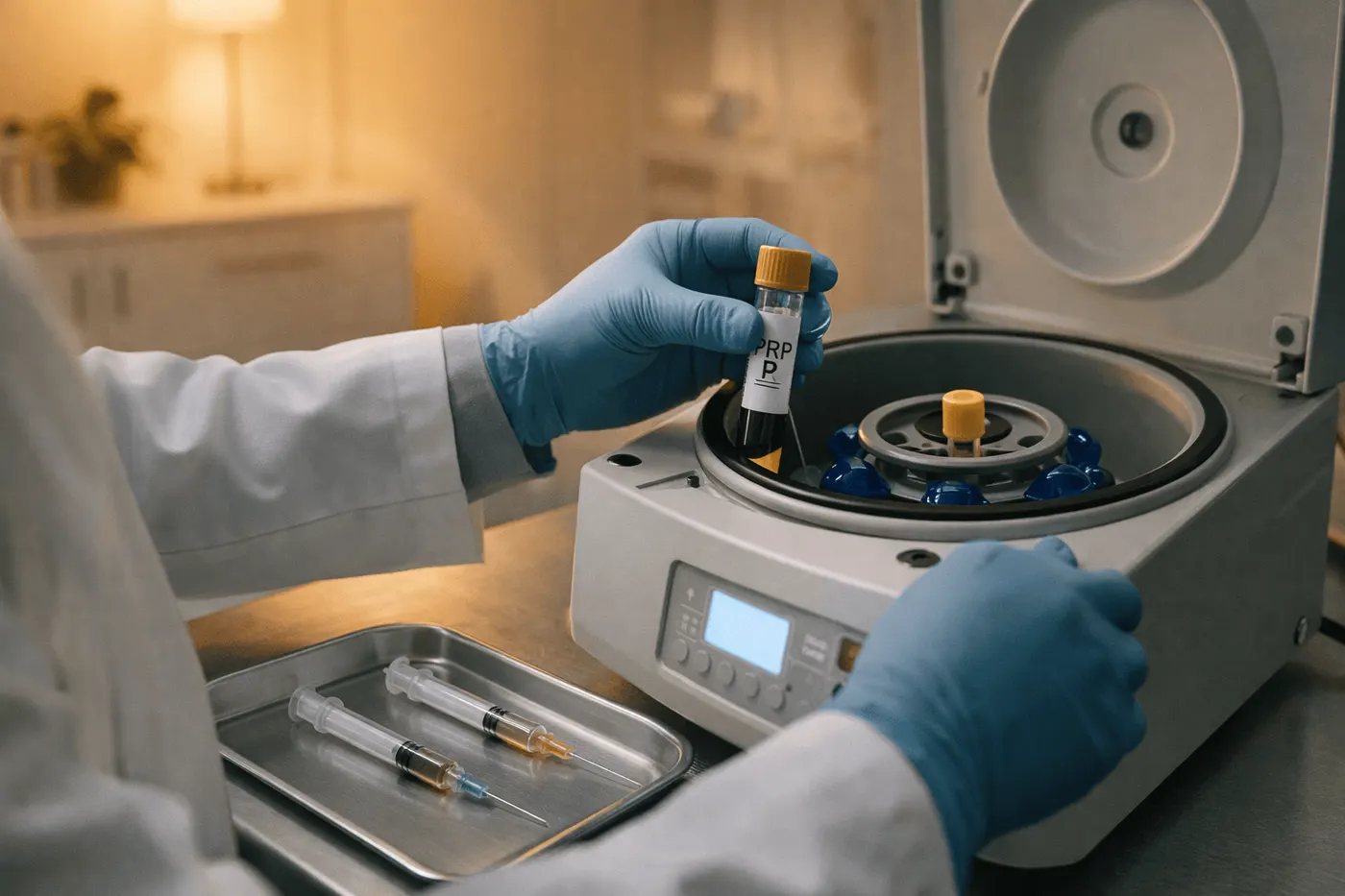
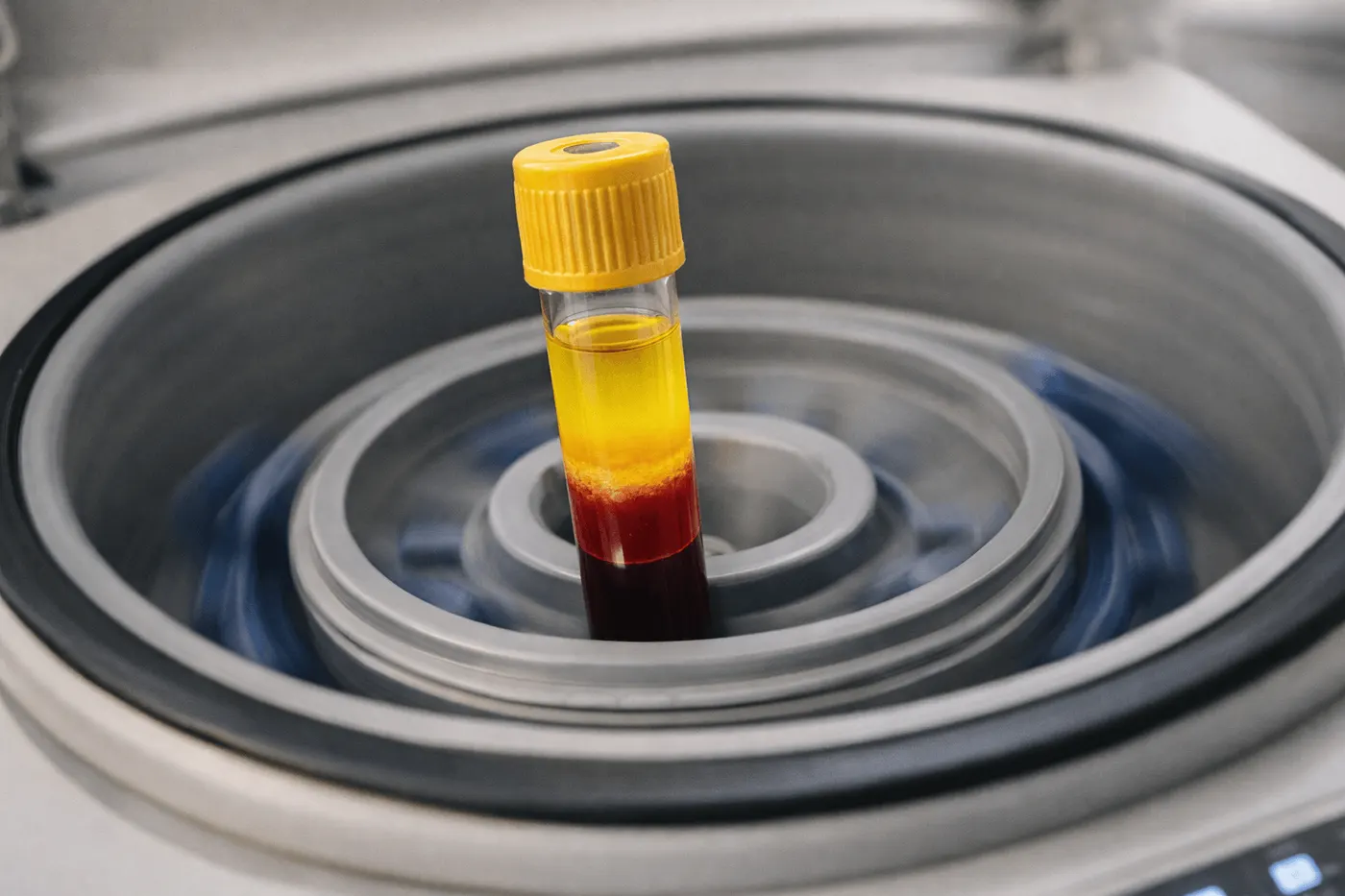
The P-Shot (short for Priapus Shot) uses PRP, a concentrate of platelets and the growth factors they carry, prepared from a sample of your own blood. According to the American Academy of Orthopaedic Surgeons, PRP can hold 5 to 10 times the platelet concentration of normal blood.
Platelets release several growth factors, including:
- Platelet-derived growth factor (PDGF)
- Vascular endothelial growth factor (VEGF)
- Insulin-like growth factor (IGF-1)
- Fibroblast growth factor (FGF)
In theory, these signals support new small blood vessels, nerve repair and tissue remodeling in the erectile tissue. That theory is why PRP is studied for ED, but laboratory reasoning is not the same as proof that erections improve. Our article on how PRP is prepared shows each step.
Who considers the P-Shot, and what does the evidence show?
Men usually ask about PRP when they have mild to moderate ED, weaker or less reliable erections, or reduced sensitivity, and when they want an option that does not involve taking a pill before sex. Some also ask after pills such as sildenafil or tadalafil have given only a partial response, or when diabetes or high blood pressure has affected their erections.
The evidence is genuinely mixed. The International Society for Sexual Medicine summarizes it this way: one placebo-controlled trial of 60 men found 69% of PRP patients reached a meaningful improvement at six months versus 27% on placebo, while a 52-man trial found no difference from saline. A double-blind trial at the University of Miami gave 61 men two injections a month apart and found PRP safe, but no more effective than placebo, with no change in penile blood flow measurements at six months.
Professional guidance reflects that uncertainty. The AUA erectile dysfunction guideline classifies PRP for ED as experimental, and PRP is not FDA-approved for this use. Our answer page on whether PRP works for ED tracks new studies as they appear.
What happens during a P-Shot appointment?
The full visit takes about 45 to 60 minutes and follows four steps:
- A blood draw, just like routine labs
- PRP is separated from the rest of the blood in a centrifuge
- A local numbing agent is applied
- PRP is injected into targeted areas of the penis
Most men feel only mild discomfort and return to normal activity the same day. AAOS notes that injection-site soreness can last a week or two after PRP in other parts of the body.
When will I see results?
There is no reliable timeline, because trials have not settled whether, or how much, PRP helps. Studies measured outcomes from one to six months after the last injection, and AAOS notes that any benefit from PRP generally takes several weeks to appear. The number of sessions is not standardized either; our page on how many PRP treatments for ED explains what goes into that decision.
P-Shot and TRT: when both come up
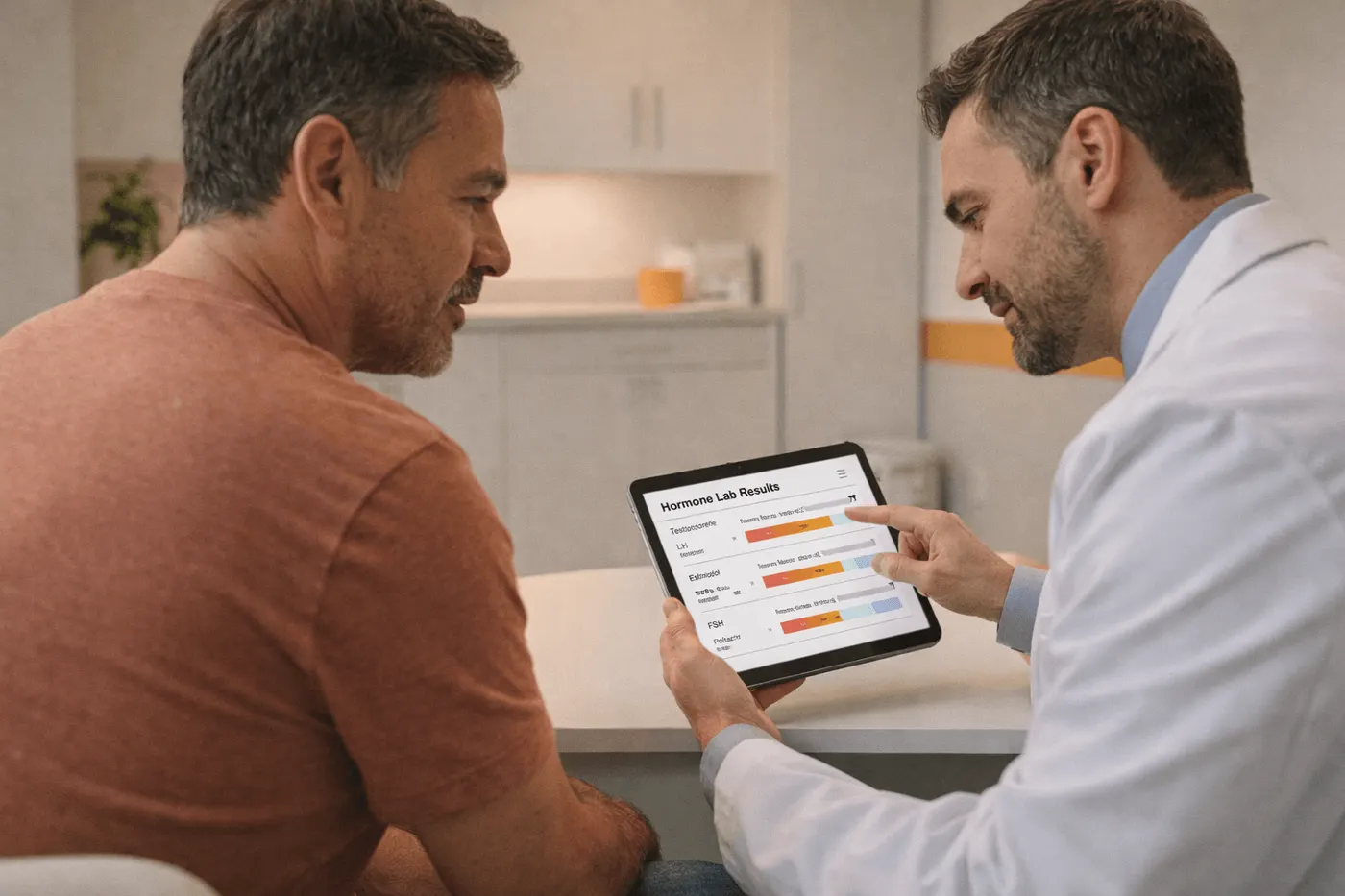
Low testosterone and blood-flow problems often travel together, especially in men with diabetes, obesity or heart disease. When labs confirm low testosterone on two morning tests and symptoms fit, testosterone therapy may be discussed alongside PRP, because the two address different parts of the problem: drive and hormones on one side, local tissue on the other.
Neither one is a complete ED protocol by itself. If testosterone is normal, TRT is not added, and the plan leans on proven ED treatments with PRP as an optional extra.
Is the P-Shot safe?
The trials so far report a reassuring safety record: the Miami trial had no major adverse events and only one minor event in each group. Because PRP comes from your own blood, the risk of an allergic reaction to the product itself is low.
It is still an injection, so bruising, soreness, swelling and, rarely, infection are possible. AAOS reports that the risks of infection, tissue damage and nerve injury with PRP appear similar to those of cortisone injections. Long-term safety data in the penis are limited. If you ever have an erection lasting more than 4 hours after any ED treatment, go to the emergency room.
How Ultimate Male builds an ED plan
We start by measuring rather than guessing: testosterone, estradiol, ED severity and vascular risk factors such as blood pressure, blood sugar and cholesterol. Then we build a personalized ED plan that may include:
- PRP injections for ED
- Shockwave therapy (not FDA-approved for ED; the AUA calls it investigational)
- TRT when low testosterone is confirmed
- Tadalafil or Trimix injections if needed
Results vary, and we explain the evidence for each option before you choose. To talk it through, book an ED consultation at our San Gabriel or Downey clinic, or call or text 626-319-5261. You will get a quote before any treatment is scheduled.
