

Timing: when TRT works and what happens if you stop
Men 35 and older come to Ultimate Male with the same core questions about testosterone replacement therapy (TRT). Here is a clear, practical guide, with sources, to the ones we hear most. The first two are about time.
1) How long until I feel the effects?
Sex drive usually moves first. A review of testosterone studies found that effects on sexual interest appear after about 3 weeks and plateau around 6 weeks, while changes in erections can take up to 6 months. Mood often improves over 3 to 6 weeks, and fat, muscle and strength change over roughly 12 to 16 weeks.
Your provider will often fine-tune the dose in the first months, which can shift that timeline. Our article on how long TRT takes to work breaks it down effect by effect.
2) If I stop TRT, how long until I am back to pre-TRT levels?
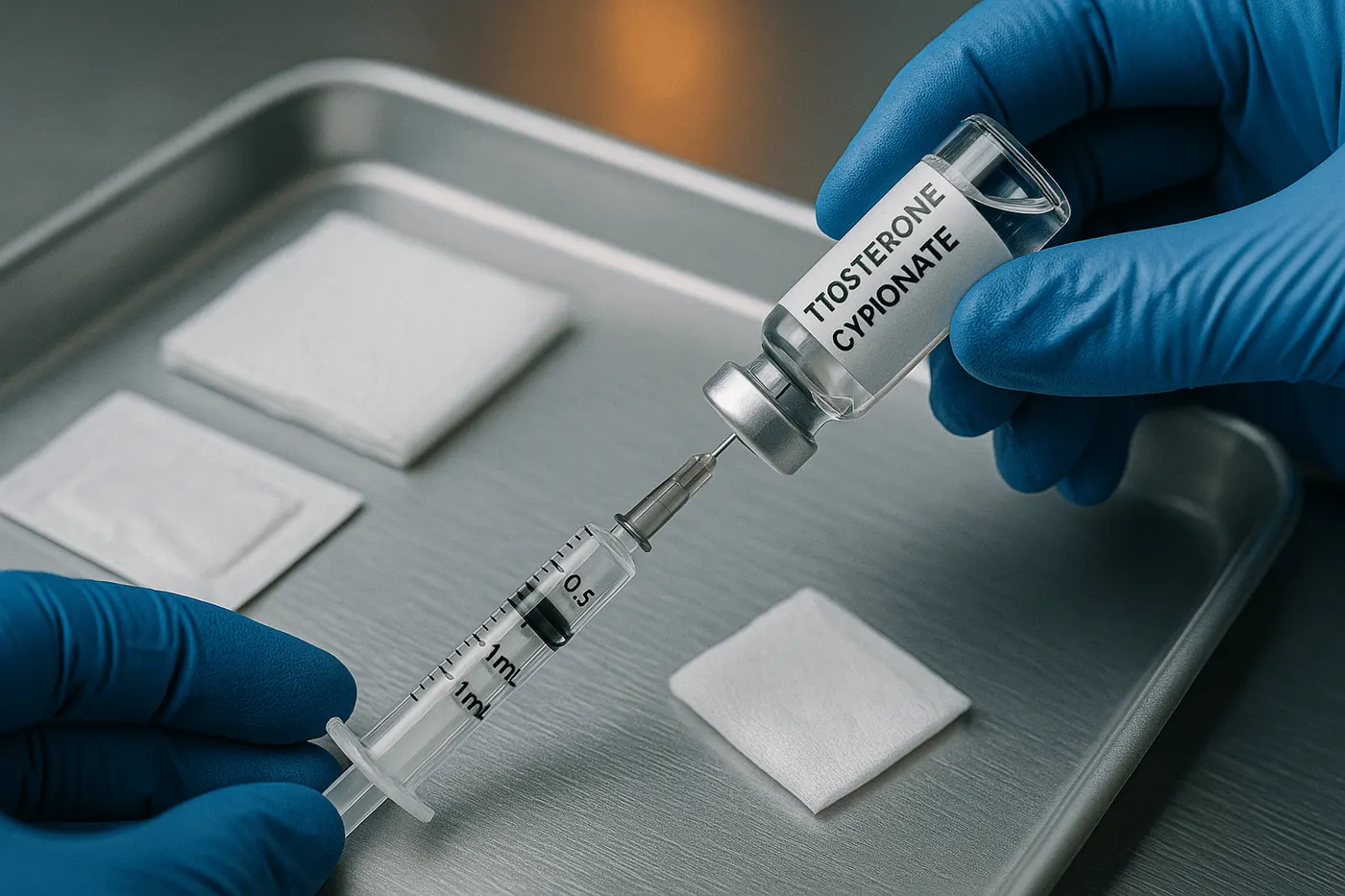
After your last dose, levels from injections fall over the following weeks. The testosterone cypionate label gives a half-life of about eight days. Your own production restarting is slower and varies from man to man, often weeks to months.
When it makes sense, your provider may use hCG while you come off to support the testes’ own output, then recheck your labs. Read more about what happens when you stop TRT.
Your body and fertility
These two questions come up in almost every first visit, often near the end, when men finally feel comfortable asking.
3) Will my penis or testicles shrink?
Penis: no.
Testicles: they may look or feel smaller on testosterone, because the brain stops sending the LH signal that keeps them working when testosterone comes from outside. The change is usually modest and tends to reverse, especially if hCG is part of the plan or you come off TRT with support.
4) Can I have kids on TRT?
Testosterone from outside the body can shut down sperm production. The American Society for Reproductive Medicine notes that it usually leads to low sperm counts or none at all, and that counts generally return after stopping without permanent damage.
If family planning matters, tell us first. The AUA guideline advises against testosterone for men who are actively trying to conceive and lists hCG among the options for men who want to keep their fertility. Lower-dose strategies and sperm banking before starting are also worth discussing.
Labs, levels and follow-up visits
Numbers drive the decision to start and every adjustment after that, so it pays to know what is being measured and when.
5) What are normal testosterone levels, and when is TRT recommended?
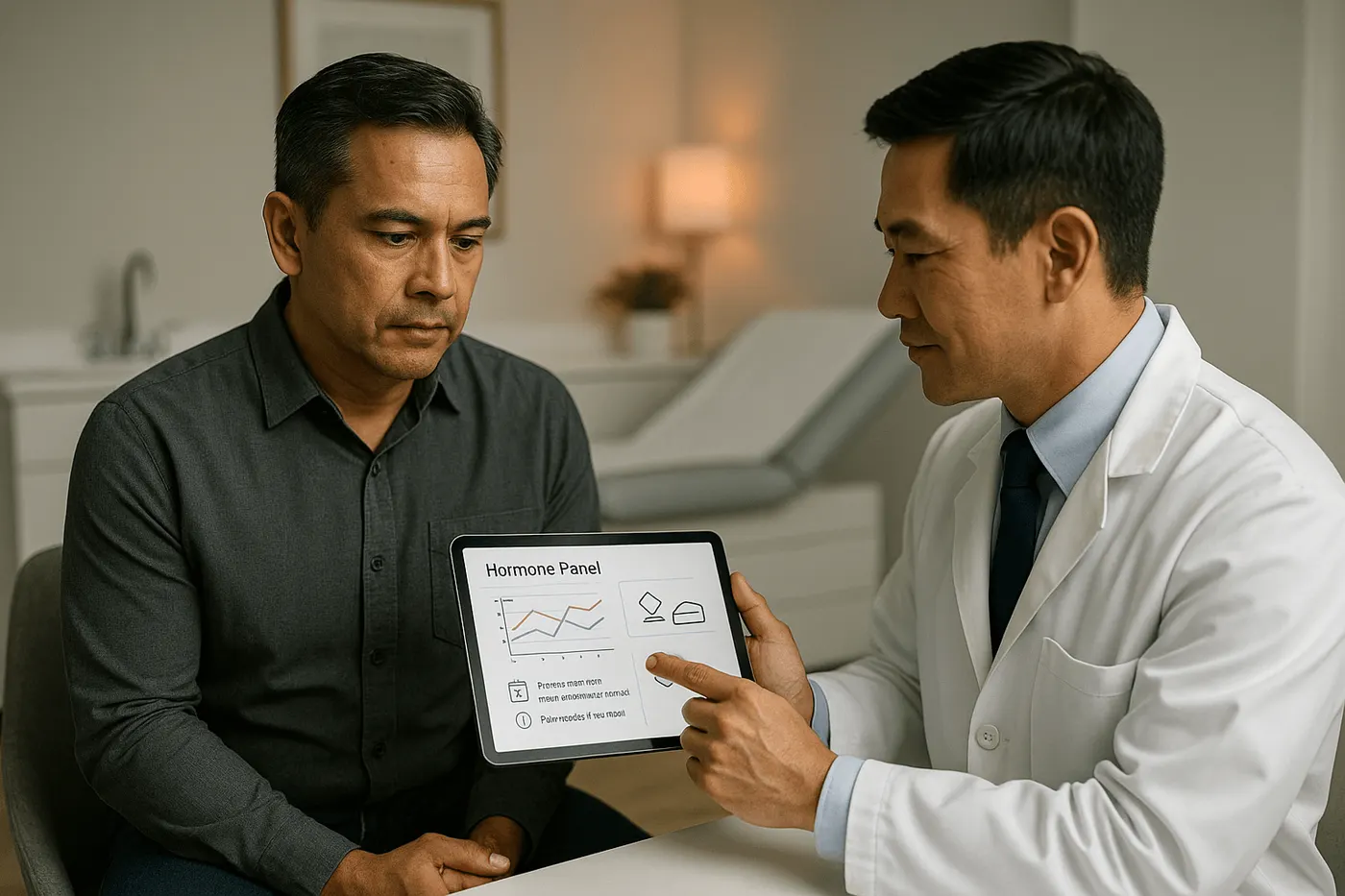
We treat the patient and the labs together, not a number alone. The AUA uses a total testosterone below 300 ng/dL as a reasonable cutoff, confirmed on two separate early-morning tests. TRT is considered when those results are low, symptoms fit and nothing rules treatment out. Our page on what testosterone level qualifies for TRT explains the gray zone.
6) How often are labs and visits?
At Ultimate Male, a typical rhythm is a baseline panel, a recheck about six to eight weeks after starting or changing a dose, then every three to six months. We check total and free testosterone, SHBG, estradiol, CBC and hematocrit, CMP, lipids and PSA as indicated.
That is closer follow-up than the minimum in guidelines. The AUA suggests measuring testosterone every 6 to 12 months while on therapy, and the Endocrine Society guideline calls for hematocrit checks early in treatment and then yearly. See how often you need blood work on TRT for the details.
Choosing how you take testosterone
Most men can do well with more than one method, so the choice often comes down to routine, comfort and goals.
7) Injections, oral, gel or pellets: how do I choose?
- Injections (testosterone cypionate): precise and flexible, often given once or twice a week.
- Oral (Kyzatrex): needle-free; taken with meals for steady levels.
- Gel: daily and needle-free, but it can transfer to others through skin contact. Ultimate Male does not currently offer gel.
- Pellets (Pellecome): long-acting convenience over several months.
We match the method to your schedule, how your body absorbs it and your goals. Our guide to testosterone therapy options compares each one in depth.
Side effects, ED and prostate safety
Every treatment has tradeoffs, and these are the three areas men ask about most.
8) Will TRT help ED?
If ED is related to low testosterone, it may. The AUA tells men with confirmed deficiency that treatment may improve erectile function and sex drive, and it can help ED medicines work better. When blood flow is the bigger problem, we also offer shockwave therapy, PRP and other ED treatment options.
9) What about side effects such as hematocrit, estrogen, acne and hair?
We monitor and manage each one:
- Hematocrit: testosterone raises red cell production, so hematocrit can climb on TRT. The Endocrine Society advises stopping therapy if hematocrit goes above 54% until it comes down, then restarting at a lower dose. Dose timing and other adjustments are your provider’s call. Read more about high hematocrit on TRT.
- Estrogen balance: dosing strategies first, with medication only if clinically indicated.
- Skin and hair: adjusting the form or schedule, plus skincare support.
10) Does TRT raise prostate cancer risk?
Current evidence does not show an increase when men are screened and monitored. In a large randomized trial in JAMA Network Open, over 5,000 men with low testosterone were treated for an average of about 22 months, and high-grade prostate cancer was rare and not significantly different between the testosterone and placebo groups. PSA did rise more with testosterone, which is why we track it and coordinate care based on your history.
Living with TRT long term
TRT is a long-term routine for most men, so the last questions are about everyday life.
11) Will TRT affect sleep, weight and training?
TRT can support lean muscle and a modest drop in fat, especially when you lift, do some cardio, eat enough protein and sleep well. It is not a sleep treatment, and untreated sleep apnea should be addressed before or alongside therapy. Our guide to strength training on TRT after 40 shows how to build the routine.
12) What happens if I ever want to stop?
We plan an off-ramp instead of an abrupt stop, sometimes with hCG, and then retest. Recovery time varies, and many men return to their own baseline over several weeks to months. Symptoms of low testosterone can return as levels fall, so we plan for that together.
Ready for a clear plan?
Your questions deserve answers based on your own labs, not a one-size template. Book a testosterone consultation at Ultimate Male, serving San Gabriel and Downey, starting with a free 10-minute call and same-day labs. Coming in for a consult does not mean you will start TRT; it means you will leave with answers.
Learn more about testosterone therapy at Ultimate Male, call or text 626-319-5261, or book online.
