

What happens in your first 90 days on TRT?
Your body adapts, your labs settle and your dose gets fine-tuned. Starting testosterone replacement therapy (TRT) is a meaningful decision for men 35 and older who want to feel stronger and more energetic, and the first three months set the pattern for everything after.
Here is an evidence-based roadmap of what usually happens during your first 90 days with testosterone therapy at Ultimate Male. Everyone moves at a different pace, so treat the timings as typical ranges rather than deadlines.
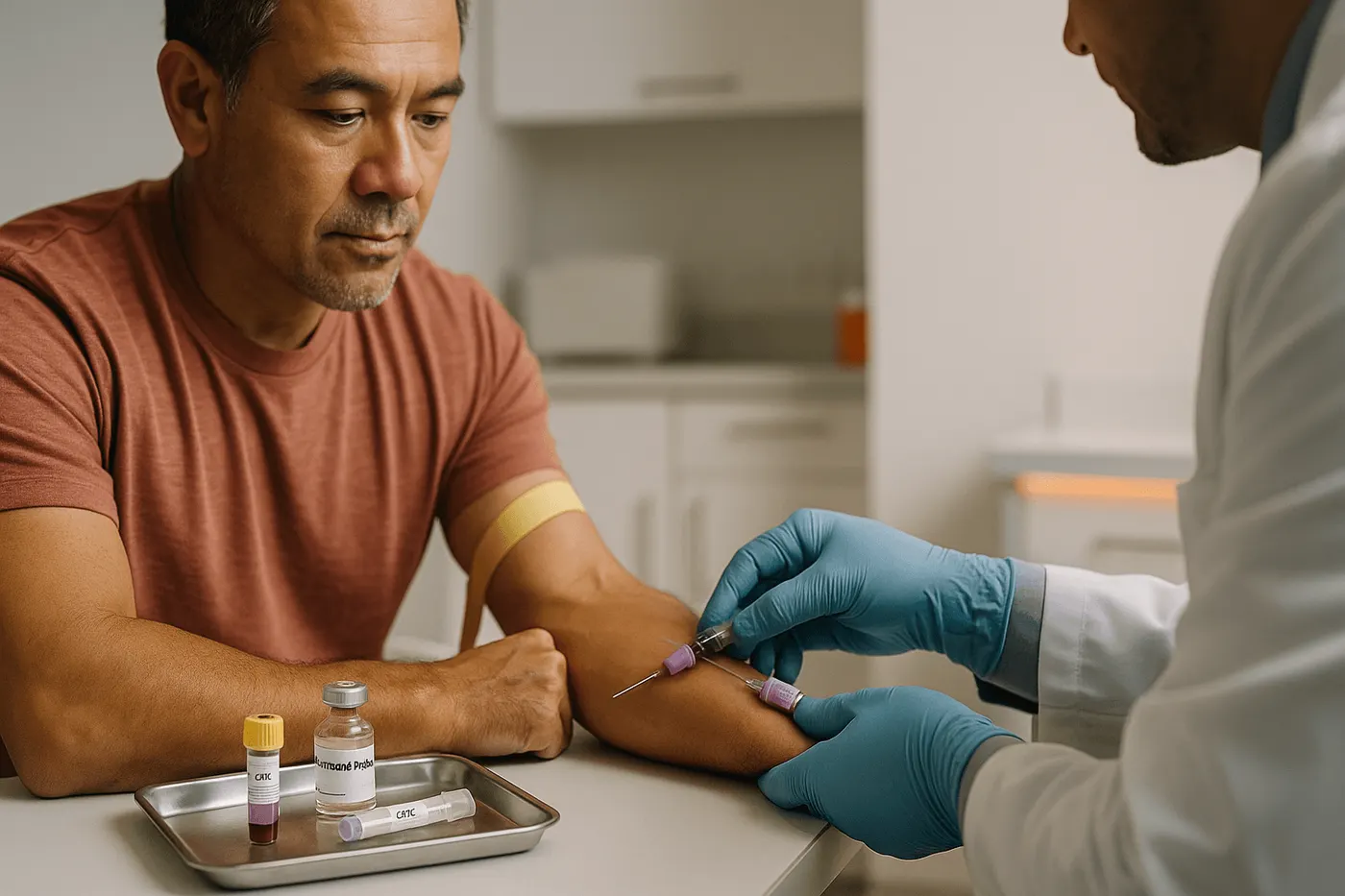
Week 0: baseline labs and pre-screening
Before treatment, we run a hormone and safety panel to set your starting profile. Our TRT pre-screening panel includes:
- total testosterone,
- estradiol,
- PSA,
- a complete blood count, including platelets.
These labs help your provider dose safely and catch problems such as estrogen imbalance, rising hematocrit or prostate concerns early. Your provider adds LH, FSH, free testosterone or other markers when your history calls for them, and checks your blood pressure, since the FDA’s 2025 labeling update confirmed that testosterone products can raise it.
Weeks 1 to 12: what changes and when
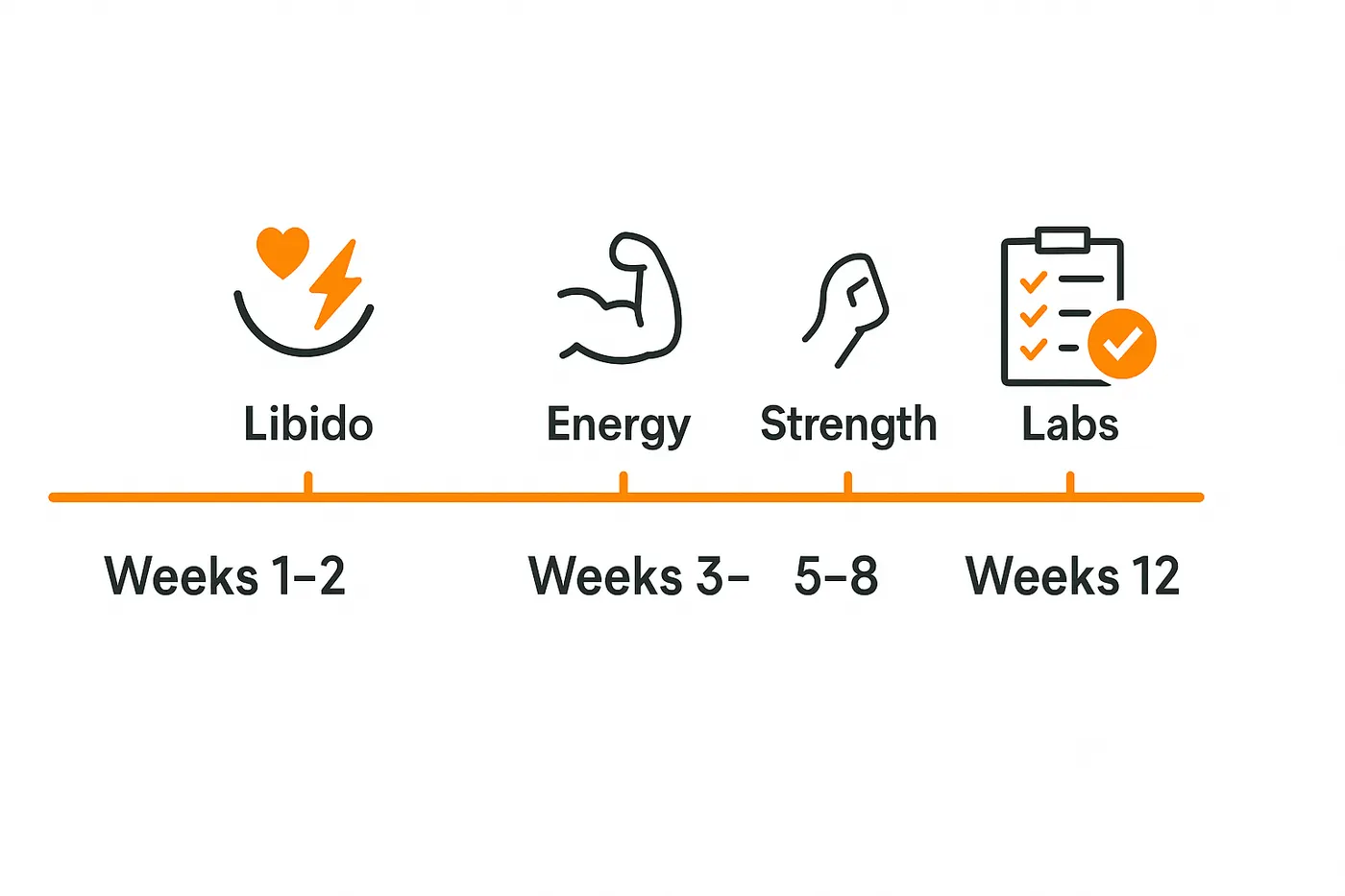
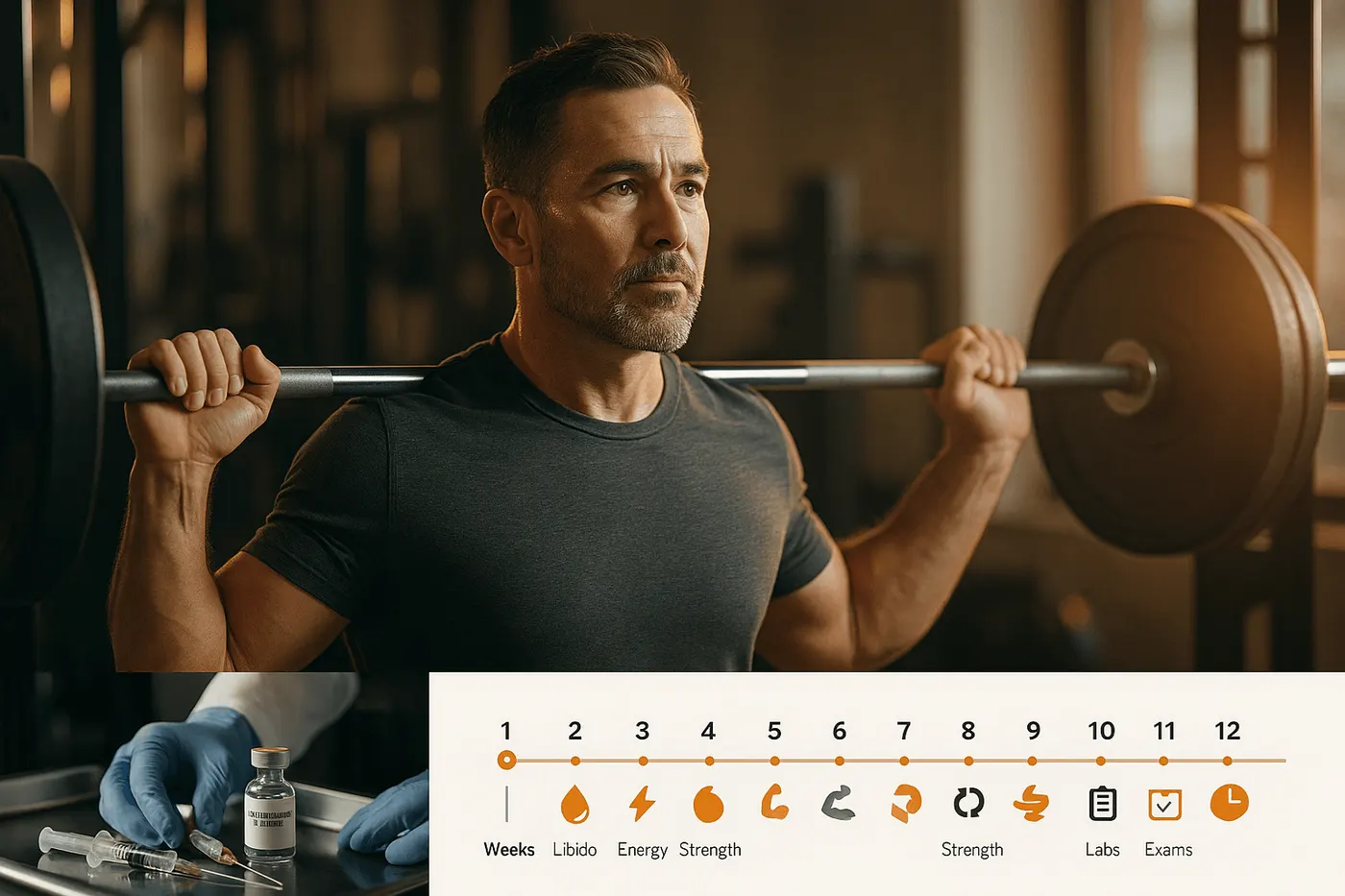
Different effects arrive on different clocks. A review in the European Journal of Endocrinology pooled published studies to map when each effect of testosterone treatment tends to appear, and the stages below follow that research.
Weeks 1 to 2: hormone levels begin to settle
Your body is adjusting to steadier testosterone. Some men notice early shifts in morning energy, motivation or workout recovery, and many notice little at all yet. That is normal: in the review, measurable effects on sexual interest and quality of life started at around three weeks. It is subtle, but the foundation is being built.
Weeks 3 to 6: real symptom changes start
This is when many men begin to say they feel like themselves again. Common changes in this window:
- sexual interest rising, typically from about week 3 and leveling off around week 6,
- improved mood and mental resilience, with effects on low mood detectable from weeks 3 to 6,
- more consistent energy through the day,
- faster recovery after physical work.
Estradiol can shift during this stage, and red blood cell counts start to climb more gradually; the review found effects on red cell production became clear at about three months. Both are expected and manageable with dose or schedule changes.
Your first dose is an informed starting point, not a final answer, and adjustments are a normal part of the first months. The AUA guideline recommends adjusting dosing to bring total testosterone into the middle of the normal range. That is why we never “set and forget” TRT.
Weeks 8 to 12: the first full check-in window
By now your testosterone levels have settled into a pattern your provider can measure and compare with your symptoms. Changes men often notice by this point:
- a stronger, steadier libido,
- improving erections, which can keep getting better for up to six months,
- better strength and muscle retention, with fat and lean mass changes usually appearing from weeks 12 to 16,
- clearer thinking and sharper focus.
The Endocrine Society guideline recommends seeing patients 3 to 6 months after starting treatment to check symptoms, testosterone level and hematocrit, then yearly, and our hematocrit guide explains what your number means. Blood pressure is rechecked at these visits too.
TRT also tends to work better alongside healthy habits. Some men pair it with:
- medical weight loss with semaglutide or tirzepatide,
- IV nutrient therapy,
- a consistent sleep schedule,
- regular resistance training.
When should you call the clinic, and when is it an emergency?
Call the clinic for side effects that are bothersome but not urgent. The ISSM patient sheet lists acne, breast growth or tenderness, swelling of the feet and hands, new snoring or sleep apnea, and an overproduction of red blood cells among the possible side effects. Our guide to TRT warning signs covers when to call.
Call 911 or go to the nearest emergency room for chest pain, trouble breathing, signs of a stroke such as face drooping or arm weakness, or a painful, swollen leg, which can signal a blood clot. Our article on the FDA’s blood clot warning for testosterone explains that risk.
Your TRT options at Ultimate Male
We tailor treatment to your schedule, goals and comfort with each method:
- Injectable testosterone, under the skin or into the muscle, given in clinic or at home on a schedule your provider sets.
- Kyzatrex oral testosterone, a needle-free capsule taken with food.
- Pellecome testosterone pellets, placed under the skin for steady release over several months.
- HCG (Pregnyl), which stimulates your own production and is a fertility-conscious choice, alone or alongside testosterone.
Start your first 90 days with a plan
At Ultimate Male, the 90 days begin before the first dose: a free 10-minute phone call, same-day blood work at San Gabriel or Downey with results in 24 to 48 hours, and a one-on-one consultation with a PA-C or MD who decides with you whether treatment fits. If it does, you leave with clear instructions, a follow-up date and a lab schedule.
From there, each check-in compares how you feel with what your labs show, and the plan changes when it needs to. If you want to know what early progress looks like, read the first signs your TRT is working, then book your consultation.