
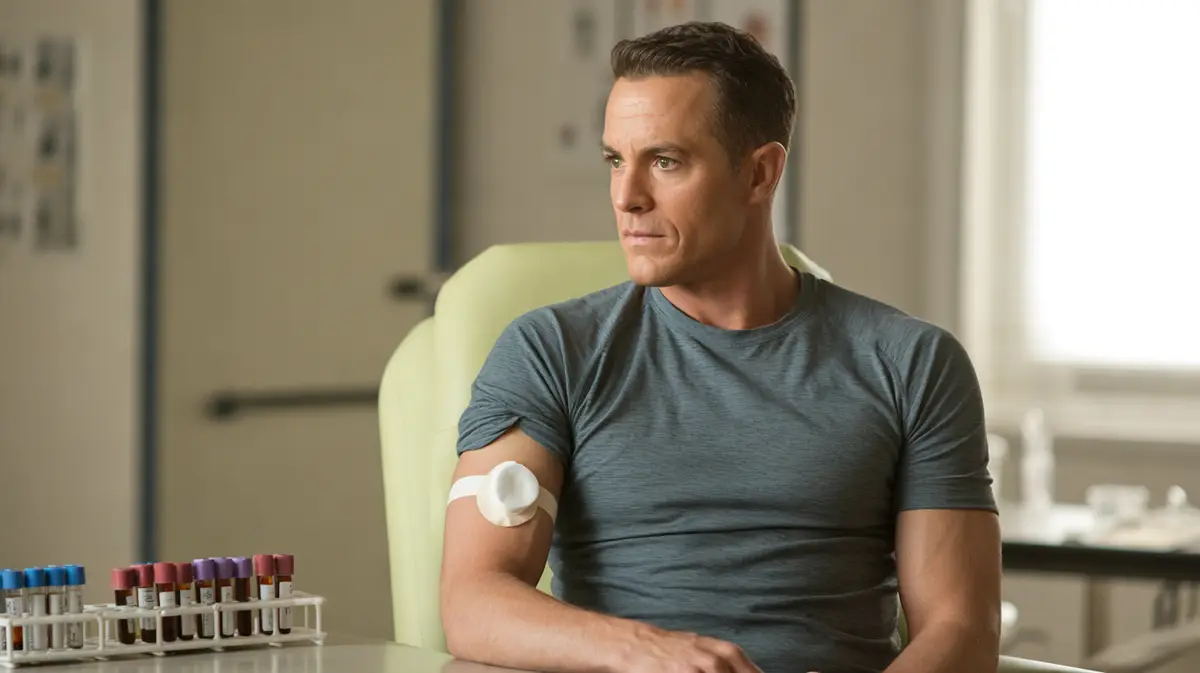
How many blood draws does TRT need in year one?
In year one, expect a baseline panel before you start and two to three follow-up draws, more if your dose changes. That pattern comes from the two main guidelines. The Endocrine Society guideline recommends checking testosterone 3 to 6 months after starting, measuring hematocrit at baseline, at 3 to 6 months and then yearly, and evaluating each man 3 to 12 months in and then annually.
The AUA guideline adds that a follow-up testosterone level should be measured after an appropriate interval once treatment starts, and that hemoglobin, hematocrit and, for men over 40, PSA should be measured before therapy begins. Put together, a typical first year looks like this:
| Draw | Guideline timing | Usually checked | What affects the cost |
|---|---|---|---|
| Baseline | Before starting | Two early-morning testosterone tests, CBC with hematocrit, PSA if over 40, estradiol | Bundled into the TRT pre-screening panel at Ultimate Male |
| First follow-up | 3 to 6 months | Testosterone, hematocrit | Priced per draw |
| Prostate check | 3 to 12 months, for men who choose monitoring | PSA | Often combined with another draw |
| Dose-change recheck | After any adjustment | Testosterone, sometimes hematocrit | Adds a draw you may not have planned |
| One-year review | Around 12 months | Testosterone, hematocrit, symptom review | Priced per draw |
How does monitoring change after the first year?
After the first year, a stable plan usually needs one or two draws a year. The AUA guideline says testosterone levels should be measured every 6 to 12 months while on therapy, and the Endocrine Society schedule moves hematocrit and the overall review to once a year. PSA then follows standard prostate screening guidance rather than a TRT-specific timetable.
Changes reset the clock. A new form of testosterone, a dose change or a rising hematocrit brings back the shorter intervals for a while, so year-two costs depend on how steady your plan is. Our page on how often you need blood work on TRT covers the timing in more detail.
What does each draw check, and why does form matter?
Each follow-up draw centers on a few markers, and the form of testosterone you use can add draws. Hematocrit is the share of your blood made up of red cells; MedlinePlus explains that a high level can mean too many red cells, which is why it is watched on TRT. Our page on the hematocrit blood test for men covers what the numbers mean, and the PSA blood test page covers the prostate side.
Form changes the schedule. The Kyzatrex label, for example, asks for a testosterone level 7 days after starting or after any dose change and for hemoglobin or hematocrit about every 3 months, which is more often than the general guideline schedule. Injections and pellets also need draws timed to the dosing cycle; our page on trough vs peak labs on TRT explains why timing changes the result.
How to budget labs beyond the monthly treatment fee
The simplest budget is the number of draws you expect in a year multiplied by the price of each panel. Ask three questions before you commit: which draws are included in your plan, what each additional draw costs, and whether a dose-change recheck is priced the same as a routine one.
Ultimate Male does not bill insurance, so follow-up labs are paid directly. Lab fees that are part of medical care are generally payable with HSA or FSA funds, so the clinic’s itemized receipt covers those draws too, and CareCredit, Prosper Healthcare Lending or Afterpay financing can absorb a year of draws if you prefer to pay over time. If you are comparing clinics, add the lab line to each quote before comparing monthly prices, since monitoring can be left out of a headline figure. For lab prices outside a treatment plan, see blood work cost without insurance.
How Ultimate Male handles TRT monitoring
At Ultimate Male, monitoring is part of the plan, not an afterthought. The TRT pre-screening panel, covering total testosterone, estradiol, PSA and a complete blood count, is bundled with your first consultation. Follow-up draws happen on site, same day, at San Gabriel and Downey, with results in 24 to 48 hours, and your provider reviews them with you and adjusts the plan as your body responds.
Your quote shows the follow-up draws expected in year one before you book, and you pay per visit with no membership. If life gets busy and a draw slips, our answer on missed TRT follow-up labs explains what happens next. Monitoring is what keeps testosterone therapy safe over the long run, so it belongs in the budget from day one.
