
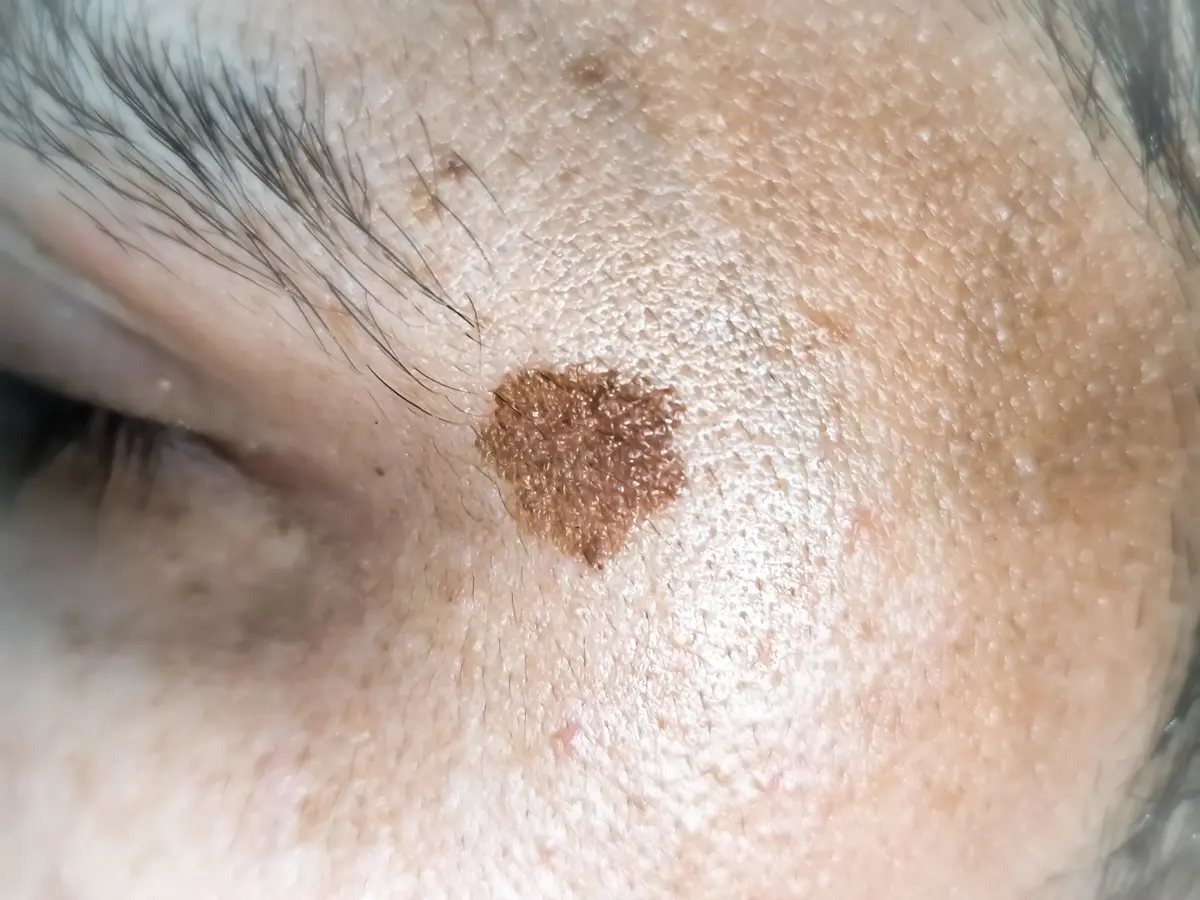
How much time off do you need?
Most men need none. PicoSure Pro is a short in-office treatment, and you can drive yourself home or back to work. The American Academy of Dermatology notes that pigment lasers can be used at varying intensity for minimal downtime, with a trade-off: the fewer sessions you want, the more downtime each one tends to bring.
What you do get is about a week of visible healing on each treated spot. It is noticeable up close, it rarely stops anyone from working, and it is the reason to book with an event two weeks or more away.
What does the skin look like each day?
Each treated spot follows a similar path, though larger and darker spots take a little longer.
- Right after treatment. The area looks pink and may feel warm, like mild sunburn. Some spots turn a shade darker almost immediately, and a little puffiness is common.
- The first evening. Redness fades over a few hours. The spots now look like small, slightly raised brown or gray patches.
- The next few days. The spots darken further and form thin, coffee-colored crusts. This is the stage people notice most.
- Toward the end of the first week. The crusts start to lift at the edges and flake off on their own, usually during washing.
- The weeks after. Fresh skin underneath may look pink or a little lighter than its surroundings before it blends in.
The AAD’s page on age spots describes crusting and temporary darkening as expected side effects of laser treatment that tend to fade quickly. Let the crusts fall off by themselves. Picking them early can leave a mark that lasts far longer than the crust would have.
Can you work, shave and train that week?
You can carry on with most of your week, with a few adjustments while the crusts are present.
| Activity | During the crusting days | Once crusts have flaked |
|---|---|---|
| Office or remote work | Fine | Fine |
| Outdoor work | Cover up with a hat and sunscreen; shade breaks | Same sun habits continue |
| Shaving | Shave around crusts, not across them; a trimmer helps | Normal shaving |
| Gym training | Fine indoors; wipe sweat gently rather than scrubbing | Normal training |
| Sauna, steam room, hot yoga | Skip; heat irritates healing skin | Ask at your follow-up |
| Swimming | Wait until crusts are gone | Fine, with sunscreen outdoors |
Wash the area gently with your fingertips, pat dry and use a plain moisturizer if it feels tight.
What are the sun rules in the weeks after?
Sun on healing skin is the main thing that can undo the treatment. New UV exposure can trigger fresh pigment or a rebound darkening in the treated spot, which takes months to fade. The AAD recommends a broad-spectrum, water-resistant sunscreen with SPF 30 or higher on all skin not covered by clothing, and it warns that age spots can return without sun protection.
The AAD’s sunscreen guidance adds two details men tend to miss: reapply about every two hours when you are outdoors, and do not skip it on gray days, because up to 80% of the sun’s UV rays can pass through clouds. Pair the sunscreen with a brimmed hat for yardwork, golf or a commute with the window down.
How long do the strict rules last? At least until the treated skin has fully evened out, which can take several weeks. After that, the same habits are what stop new spots from forming. Our answer on whether PicoSure removes sun spots permanently explains why.
Does downtime differ for darker skin tones?
The healing pattern is similar, but the plan changes. Men with medium to darker skin are usually treated at gentler settings, which can mean lighter crusting per session and more sessions overall. The risk to watch is a rebound dark mark rather than the crusts themselves, and our answer on PicoSure for Asian and Latino skin covers how test spots reduce it.
Call the clinic if a treated area blisters, oozes, becomes more painful after the first day or looks infected.
Planning PicoSure Pro around your calendar
At Ultimate Male, your consultation includes a look at your calendar as well as your skin. We help you pick a treatment day that keeps the crusting week away from photos, presentations and travel, and we tell you whether a second session is likely so you can plan both. Season matters too; our answer on when to treat sun spots explains why fall and winter are easier.
See how a session runs on our PicoSure Pro for sun spots page, then book through our aesthetics team at San Gabriel or Downey, or call 626-319-5261.
