
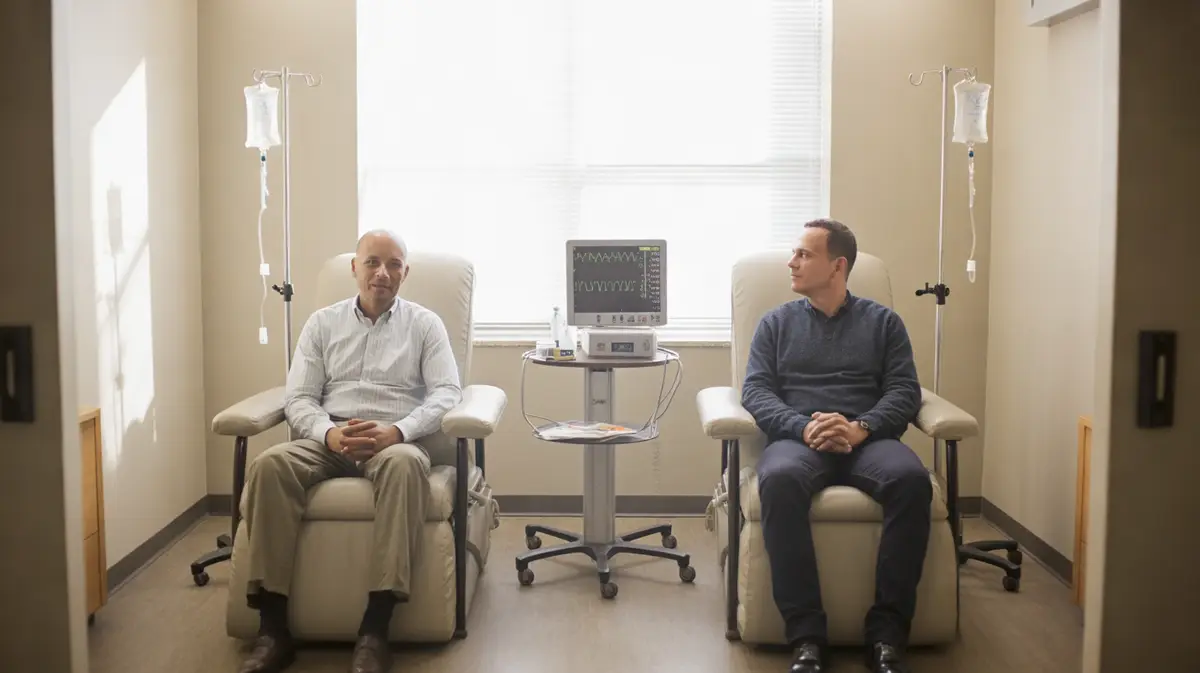
Which setting suits whom
Mobile IV suits a healthy man with no heart, kidney or blood pressure problems who wants a simple hydration or vitamin drip and values not having to drive anywhere, for example after a long flight or during a busy week. An in-clinic session suits men with chronic conditions or several medicines, anyone trying IV therapy for the first time, men interested in longer infusions such as NAD+, and anyone who would rather have a provider in the building if something goes wrong. Both can be done safely. The difference is how much structure surrounds the drip.
Clinic and mobile IV side by side
| Mobile IV at home | In-clinic IV | |
|---|---|---|
| Location | Home, office, hotel or gym | Treatment room at the clinic |
| Health-history review | Varies; often a form plus a remote or in-person check | Structured review with the provider before the first session |
| Vital signs | Varies by service | Blood pressure, heart rate and other vitals before you start |
| Where the bag is prepared | Varies; should follow sterile compounding standards | Prepared in a controlled clinic space |
| If you react | Nurse responds; further help depends on the setting | Provider and supplies on site |
| Labs when needed | Usually separate | Same-day blood draw available on site at Ultimate Male |
| Convenience | Highest | You travel to the clinic |
| Extra fees | May include travel or call-out fees | None for travel |
What the regulators say
California’s pharmacy board issued a policy statement on IV hydration in 2024 that applies to any setting. It describes IV hydration as a medical treatment that requires an examination by an authorized provider before it is given, and it says that adding vitamins or electrolytes to a bag counts as sterile compounding, which should be done by trained people in a way that prevents contamination. The board also notes that treatments may be offered in offices, workplaces, hotels, gyms or private homes, and that it is aware of patients who were harmed.
None of this means a mobile service is unsafe. It means the same standards apply on your couch as in a clinic, and it is fair to ask how a service meets them. Our article on California’s IV drip bar rules and our answer on whether IV therapy is regulated in California go further.
What a clinic visit adds
The value of a clinic visit is mostly in the steps around the drip.
- A health-history review. Heart failure, kidney disease, uncontrolled blood pressure and certain medicines change how much fluid is safe and which additives make sense. Our page on who should not get IV therapy lists the common red flags.
- Vital signs before and during. A blood pressure and heart rate reading before the line goes in catches problems a form cannot.
- A controlled, sterile setup. Bags are prepared and lines placed in a space designed for it, which matters most when additives are mixed in.
- A provider on site if you react. Most IV sessions are uneventful, but fainting, a vein that leaks fluid into the arm, or an allergic reaction can happen. MedlinePlus notes that anaphylaxis symptoms often develop within seconds or minutes and call for 911 and epinephrine right away.
- Labs on the same visit. If your goal is energy and you have not had blood work recently, a same-day draw can show whether a deficiency, thyroid issue or low testosterone is the real story. See our page on blood work before IV therapy.
Side effects and safety in either setting
The usual side effects are the same anywhere: a pinch when the line goes in, a bruise afterward, and a cool feeling in the arm as fluid flows. Less common problems include an irritated or inflamed vein, fluid leaking under the skin around the catheter, lightheadedness, and rarely infection.
Two things raise the stakes outside a clinic: how far you are from help, and how much the nurse can do alone. If you choose mobile IV, ask what the nurse carries for a reaction and what the plan is if you need more help. Any time you have trouble breathing, swelling of the face or throat, chest pain or confusion during an infusion, the drip should stop and someone should call 911.
Questions to ask any IV provider
The pharmacy board’s own list is a good checklist, whichever setting you choose:
- Did a licensed provider review my history and approve this specific drip?
- Which pharmacy supplies the drip ingredients, and how are they kept between visits?
- Who mixes the bag, and are they licensed and trained to do it?
- Is the medical director on site, and how often are records reviewed?
- Can I see the licenses of the people treating me? You can confirm any California license through the Department of Consumer Affairs license search.
Convenience, cost and the Ultimate Male approach
Mobile IV can cost more per session when travel and the nurse’s time on the road are built in, though some men find that worth it. A clinic session asks you to drive and park, and in return bundles the review, vitals and on-site support into the visit.
IV therapy at Ultimate Male is given in the clinic, in San Gabriel or Downey. Your first session starts with a review of your health history and medicines and a set of vital signs, and the provider can add labs if your goal points to a deficiency. Sessions for hydration, energy, recovery and immune support run about an hour, and you get a quote before booking. Read what to expect at your first IV session, or if you are weighing a drip against simply drinking more, see IV hydration versus electrolyte drinks. All formulas are listed on the IV therapy page.
