
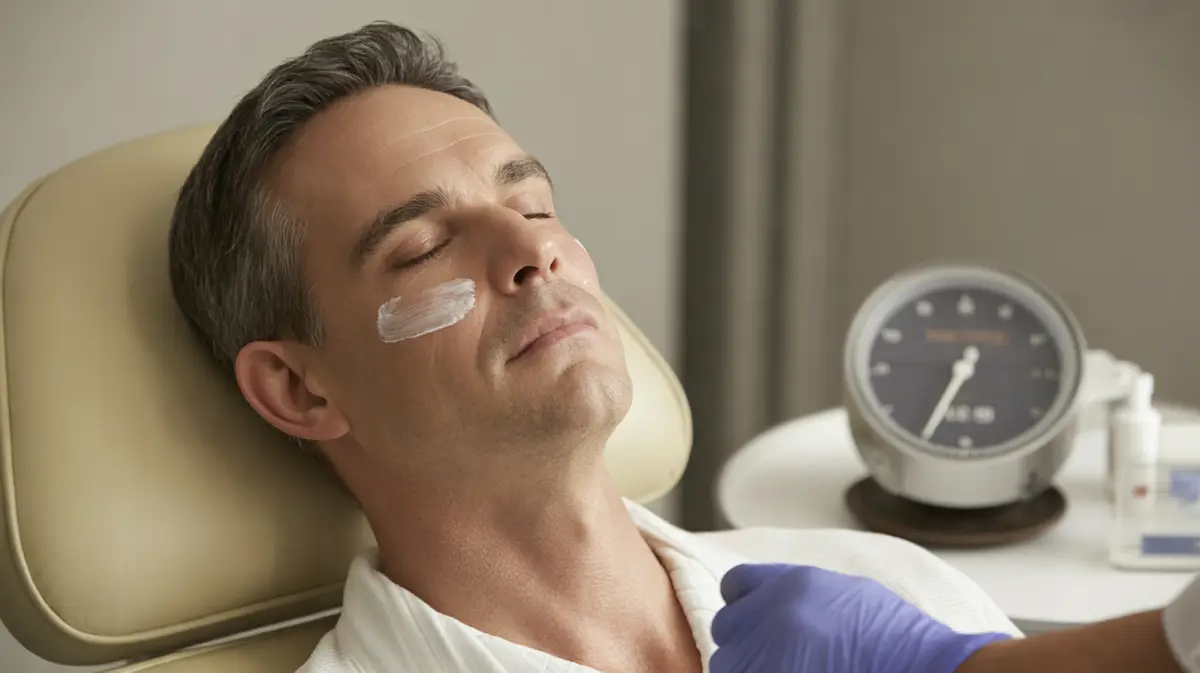
What numbing creams are used before cosmetic procedures
Topical numbing creams are local anesthetics that soak into the outer skin and block pain signals from nerve endings for a while. Before aesthetic treatments, two kinds come up most:
- Lidocaine creams. Lidocaine is the most familiar topical anesthetic. Over-the-counter versions are limited in strength, and stronger lidocaine products are available through clinicians.
- Compounded BLT. A mix of benzocaine, lidocaine and tetracaine made by a compounding pharmacy. In a survey of cosmetic dermatologists, the most popular topical anesthetic was benzocaine 20%, lidocaine 6% and tetracaine 4%, used most often before fractional laser treatments.
Their FDA status differs. As of October 2026, over-the-counter lidocaine numbing products are FDA-regulated with a strength cap, and the agency tells consumers to avoid OTC products above 4% lidocaine. Stronger lidocaine creams are available only through clinicians. BLT, like every compounded medicine, is not FDA-approved, so its strength and quality depend on the pharmacy that makes it.
Where numbing fits: PicoSure Pro, PRP and filler
How much numbing helps depends on the procedure. Laser treatments for pigment, such as PicoSure Pro for sun spots, deliver rapid pulses across an area of skin, so surface numbing is a common comfort step. PRP involves several small injections, and Ultimate Male’s PRP injections are done with numbing as part of the visit.
Fillers are a partial exception. The FDA’s dermal filler page notes that some fillers contain lidocaine, so the product numbs the tissue as it goes in, and the FDA lists lidocaine allergy as a reason to discuss options first. A topical cream may still be used for the needle’s first entry in sensitive spots such as the lips.
Why the cream is applied in clinic for a set time
Numbing cream is applied by the clinic, left on for a timed period and then removed, because absorption is what makes it both effective and risky. The more cream, the larger the area, the longer it stays on and the more the skin is broken, warmed or covered, the more anesthetic enters the bloodstream.
A review of topical anesthetic safety advises that compounded formulations be used with caution, in medical settings only, on limited body areas and without occlusion (covering the skin with plastic). That is the logic behind in-office application:
| Safe practice | Why it matters |
|---|---|
| Staff apply a measured amount | Prevents the thick layers people tend to use at home |
| Limited to the treatment area | Keeps total absorbed dose down |
| Timed, then wiped off | Stops absorption before treatment starts |
| No plastic wrap or heat | Wrapping and warmth increase absorption |
| Skin checked first | Broken or irritated skin absorbs far more |
The FDA warnings: seizures and heart rhythm problems
The FDA has warned repeatedly about strong numbing products used around cosmetic procedures. In a March 26, 2024 warning, it named products sold for use before microdermabrasion, laser hair removal, tattooing and piercing that contained more lidocaine than over-the-counter rules allow. Used in ways that increase absorption, they can cause irregular heartbeat, seizures and breathing difficulties, and they may interact with other medicines or supplements.
The FDA’s advice for consumers is direct:
- Do not use over-the-counter numbing products with more than 4% lidocaine.
- Do not apply them heavily over large areas or on irritated or broken skin.
- Do not cover treated skin with plastic wrap or other dressings.
If someone develops ringing in the ears, a metallic taste, confusion, twitching, a racing or irregular heartbeat, trouble breathing or a seizure after using a numbing cream, call 911. These signs of anesthetic toxicity need emergency care, not a call back later.
Side effects, interactions and who should be careful
Most reactions are mild: redness, paleness, itching or a short burning feeling where the cream sat. Allergic reactions happen and are more common with the ester-type anesthetics, benzocaine and tetracaine, than with lidocaine. Benzocaine can also, rarely, cause methemoglobinemia, a blood problem that limits oxygen delivery and shows up as gray or blue lips and shortness of breath.
Tell your provider before numbing if you:
- have had a reaction to a dental or local anesthetic;
- take heart rhythm medicines or other drugs that act like local anesthetics;
- have significant liver or heart disease, which can slow clearance or raise sensitivity;
- have eczema, a rash or a fresh wound in the area;
- are planning treatment over a large area in one session.
Monitoring during a supervised application is straightforward: the time is tracked, the skin is checked when the cream comes off, and you are asked how you feel before treatment begins.
What numbing cream can and cannot do
Topical numbing works on the surface. It takes the sharp edge off a needle entering the skin or the snap of a laser pulse, but it does not reach deeper tissue, so you may still feel pressure, warmth or a dull ache during injections or longer laser passes. That is normal and not a sign the cream failed.
It also is not the only comfort tool. Cooling the skin, a filler that already contains lidocaine, short breaks during treatment and a steady, unhurried technique all help. For a small area, some men skip cream entirely, which avoids the wait and any reaction to it. Ask what your options are rather than assuming more numbing is better.
How Ultimate Male handles comfort during treatments
Ultimate Male offers aesthetics for men including PicoSure Pro, fillers and wrinkle relaxers, and the provider or nurse decides whether numbing is needed and which form to use for your skin, the area and the treatment. Share your full medication and allergy list at the visit. If you are preparing for injections, our guide on how to prepare for Botox or filler covers the rest, and our page on hyaluronidase explains what happens if HA filler ever needs to be dissolved.
