
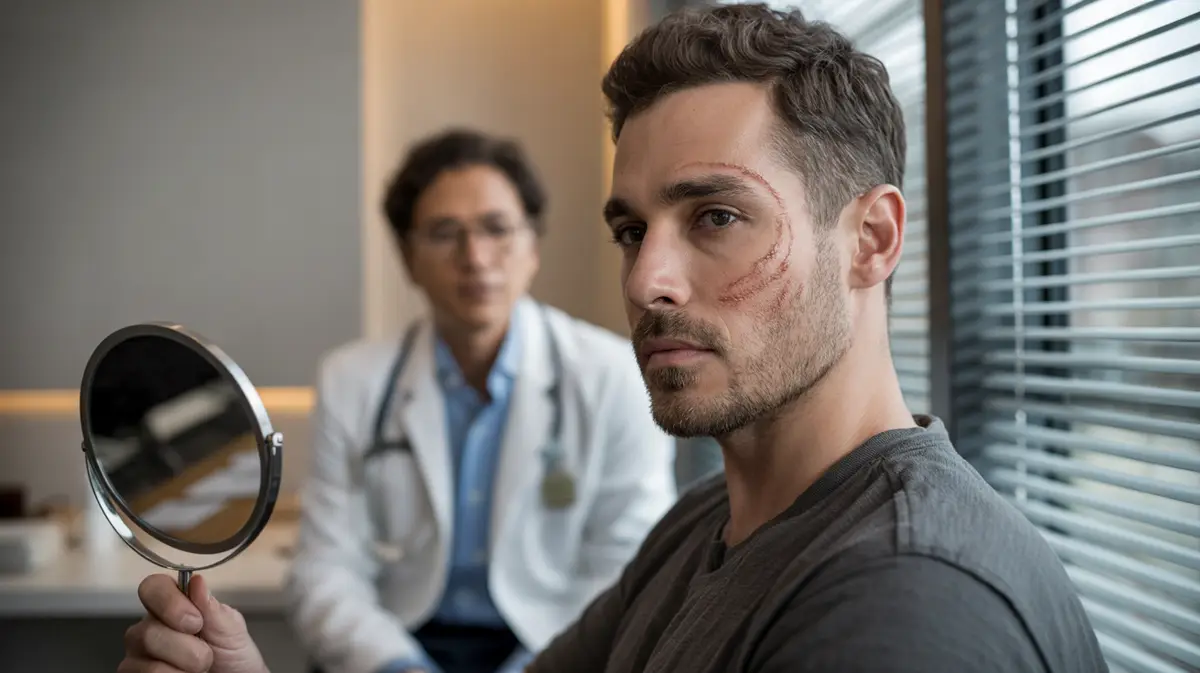
Which acne scars a VI Peel can help
Acne leaves two very different kinds of marks, and the difference decides whether a peel is the right tool. The first kind is a color change: flat red or brown spots where a pimple used to be. The American Academy of Dermatology points out that a flat spot of color is usually not a scar at all, and that it tends to fade with time.
The second kind is a true scar, a dent in the skin’s surface. Dermatologists sort these depressed scars into three types, a system reviewed in Dermatologic Surgery in 2019: icepick, boxcar and rolling. The AAD notes that icepick scars require different treatment than rolling scars, and a chemical peel works mainly on the upper layers of skin.
| Scar or mark | What it looks like | What a VI Peel series can do | Other options |
|---|---|---|---|
| Flat brown or red marks | Color only, no dent | Often helps even out tone | Time, sun protection |
| Shallow rolling scars | Soft, wavy dips seen in side light | Can soften the edges | Subcision, filler |
| Shallow boxcar scars | Broad, flat-bottomed dents | Modest softening | Energy devices, punch techniques |
| Deep boxcar scars | Sharp, steep walls | Little on its own | Punch elevation, energy devices |
| Icepick scars | Narrow, deep pits | Little on its own | Punch excision, other targeted procedures |
| Raised scars | Firm bumps above the skin | Not a peel problem | Injections, lasers |
Most men have a mix. A peel series is a good fit when the bulk of what bothers you sits in the top rows of that table.
Who a peel series suits, and who should wait
The strongest candidates have mostly shallow scarring, leftover discoloration and acne that is largely under control. Men with dark marks from razor bumps along the jaw often fit too, and our page on dark spots after acne and razor bumps covers that pattern.
Wait if you are still breaking out regularly. The AAD’s acne scar treatment guidance says that if you have breakouts, your plan will likely start with acne treatment. Acne can flare after starting testosterone, and our answer on acne on TRT explains how that is handled. The VI Peel FAQ also rules out anyone who took oral isotretinoin (Accutane) in the past six months or has an active cold sore or open wound.
How many VI Peels acne scars usually need
One peel brightens. Scars need a series. VI Derm recommends three to six peels for optimal results, spaced every four to six weeks, which works out to roughly two to seven months of treatment. The AAD gives a similar picture for milder peels, saying you may need three to five treatments given every two to four weeks.
Set expectations around softening, not erasing. The 2019 review found few high-quality studies on acne scar treatments, partly because many papers did not define which scar types they treated. Shallow scars and marks are where a full series has the most room to help, while deeper scars tend to stay visible and are better handled with procedures aimed at them. Our condition page on acne scars in men walks through those options.
If some of your rolling scars are broad and soft, adding volume underneath can lift them, and the clinic can talk you through dermal filler options as a separate step.
Your peel series, visit by visit
- Scar mapping. Your provider looks at your skin under side lighting, sorts what is scar and what is pigment, and takes photos in the same light for later comparison.
- First peel. The solution is layered on in a short visit, and you leave with it on your skin and nothing else applied for four hours.
- Peeling week. Flaking starts around day two or three and is usually finished by day seven. Shaving waits until it ends.
- Healing gap. Four to six weeks of daily sunscreen and a gentle routine before the next peel.
- Progress check. Photos are repeated before each session so you can see the trend, and the plan changes if a scar type is not responding.
The general peel routine, from timing to training, is covered on our main VI Peel for men page, and the VI Peel aftercare guide covers each healing day.
Side effects and safety for acne-prone skin
Redness, tightness and peeling are expected after each session. The bigger risk for acne-prone skin is new dark marks, either from picking flakes or from sun during healing, which can undo the very discoloration you are trying to fade.
Skin tone matters here. The AAD’s chemical peel FAQ says people with darker skin can have peels safely, but without the right expertise they can develop permanent pigment problems. If you have a history of cold sores, tell your provider before the first session. Call the clinic if a treated area blisters, weeps or becomes more painful each day.
Paying for a peel series and booking at Ultimate Male
Peels for acne scarring are generally treated as cosmetic, and under IRS Publication 502 cosmetic procedures usually cannot be paid from an FSA or HSA. Ultimate Male is direct-pay with no membership. Bundle pricing applies to longer plans, so ask about it when your series is set, and see the VI Peel cost page for the factors behind a quote. CareCredit, Prosper Healthcare Lending and Afterpay are available.
Your consultation with our aesthetics team starts with an honest map of your scars. If most of them are deep icepick or steep boxcar scars, you will hear that a peel series is unlikely to satisfy you, and why. Call 626-319-5261 for a free 10-minute chat first.
