
Why melasma is not the same as a sun spot
Melasma shows up as blotchy, often symmetrical brown or gray-brown patches, usually on the cheeks, forehead, chin or upper lip. A sun spot is a fixed deposit of pigment that a laser can clear. Melasma is different: the pigment-making cells in that skin are overactive and keep producing. A 2024 treatment review calls it a chronic, recurrent condition with no permanent fix, linked to sun exposure, hormones and heat exposure.
It is much less common in men. In one Puerto Rico study cited by a review of melasma in men, men made up only 10 percent of cases. The same review found sun exposure to be the key trigger regardless of sex, a family history in a large share of male patients, and a handful of cases linked to medicines, including the seizure medicine phenytoin (Dilantin) and the hair-loss drug finasteride (Propecia). If you take finasteride, our page on finasteride for hair loss is worth a read before your visit.
Not sure which one you have? Our article on melasma versus sun spots shows the differences, and discrete spots have their own plan on our page about PicoSure Pro for sun spots.
Who PicoSure Pro suits, and who should wait
PicoSure Pro makes most sense for men whose melasma has been diagnosed rather than guessed at, who already wear sunscreen daily, and who accept that the goal is lighter, more even skin that needs upkeep. It can also help men whose patches have not improved enough with topical treatment alone.
It is better to wait if you have a tan or a recent sunburn, if your patches are actively darkening after a summer outdoors, or if you cannot yet protect your face from sun and heat at work. Men with deeper skin tones can be treated, but more cautiously, and our page for men with darker skin tones explains what changes.
Why the laser settings stay gentle
Melasma punishes aggressive treatment. The 2024 review reports that rebound hyperpigmentation is a known complication of laser treatment, particularly at higher energy levels, and that lower-energy settings gave better responses with fewer side effects in the studies it covered. That is why melasma is treated with low-energy passes across the whole patch over several sessions, not one strong treatment aimed at the darkest areas.
The FDA’s 2021 510(k) clearance for the PicoSure platform names melasma among the pigmented lesions its 755 nm wavelength can treat. Clearance is not a ranking, though. A 2026 meta-analysis of five randomized trials found that a topical triple-combination cream reduced melasma scores more than the 755 nm picosecond laser, and that rebound darkening was more common with the laser. The authors rated the evidence low in certainty because the trials were small.
The practical takeaway matches the American Academy of Dermatology: a few studies show that adding a laser can improve results for people who also use medication and sun protection. The laser is an add-on to topical care, not a replacement for it.
How a melasma course runs, visit by visit
There is no agreed session count for the 755 nm laser in melasma, and our answer on PicoSure sessions for melasma explains why. The AAD says that with a consistent plan, results usually take 3 to 12 months to show.
| Phase | What happens | Your part |
|---|---|---|
| Preparation | Diagnosis, baseline photos, topical lightening plan | Daily tinted sunscreen, no tanning |
| Active series | Low-energy laser sessions spaced weeks apart, with photo checks | Sun and heat avoidance between visits |
| Maintenance | Occasional review and touch-up if patches return | Sunscreen and topical care indefinitely |
At each visit your skin is cleansed, you wear laser-safe goggles, and the provider makes even, gentle passes over the whole patch. A mineral sunscreen goes on before you leave. If any area darkens between sessions, the next one is postponed rather than pushed.
Sun, visible light and heat: the rules that decide your result
Laser sessions can be undone by one careless weekend. The AAD’s melasma self-care advice is a broad-spectrum, water-resistant sunscreen with SPF 30 or higher, and a tinted sunscreen with iron oxide, because visible light also worsens melasma, especially in darker skin.
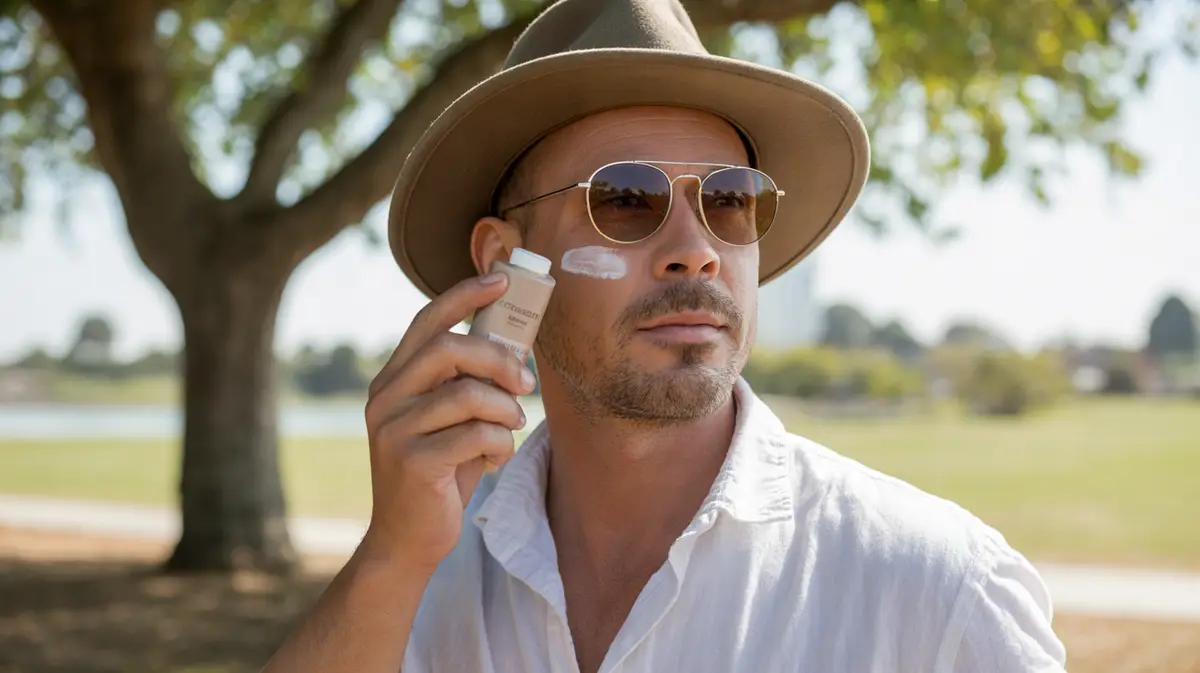
Heat is the part men overlook. Saunas, hot yoga, long sessions over a grill or a hot commercial kitchen can all aggravate pigment. The review of melasma in men also noted that men tend to be less consistent with sunscreen, so build it into your routine: apply it after shaving, keep a tinted stick in the truck or gym bag, and wear a brimmed hat outside. Men who work outdoors will find more tactics on our page for outdoor and construction workers.
Why melasma can return, and the side effects to watch
Even when the patches clear, melasma can come back. The review of melasma in men says treatment needs to continue indefinitely to prevent recurrence, and that strict sun protection lowers the chance of relapse but does not rule it out. A sunny vacation, a new medicine or a hot summer can bring patches back. Planned maintenance is part of the treatment.
Side effects of the laser itself include redness, mild swelling and, most importantly, post-inflammatory hyperpigmentation. Report any darkening between sessions rather than waiting for the next appointment. Read our condition page on melasma in men for the full range of options beyond the laser.
Paying for a melasma plan and booking at Ultimate Male
Laser treatment for melasma is generally treated as cosmetic, and cosmetic procedures usually are not FSA or HSA eligible. Ultimate Male does not bill insurance. Your quote reflects the size of the area and the number of sessions planned, and the PicoSure Pro cost page shows how a course is priced. You pay per visit, and CareCredit, Prosper Healthcare Lending and Afterpay are available.
At the consultation, our aesthetics team confirms whether the pattern is melasma, maps out sessions and maintenance, and is honest about how much the laser is likely to add for your skin. Call 626-319-5261 for a free 10-minute conversation before you commit to anything.