
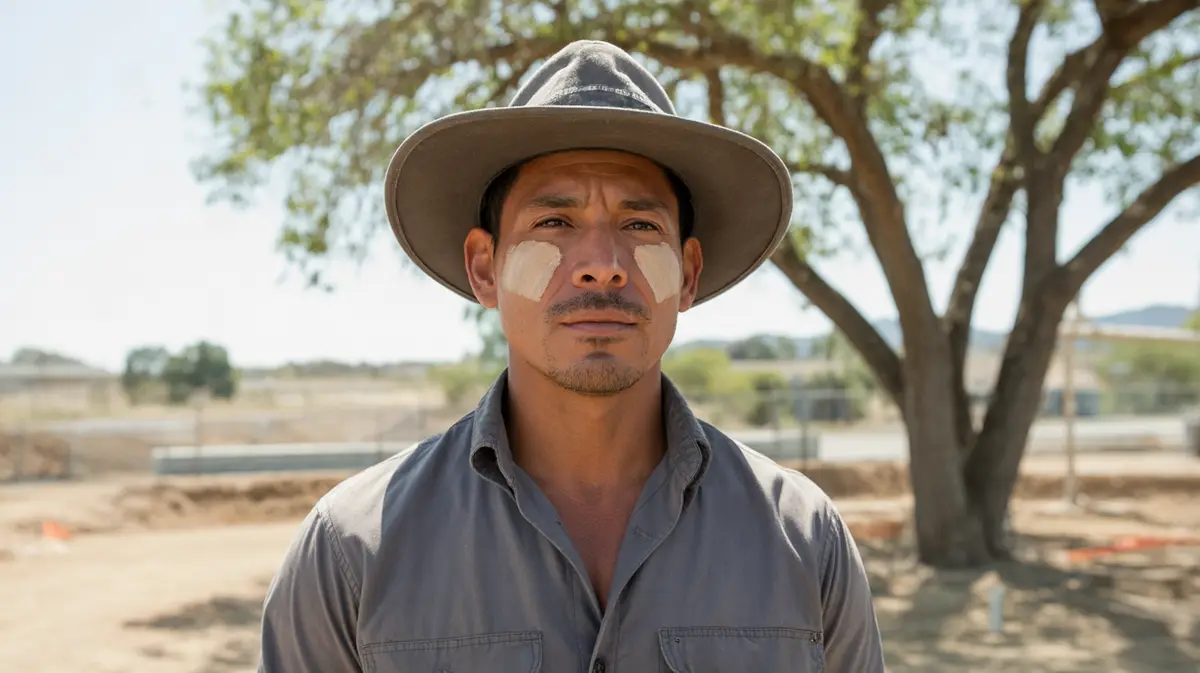
What melasma looks like on a man’s face
Melasma shows up as flat, blotchy patches that are brown or gray-brown, often with soft, map-like edges. The giveaway is symmetry: the same shape on both cheeks, or across the forehead, nose or upper lip. The American Academy of Dermatology describes it on the cheeks, forehead, chin and above the upper lip, and less often on the arms or neck.
In men, the most common layout is the cheek pattern. A 2018 review of melasma in men found that this malar pattern dominates in men, while the center-of-the-face pattern is more frequent in women. The patches do not itch or hurt, and they tend to look darker after summer.
Why it is so often missed in men
Melasma has a reputation as a women’s condition, and it is more common in women. In one Puerto Rican study cited by the review, men made up only 10 percent of cases. That reputation is part of the problem. A man with matching brown patches on both cheeks is more likely to be told he has sun damage or a tan line, and he may never hear the word melasma.
The numbers look different in some groups. The same review reports that melasma is more commonly seen in men of Hispanic, Asian and Indian origin than in Caucasian men, with studies of Hispanic farm and poultry workers finding it in a meaningful share of men. The authors also note that melasma is likely underreported overall, partly because it causes no physical symptoms and people self-treat with store products.
What drives it, and why heat and sun bring it back
Melasma is pigment cells that have become overactive and easily provoked. Several triggers stack up:
- Ultraviolet light. The review calls sun exposure the main documented cause in most studies of men, and in one study more than half of the men affected worked outdoors.
- Visible light. The AAD’s melasma self-care page says visible light has been shown to worsen melasma, especially in darker skin.
- Heat. Infrared radiation, the warmth you feel from the sun, has also been found to cause melasma, though less severely than UV. Many skin specialists also advise limiting saunas, hot kitchens and long hot workouts, although the evidence for heat alone is thinner than for sunlight.
- Family history. In one study of men, 39 percent had a relative with melasma.
- Some medicines. The review links certain cases to the seizure medicine phenytoin and to hormonal agents, including finasteride.
This is why melasma returns. Treatment clears pigment, but the overactive cells remain. A summer of weekend yard work or a beach vacation can bring patches back. The AAD is direct about it: treatment can fade melasma, but it can come back. The review goes further, saying treatment needs to continue indefinitely to avoid recurrence and that sun protection helps but cannot promise it.
How melasma is evaluated
Melasma is diagnosed by looking at the skin, its pattern and its history. No blood test is needed for most men. The visit focuses on sorting melasma from look-alikes, because the treatments differ:
| Feature | Melasma | Sun spots | Dark spots after acne |
|---|---|---|---|
| Shape | Blotchy, matching patches | Separate round or oval spots | Marks where bumps were |
| Distribution | Both cheeks, forehead, nose, lip | Anywhere the sun hits | Breakout or shaving zones |
| Response to heat and sun | Flares quickly | Slowly adds new spots | Darkens, slower to fade |
The clinic also reviews your medicines, your job and your outdoor habits, since each one shapes the plan. Our article on melasma vs sun spots shows the difference with more examples, and the sun spots on the face page covers the other common pattern.
How PicoSure Pro and the VI Peel are combined
Ultimate Male treats melasma with two in-clinic tools and one daily habit.
PicoSure Pro fires picosecond pulses that break pigment into tiny particles without heating the skin for long, which matters for a condition that heat can provoke. The PicoSure workstation’s 755 nm laser holds an FDA clearance that names melasma among the pigment conditions it is cleared to treat. Even so, the 2018 review cautions that rebound darkening can occur after laser treatment, particularly in darker skin, so sessions are spaced and settings stay gentle. The PicoSure Pro for melasma page describes the service.
The VI Peel resurfaces the outer layers of skin and lifts pigment across the whole face, which suits patches with soft, wide edges. The review advises caution with peels for melasma in darker skin types, so peel strength and timing are matched to your tone.
Daily sun protection is the third part, and without it the first two do not last. The AAD recommends a tinted sunscreen containing iron oxide with SPF 30 or higher, because iron oxide also blocks visible light. Add a brimmed hat, shade when you can, and reapplication when you sweat.
Our VI Peel vs PicoSure Pro comparison explains when one is favored over the other.
A plan for control, not a one-time fix
Think of melasma like blood pressure: it can be brought down and kept down, but it needs ongoing attention. A typical plan moves through three phases.
- Clearing. A series of PicoSure Pro or VI Peel sessions, with strict sun and heat protection between visits.
- Settling. Spacing visits out as patches fade, watching for any rebound.
- Maintenance. Occasional touch-up sessions, often timed around the high-sun months, plus daily tinted sunscreen.
Men who work outdoors have the hardest time, and the outdoor and construction workers page has practical ideas for protecting skin on the job.
When to get a different check, and how to start
Melasma itself is not dangerous. A single dark spot that changes shape, has several colors or an irregular border, or bleeds is different and needs a dermatologist before any cosmetic treatment. Call 911 for facial swelling with trouble breathing after any product or procedure.
When you are ready, book a free 10-minute call or a consultation in San Gabriel or Downey. Ultimate Male is direct-pay and does not publish prices. Melasma treatment is generally treated as cosmetic, so it is usually not FSA or HSA eligible, and CareCredit, Prosper Healthcare Lending and Afterpay are available. At the visit, the aesthetics team confirms the diagnosis, reviews your triggers and lays out a clearing and maintenance plan you can actually keep. Our answer on PicoSure sessions for melasma and the full aesthetics for men menu are good next reads.
