
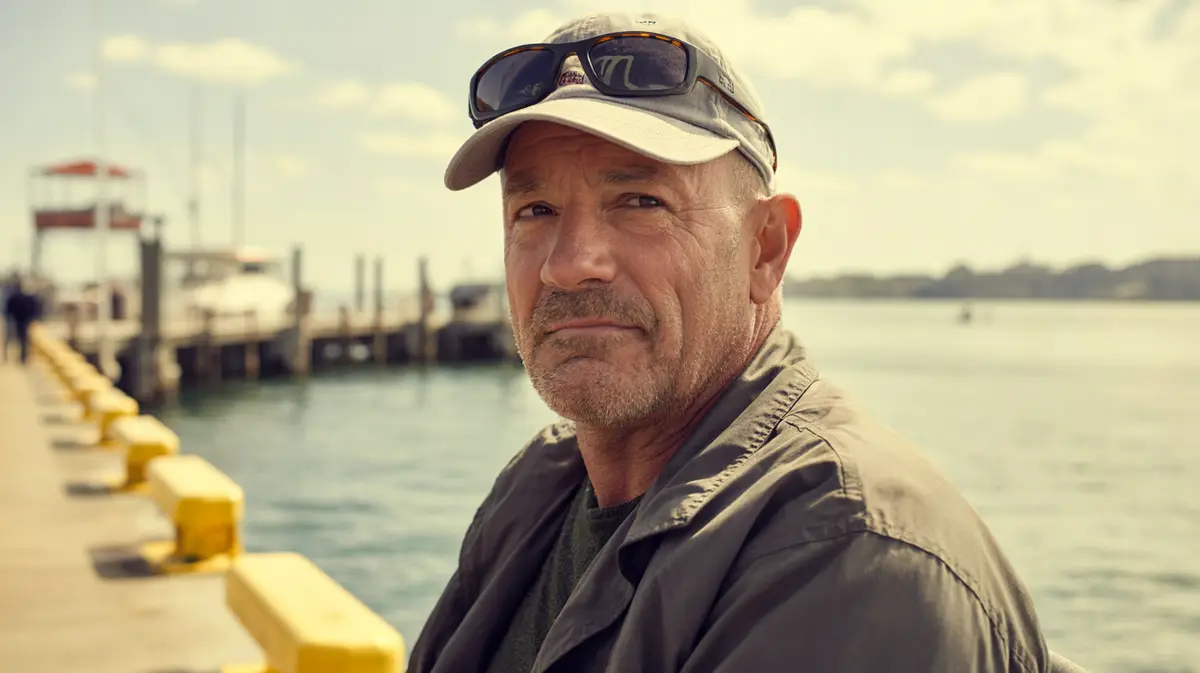
What years of sun do to a man’s skin
Sun damage rarely shows up as one problem. It is a collection of changes that build slowly until one day the mirror looks older than you feel. The most common signs are:
- Rough texture. Skin feels coarse or leathery, especially across the cheeks and forehead.
- Uneven tone. Blotchy patches of brown and red instead of an even color.
- Brown spots. Flat sun spots on the cheekbones, temples, ears and backs of the hands.
- Fine lines. Crinkling around the eyes and across the cheeks that is there even when your face is relaxed.
- Dullness and visible pores. Skin that has lost its smooth reflection of light.
- Rough, red patches. These deserve special attention, covered below.
The pattern is a giveaway. The back of the neck, the ears, the left side of a driver’s face or the forearms of a man who works outside often look a decade older than skin that stays covered.
Why outdoor work and sport add up
Ultraviolet light damages the collagen and elastic fibers that keep skin firm and smooth, and it pushes pigment cells to overproduce. Each exposure does a little. Twenty years of construction sites, landscaping, delivery routes, softball leagues, surfing or golf do a lot.
Men who started working outside young, men who rarely wore sunscreen, and men with fair or light olive skin tend to show the most change. Medium and deeper skin is somewhat better protected from wrinkling but still develops uneven tone and dark patches. If your work keeps you outside, the outdoor and construction workers page has practical skin advice for the job site.
Spots to have checked before any treatment
Sun-damaged skin is also skin at higher risk for precancerous and cancerous growths, so a cosmetic plan starts with a careful look. The American Academy of Dermatology notes that an actinic keratosis often appears as a reddish spot on the face, ears, balding scalp, hands, neck or lips, can resemble an age spot, pimple or irritated patch, and in some cases turns into squamous cell carcinoma.
Any rough red patch that keeps coming back, any sore that does not heal, and any spot that is changing in size, shape or color should be examined by a dermatologist before a peel or laser touches it. The AAD’s guide to a skin self-exam shows how to check yourself between visits, including the scalp, ears and back of the neck. Our answer on when to treat sun spots explains how we handle a spot that needs a second opinion first.
Treating the whole surface and the individual spots
Sun damage has two layers of problem, so the plan uses two tools.
The VI Peel treats the whole surface. This medical-grade peel, made with a blend including TCA, salicylic acid, retinoic acid and vitamin C, removes the rough outer layer and prompts fresher skin to grow in. Over a series of sessions, texture smooths, tone evens out and fine lines soften. It is formulated for all skin tones. Details are on the VI Peel for sun damage page.
PicoSure Pro targets the individual spots. Brown spots that a peel lightens but does not clear are a job for this picosecond laser, which breaks pigment into tiny particles your body removes. It is precise enough to treat one spot at a time without affecting the skin around it. The sun spots on the face in men page explains that part in more depth.
| Concern | Main tool | What to expect |
|---|---|---|
| Rough, leathery texture | VI Peel series | Smoother feel after the first peel, building over the series |
| Blotchy, uneven tone | VI Peel series | More even color as layers renew |
| Individual brown spots | PicoSure Pro | Spots darken, flake and lighten over weeks |
| Fine lines from sun | VI Peel series | Softening, not erasing |
| Deeper expression lines | Wrinkle relaxers | A different treatment; see below |
Lines that deepen when you frown, squint or raise your brows come from muscle movement as much as sun. Peels soften the surface but do not stop the muscle, so men who want those lines quieter often add wrinkle relaxers to the plan.
What a combined plan usually looks like
Every plan is built on your skin, but the order often follows the same logic. The peel series comes first to even out the whole surface. Spots that remain afterward are treated individually with PicoSure Pro. Maintenance sessions follow as needed.
A VI Peel visit takes about 30 minutes. Mild redness is common right away, peeling usually starts two to three days later and can last up to a week. PicoSure Pro visits are short, with spots that darken and flake over several days. Most men return to work immediately after either, though the peel week can look patchy. Fall and winter are popular months for this work, and our post on fall laser season for sun spots explains why.
Protecting the result
The AAD’s chemical peel FAQs make a point every man with heavy sun damage should hear: if you have lots of sun-damaged skin or actinic keratoses, you will likely keep seeing new spots and growths. The same page says healing skin must be fully protected from the sun and that daily sunscreen helps maintain results once it heals.
So the routine matters. Use a broad-spectrum sunscreen every morning, reapply when you sweat, wear a brimmed hat rather than a cap that leaves ears exposed, and keep up with skin checks. Call the clinic if treated skin blisters, oozes or becomes increasingly painful. For facial swelling with difficulty breathing after any product, call 911.
Paying for treatment and starting your plan
Ultimate Male is direct-pay and does not publish prices, since the total depends on how many peels and laser sessions your skin needs. Peels and lasers for appearance are considered cosmetic and are generally not FSA or HSA eligible under IRS Publication 502. CareCredit, Prosper Healthcare Lending and Afterpay offer financing.
Begin with a free 10-minute phone call or book a visit at San Gabriel or Downey. The aesthetics team looks at your whole face, flags anything that needs a dermatologist, and maps out which concerns the peel series covers and which spots need laser. You can explore the rest of the aesthetics for men menu before you come in.