
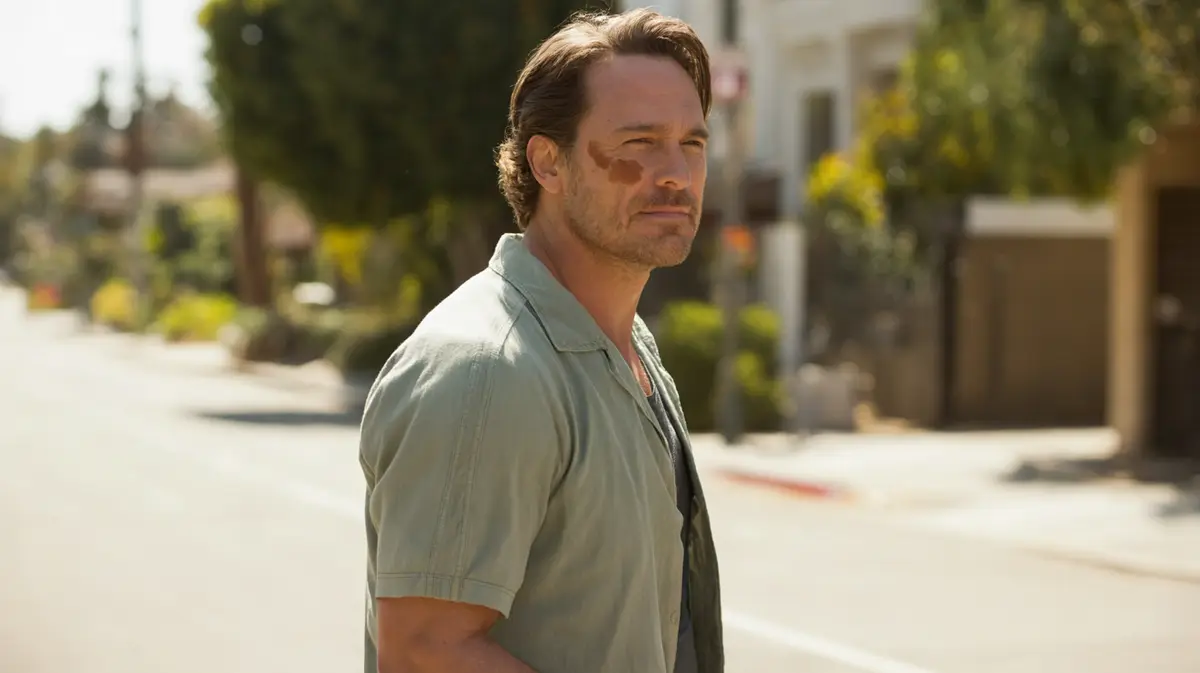
What sun spots look like on a man’s face
Sun spots are flat, evenly colored patches that range from light tan to dark brown. Dermatologists call them solar lentigines, and you may also hear age spots or liver spots, although the liver has nothing to do with them. They are usually round or oval, anywhere from freckle-sized to coin-sized, and they cluster where the sun lands hardest.
On men, the usual places are the cheekbones, temples, forehead, the bridge of the nose and the tops of the ears. A receding hairline or thinning crown exposes more skin, so the spots often follow the hairline back. A true sun spot does not itch, hurt or bleed, and it stays the same for years. That last detail matters more than anything else on this page.
Why they show up in your 30s, 40s and beyond
A sun spot is a patch of pigment cells pushed into overproducing melanin by ultraviolet light. It does not come from one bad burn. It is the running total of weekend golf, a daily commute with the sun on the same side of your face, outdoor work, beach days in your twenties and very little sunscreen along the way.
Men often collect them earlier for practical reasons. Plenty of men skip daily sunscreen, short haircuts leave ears and necks exposed, and many jobs in Southern California put the face in direct sun for hours. Fair skin spots most easily, but medium and olive skin gets them too, often as a scattering across the upper cheeks.
Sun spot, or something that needs a skin check first?
Not every brown mark is a sun spot, and a laser is never the first tool for a spot that is changing. The American Academy of Dermatology’s ABCDEs list the warning signs of melanoma: one half unlike the other, an irregular or poorly defined border, several colors in one spot, a diameter usually greater than 6 millimeters, and a spot that is evolving in size, shape or color. The AAD advises seeing a board-certified dermatologist for any spot that is changing, itching or bleeding.
The second look-alike is the actinic keratosis (AK). It often appears as a reddish spot on the face, ears, balding scalp, hands, neck or lips, and the AAD notes that some AKs turn into squamous cell carcinoma. An AK is sun damage that needs medical treatment, not cosmetic pigment work.
| What you see | What it may be | What happens next |
|---|---|---|
| Flat, even tan or brown, unchanged for years | Sun spot (solar lentigo) | Can be considered for PicoSure Pro |
| Reddish or rough patch that keeps coming back | Possible actinic keratosis | Dermatology evaluation first |
| Mixed colors, uneven border, growing, itching or bleeding | Warning signs of skin cancer | Prompt dermatology visit, no laser |
| Blotchy, matching patches on both cheeks | Possibly melasma | A different plan |
If anything you show us fits the third row, we will ask you to see a dermatologist before we treat a single spot. Our answer on whether sun spots can turn into cancer goes deeper, and the melasma in men page covers the patchy pigment that behaves very differently.
How PicoSure Pro breaks up sun spots
PicoSure Pro is a picosecond laser. Its pulses last trillionths of a second, so the energy reaches the pigment as a rapid pressure wave rather than as prolonged heat. The pigment breaks into fine particles, and your body’s normal cleanup process carries them away over the following weeks. Because the surrounding skin is not heated for long, recovery is usually brief.
The platform has a regulatory record for this exact use. The PicoSure workstation’s 755 nm laser is FDA-cleared for tattoo and benign pigmented lesion removal, and a 2021 clearance added melasma and two other pigment conditions by name. In a randomized study of solar lentigines, a single session with a 755 nm picosecond laser produced measurable lightening at 12 weeks, though the trial was small and treated spots on the arms of Asian patients.
Sun spots often need only a few short sessions, and some lighten noticeably after the first. Older, darker or larger spots can take more. The nurse will give you a realistic estimate after seeing your skin, and the PicoSure Pro sun spot treatment page describes the service itself. If you are weighing light-based options, our comparison of PicoSure and IPL for sun spots lays out the differences.
What a session feels like and what happens after
The visit is short, and most men go back to work the same day. You wear protective eyewear while the laser is in use. Each pulse feels like a quick snap against the skin, and a handful of facial spots takes only minutes.
Right afterward, treated spots can look slightly raised, pink or grayish. Over the next several days they usually darken and then flake away as the skin renews. Let them shed on their own rather than picking, keep the area clean and moisturized, and use broad-spectrum sunscreen every morning. Fresh sun on newly treated skin is the most common reason a spot darkens again.
Side effects are usually mild: redness, swelling and tenderness that settle within days. Less often, the treated skin turns temporarily darker or lighter than the skin around it, a risk that rises with deeper skin tones and recent tanning. Call the clinic if you see blistering, oozing or spreading redness. If you ever have facial swelling with trouble breathing after any skin product or treatment, call 911.
Paying for sun spot treatment
Ultimate Male is a direct-pay clinic, and we do not publish prices because the total depends on how many spots you have, where they are and how many sessions they need. Sun spot removal is cosmetic, and cosmetic procedures are generally not eligible for FSA or HSA reimbursement under IRS Publication 502. Financing is available through CareCredit, Prosper Healthcare Lending and Afterpay, which our financing page explains, and the PicoSure Pro cost page walks through what shapes the quote.
Getting your sun spots looked at
Start with a free 10-minute phone call, or book a visit at San Gabriel or Downey. At the appointment, the aesthetics team examines every spot you point out, separates the good laser candidates from anything that belongs with a dermatologist, and explains how treatment and sun protection fit together. You leave knowing which spots can be treated, roughly how many visits they may need, and what to do between sessions.
If your concern is broader than spots, with rough texture and fine lines too, the page on sun-damaged skin in men shows how a peel series and targeted laser work can be combined. You can browse the full aesthetics for men menu or book a consultation when you are ready.
