What the numbers show
Men still make up a minority of BOTOX patients, but the share has been rising for two decades. In a December 2023 release, the American Society of Plastic Surgeons reported that neuromodulator injections, which it noted are commonly called “Brotox,” jumped 65% in male patients between 2019 and 2022. The same release counted more than 1.4 million men choosing minimally invasive cosmetic treatments in 2022.
Older data show the same direction from a lower base:
| Source | What it measured | Finding for men |
|---|---|---|
| Survey data reviewed in JCAD, 2016 | Men’s share of neurotoxin injections | 9.2% in 2005, 11.5% in 2014 |
| The Aesthetic Society, 2018 | Nonsurgical procedures by sex | 162,093 botulinum toxin procedures in men, 9.0% of the total and their top nonsurgical procedure |
| ASPS, 2022 data | Change in male neuromodulator injections since 2019 | Up 65% |
The overall market grew alongside men’s share. The same 2018 data bank counted 1,801,033 botulinum toxin procedures across all patients that year, up 16.3% from 2017 and 35.8% from 2014, so men were joining a treatment that was expanding for everyone.
Two cautions apply. These figures come from different societies using different survey methods, so they show direction rather than a single trend line, and they count procedures rather than individual men. Even so, every source points the same way: wrinkle relaxers are the treatment men try first and most often.
Why do men say they do it?
The reasons sound less like vanity and more like confidence and looking rested. The American Society for Dermatologic Surgery’s 2023 consumer survey of 3,503 people, men and women together, found the top reasons for considering a cosmetic procedure were wanting to feel more confident, wanting to do something for themselves, wanting to look more attractive and wanting to look as young as they feel.
Work is a quieter thread. Deep frown lines can make a man look tense or tired in a meeting when he feels neither, and a slightly softer frown reads as calm. The JCAD review notes that men tend to avoid treatments with visible downtime, perhaps because of social stigma and career pressures, and that they are often conservative, choosing one procedure at a time, especially at first. A wrinkle relaxer fits that profile: a short visit, no bandages, back at a desk the same day.
The review also notes that men usually want lines softened rather than erased. That is a useful goal to bring to a first appointment, and our answer on whether BOTOX will make you look frozen explains how dosing protects expression.
Why does thicker male muscle change the dose?
Men generally have more muscle, and that extends to the face. The JCAD review points out that men have more skeletal muscle than women, more facial muscle movement and often deeper lines from that movement. Male faces also tend to have a larger forehead, a more prominent brow ridge and a flatter brow line.
Those differences show up in dosing. The BOTOX Cosmetic label lists 20 units as the recommended dose for frown lines in adults. In a randomized trial of 80 men, doses of 40, 60 and 80 units reduced frown lines more effectively and for longer than 20 units, side effects did not rise with dose, and the authors concluded men benefit from starting doses of at least 40 units. Participants on higher doses also reported more self-confidence and satisfaction.
Placement matters as much as amount. Because the male brow sits flatter, toxin placed the way it might be for a woman can lift the brow into an arch that looks out of place on a man. Units also are not interchangeable between brands; the label says BOTOX Cosmetic units cannot be converted into units of other botulinum toxin products. Our answer on how many units of BOTOX men need covers typical ranges by area, and your provider sets the dose for your face.
What a first treatment usually involves
Most men start with one or two areas: the frown lines between the brows, the horizontal forehead lines, or crow’s feet. Our pages on BOTOX for frown lines and forehead lines in men describe each.
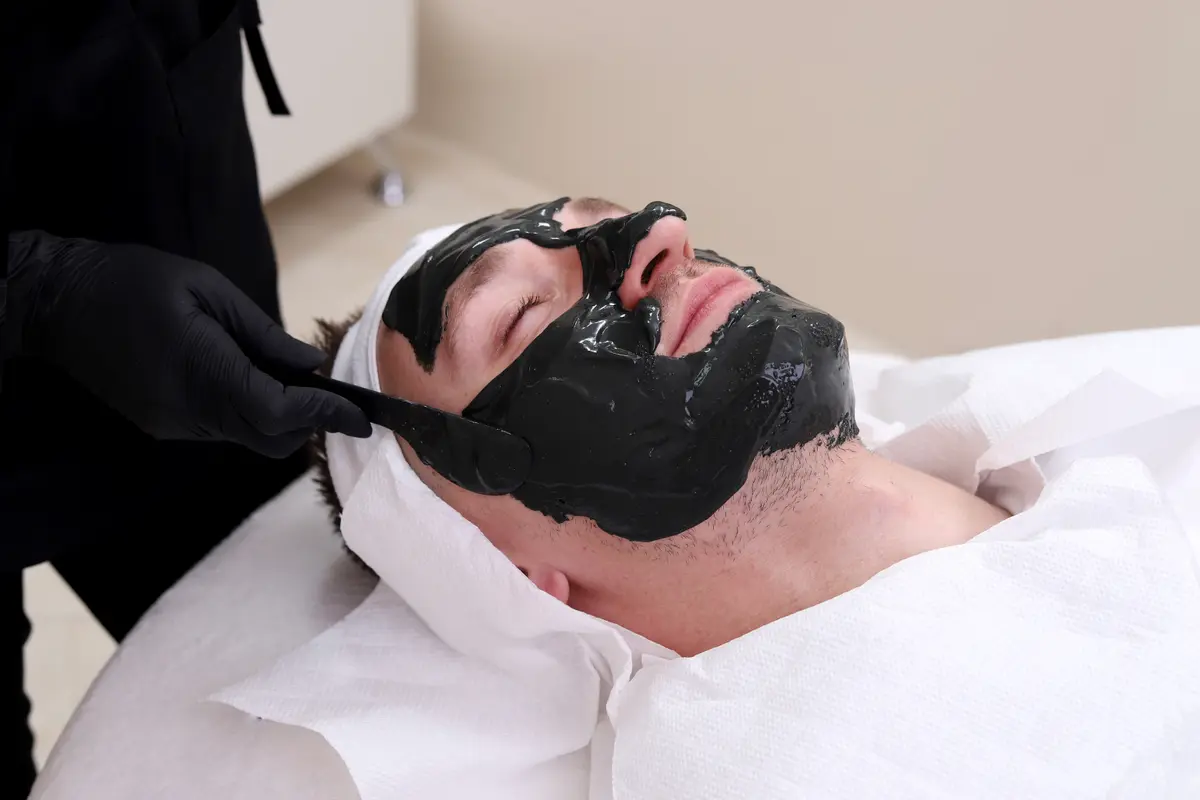
Expect a short consultation, a few small injections and no downtime beyond possible pinpoint bruising. Results appear over several days. Men with a neuromuscular disorder such as myasthenia gravis, an infection at the injection site, or a past reaction to any botulinum toxin product need to say so first, because the label treats these as reasons for caution or not to treat.
Budget for it as a personal expense. IRS Publication 502 generally excludes cosmetic procedures, so wrinkle treatment is usually not HSA or FSA eligible.
How long it lasts and what upkeep looks like
Wrinkle relaxers wear off, so a man who likes the result is signing up for repeat visits rather than a one-time fix. In the 80-man dose trial, the duration of effect rose with the dose, which suggests an underdosed treatment may wear off sooner. The BOTOX Cosmetic label adds that dosing more often than every three months has not been clinically evaluated, so maintenance visits are usually spaced at least that far apart.
Stopping is simple: you skip the next appointment, and muscle movement returns gradually as the effect fades. Our answer on what happens if you stop BOTOX explains that in more detail, and the BOTOX cost for men page covers what drives the price of a typical session.
How Ultimate Male treats men
Aesthetics at Ultimate Male are built around male faces. At our San Gabriel and Downey clinics, wrinkle relaxer treatments with BOTOX, XEOMIN or Jeuveau are given by our aesthetic and men’s health nurses inside a medical practice, with conservative dosing that softens lines while keeping natural movement.
Your first visit is a consultation about your goals and your history, and you get a quote before treatment. If you are curious where you fit on the timeline, our answer on what age men start BOTOX is a good next read, or start with the free 10-minute call.